 how-to
Auto Insurance for Residents: A 2026 Guide
Table of Contents
- Minimum Car Insurance Requirements for Residents
- Understanding No-Fault Insurance Laws
- How to Get Auto Insurance as a New Resident
- How to Lower Auto Insurance Premiums
- Transferring Out-of-State Insurance Coverage
- Auto Insurance for Non-Owner Drivers
- Conclusion
Last Updated: August 29, 2026
Minimum Car Insurance Requirements for Residents
Auto insurance for residents is mandatory in every state, and Florida is no exception. The state enforces strict minimum coverage requirements that every driver must carry at all times. Understanding these requirements isn't just about legal compliance, it's about protecting yourself financially if you cause an accident.
Florida operates as a no-fault insurance state, which fundamentally shapes what coverage you need. This means your own insurance pays for your medical bills and lost wages after an accident, regardless of who caused it. But that's just part of the picture.
Bodily Injury and Property Damage Liability
Bodily injury liability covers injuries you cause to other people in an accident. Property damage liability covers damage you cause to someone else's vehicle or property. In Florida, the minimum requirements are 10/20/10, meaning $10,000 bodily injury per person, $20,000 bodily injury per accident, and $10,000 property damage liability (flhsmv.gov).
Here's where many new residents get confused: these minimums are often insufficient. If you seriously injure someone, medical bills can exceed $10,000 within days. A lawsuit could follow. Most insurance professionals recommend carrying at least 50/100/50 coverage, which provides substantially more protection without dramatically increasing your premium.
Dehlinger Insurance has worked with Florida residents to ensure they understand the gap between minimum requirements and adequate protection. The difference in cost between minimum and recommended coverage can be modest, but the difference in protection is enormous.
PIP Coverage Requirements
Personal Injury Protection (PIP) is the cornerstone of Florida's no-fault system. PIP coverage pays for your own medical expenses, lost wages, and essential services (like childcare) after an accident, up to your policy limit. Florida requires a minimum of $10,000 in PIP coverage (flhsmv.gov).
PIP covers you regardless of fault. If you're in an accident and it's your fault, your PIP pays your bills. If the other driver is at fault, your PIP still pays your bills first, and then you may pursue additional compensation from their liability insurance if your damages exceed your PIP limit.
One critical detail: PIP coverage applies to you and any passengers in your vehicle. This is why families with multiple people in the car should carefully consider whether $10,000 per person is truly adequate. A serious accident with multiple injuries can quickly deplete this coverage.
Uninsured Motorist Coverage
Uninsured motorist (UM) coverage protects you if you're hit by someone without insurance or by a hit-and-run driver. While Florida doesn't legally require UM coverage, it's strongly recommended, roughly one in six drivers on Florida roads is uninsured (iii.org).
UM coverage mirrors your liability limits. If you carry 50/100/50 liability, your UM coverage would be the same. This ensures you have protection equivalent to what you'd expect from other drivers.
Understanding No-Fault Insurance Laws
Florida's no-fault system operates differently than most states. When you're in an accident, your own insurance company pays your medical bills and lost wages, regardless of who caused the crash. This system exists to reduce litigation and speed up claims processing.
The no-fault principle applies specifically to bodily injury claims. Property damage claims, damage to vehicles and other property, still operate on a traditional fault basis. If you damage someone else's car, their property damage liability insurance (or yours) pays for repairs.
This creates an important distinction. After an accident, you file a claim with your own insurance company for medical treatment and lost wages. Separately, if the other driver was at fault, their property damage liability insurance pays for vehicle repairs. If you were at fault, your collision or comprehensive coverage handles your own vehicle damage.
New residents from other states often find this confusing because their previous state operated on a fault-based system. In those states, the at-fault driver's insurance pays everything. Florida's system is faster but requires you to carry adequate PIP coverage to protect yourself.
How to Get Auto Insurance as a New Resident
Obtaining auto insurance for residents moving to Florida involves several distinct steps. The process is straightforward if you know what documentation you'll need and what coverage options exist.
Gather Required Documentation
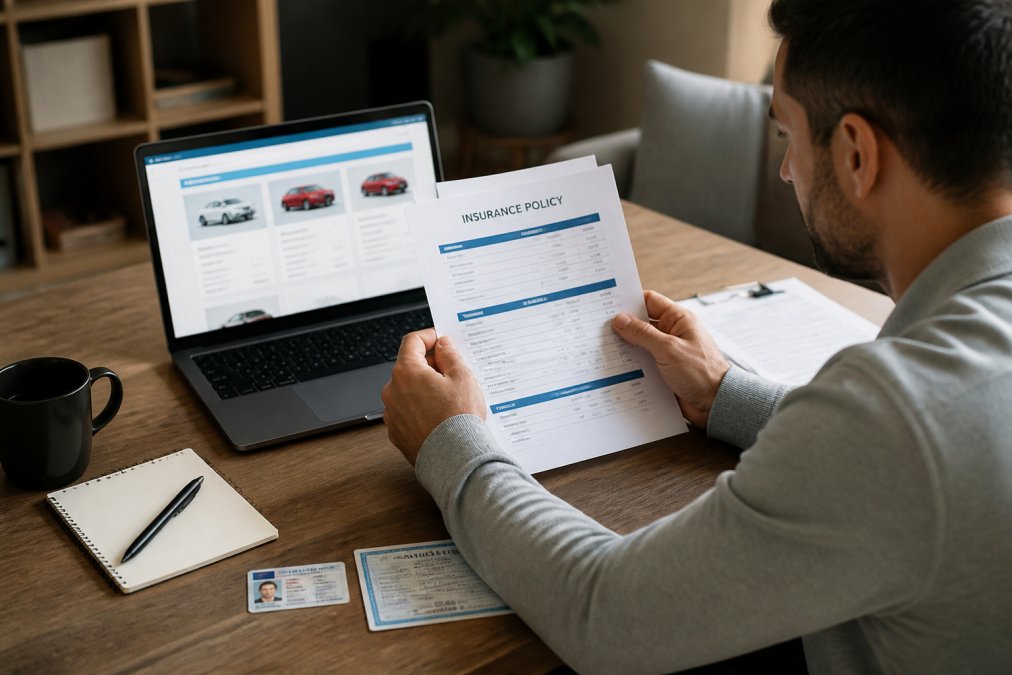
Before requesting quotes, assemble these documents:
- Driver's license (your current license from your previous state, or your new Florida license if you've already obtained one)
- Vehicle identification number (VIN) (found on your vehicle's dashboard or registration)
- Current insurance information (if you're transferring from another state, your current policy details help agents understand your coverage history)
- Driving history (insurers request this; many can access it directly, but having it ready speeds the process)
- Vehicle registration (proof of ownership)
If you've recently moved, have your new Florida address ready. Insurance quotes depend partly on your location, different areas of the state carry different risk profiles.
Compare Coverage Options and Get Quotes
Once you have documentation ready, contact multiple insurers for quotes. You're comparing not just price but coverage options and customer service quality.
When requesting quotes, specify that you need auto insurance for residents and confirm you understand Florida's minimum requirements. Ask each insurer about:
- Their standard coverage options beyond the state minimum
- Available discounts (new customer, bundling with home insurance, safety features on your vehicle)
- Claims process and customer service availability
- Financial stability ratings (check AM Best or J.D. Power ratings)
Dehlinger Insurance works with multiple top-tier carriers, which means we can often find coverage options and pricing that individual insurers wouldn't offer directly. This access to multiple carriers is particularly valuable if you've had accidents or violations, as some carriers specialize in insuring higher-risk drivers.

Choose Your Policy and Activate Coverage
After comparing quotes, select the policy that best balances cost and coverage. Before your coverage becomes active, review the declarations page carefully. This page lists your vehicle information, coverage limits, deductibles, and premium amount.
Timing matters. Your coverage must be active before you drive. If you're purchasing a new vehicle, arrange insurance before taking possession. If you're transferring a vehicle you already own, ensure there's no gap between your old policy's expiration and your new policy's start date.
Call Us and Get a Quote Today! →
How to Lower Auto Insurance Premiums
Auto insurance for residents can represent a significant annual expense. Several strategies exist to reduce your premium without sacrificing necessary coverage.
Impact of Credit Scores on Your Rate
Your credit score directly influences your auto insurance premium in Florida. Insurers use credit-based insurance scores (a variant of your credit score) to predict claim likelihood. Drivers with higher credit scores statistically file fewer claims, so insurers reward them with lower rates.
The relationship is substantial. A driver with excellent credit (750+) might pay 20-30% less than a driver with poor credit (below 600) for identical coverage. This isn't punitive, it's actuarial. The data shows the correlation is real.
If your credit score is below optimal, improving it takes time but directly reduces your insurance costs. Pay bills on time, reduce outstanding debt, and dispute any errors on your credit report. Even modest improvements can lower your premium by several dollars monthly.
Discounts and Premium Reduction Strategies
Insurers offer numerous discounts that can substantially reduce your annual premium:
- Multi-policy bundling: Combining auto and home insurance typically saves 15-25% on both policies
- Safety features: Vehicles with anti-theft devices, automatic safety systems, or advanced driver assistance systems (ADAS) qualify for discounts
- Low mileage: If you drive fewer than 10,000 miles annually, you may qualify for usage-based discounts
- Defensive driving course: Completing an approved defensive driving course can reduce your premium by 5-10%
- Paid-in-full discount: Paying your annual premium upfront rather than in monthly installments often saves money
- Good driver discount: Maintaining a clean driving record (no accidents or violations) is rewarded with lower rates
The cumulative effect of multiple discounts can reduce your premium by 30-40%. However, not all discounts apply to all drivers, and discount amounts vary by insurer.
One often-overlooked strategy: shop for new quotes every 2-3 years. Insurance companies reward new customers with promotional rates that existing customers don't receive. Switching insurers can save hundreds annually, even with the same coverage.
Transferring Out-of-State Insurance Coverage
If you're relocating to Florida with an active auto insurance policy from another state, you don't need to cancel your current policy immediately. However, you must update your coverage to comply with Florida requirements.
Contact your current insurer and inform them of your move. Provide your new Florida address and ask about adjusting your policy to meet Florida's minimum requirements. Some insurers handle this seamlessly; others may require you to purchase a new Florida policy.
The transition typically takes one phone call or online update. Your insurer will adjust your coverage limits to at least Florida's minimum (10/20/10 liability and $10,000 PIP), recalculate your premium based on your new location, and provide updated policy documents.
If your current insurer doesn't operate in Florida or won't transfer your policy, you'll need to purchase a new policy before your old one expires. Don't let your coverage lapse, driving without insurance is illegal and can result in license suspension, fines, and difficulty obtaining coverage in the future.
Auto Insurance for Non-Owner Drivers
Not every driver owns a vehicle. If you're a non-owner, someone who drives occasionally but doesn't own a car, you still need auto insurance coverage in Florida.
Non-owner insurance provides liability and PIP coverage when you drive a vehicle you don't own. This policy covers you whether you're driving a rental car, borrowing a friend's vehicle, or using a car-sharing service. Your own policy provides primary coverage, protecting both you and the vehicle owner.
Non-owner policies are substantially cheaper than standard auto insurance because they cover only liability and PIP, not collision or comprehensive coverage (the vehicle owner's insurance handles that). Non-owner insurance also covers you across different vehicles, making it ideal for people who drive multiple cars occasionally.
If you're a Florida resident without a personal vehicle, non-owner insurance is legally required if you drive at all. Renting a car without your own insurance policy creates a coverage gap, the rental company's insurance may not cover you fully, and you'd be personally liable for damages.
Conclusion
Auto insurance for residents in Florida is mandatory, but understanding the difference between minimum coverage and adequate protection is what separates financially secure drivers from those taking unnecessary risks. The state's no-fault system means your own insurance covers your medical bills regardless of fault, but that protection only extends as far as your PIP limit allows. Bodily injury and property damage liability coverage protect you from lawsuits when you cause accidents, and the $20-30 monthly difference between minimum and recommended limits is far cheaper than a single serious accident claim.
At Dehlinger Insurance, we've guided Florida residents through this process over our 38 years serving the community. We work with multiple top-tier carriers to find coverage that fits your specific situation, whether you're a new resident transferring out-of-state coverage, a non-owner driver, or someone looking to lower your premium through strategic discounts and improved credit. Our team understands Florida's unique insurance landscape and the coverage gaps that can leave families financially exposed.
Get a personalized quote today. Call Dehlinger Insurance and let our experienced team help you secure the right coverage at the right price.
Frequently Asked Questions
Q: What are the minimum auto insurance requirements for residents?
A: State law requires all drivers to carry bodily injury liability (at least $10,000 per person, $20,000 per accident), property damage liability ($10,000), and Personal Injury Protection (PIP) coverage. These minimum coverage limits satisfy financial responsibility requirements and prevent driver license suspension. Many residents choose higher limits for additional protection, especially if financing a vehicle.
Q: How does the no-fault insurance system affect my auto insurance coverage?
A: As a no-fault state, your PIP coverage pays your medical expenses and lost wages regardless of who caused the accident, up to your policy limit. This means you file claims with your own insurer first, not the at-fault driver's. Understanding this system helps you choose appropriate PIP limits and avoid gaps in medical expense coverage after an accident.
Q: Can I maintain out-of-state auto insurance while living here?
A: No. Once you establish residency, you must obtain compliant auto insurance within a reasonable timeframe. Out-of-state policies do not meet state requirements, and driving with non-compliant coverage risks traffic citations, license suspension, and financial penalties. New residents should secure coverage immediately upon arrival or vehicle purchase.
Q: What factors influence auto insurance premiums for residents?
A: Premiums depend on driving history, age, vehicle type, coverage limits, deductible amounts, credit score, and claims history. Credit scores significantly impact rates in this state. Discounts for bundling policies, maintaining a clean driving record, completing defensive driving courses, and loyalty with your insurer can reduce your annual rate substantially.
This article was written using GrandRanker