 ultimate-guide
Florida Hurricane Insurance Coverage Requirements 2026
Table of Contents
- Understanding Hurricane Deductibles in Florida
- Coverage A Value Thresholds and Policy Limits
- Mandatory Flood Insurance Requirements 2026
- Windstorm Mitigation Grants and Premium Reductions
- Difference Between Flood and Wind Damage
- How to File a Hurricane Insurance Claim in Florida
- State-Led Property Insurance Reforms and Mortgage Lender Mandates
- Impact of 2026 Legislative Changes on Condo Associations
Last Updated: August 8, 2026
Understanding Hurricane Deductibles in Florida
A hurricane deductible is the amount you pay out of pocket before your homeowners insurance covers hurricane damage. Unlike standard deductibles (typically $500-$1,000), hurricane deductibles in Florida are often expressed as a percentage of your home's coverage limit. A 2% deductible on a $300,000 home equals $6,000; on a $500,000 home, it equals $10,000.
Florida's property insurance market now requires many carriers to maintain separate deductibles for named storms and hurricanes, distinct from standard wind or hail coverage. This separation protects insurers from catastrophic losses while placing more responsibility on homeowners to understand their actual out-of-pocket exposure.
Named Storm vs. Hurricane Deductibles
A named storm deductible applies to any tropical system officially named by the National Weather Service, including tropical storms and hurricanes. A hurricane deductible applies only when the system reaches hurricane strength (winds of 74 mph or higher). Most Florida policies now include both, with the hurricane deductible typically higher than the named storm deductible.
Named storms occur more frequently than hurricanes, so the named storm deductible is usually lower, often 2-5% of coverage limits. Hurricane deductibles, triggered less often but causing more severe damage, frequently range from 5-10% or higher depending on your location and carrier.
How Deductible Percentages Work
If your policy states a "5% hurricane deductible" and your Coverage A (dwelling coverage) limit is $400,000, your deductible is $20,000. The percentage applies to your coverage limit, not your home's actual market value. A home worth $500,000 insured for only $350,000 with a 5% deductible means you're responsible for $17,500 in damage before coverage kicks in, and you're already accepting a $150,000 gap in coverage.
Some carriers offer the option to buy down your deductible by paying a higher premium. If a 3% premium increase costs $300 annually but reduces your deductible by $15,000, you break even after 50 years, but you're protected immediately if a hurricane hits next month.
Coverage A Value Thresholds and Policy Limits
Coverage A (dwelling coverage) is the foundation of your homeowners policy and defines the maximum amount your insurer will pay to rebuild your home after a covered loss. In Florida's current insurance market, many carriers have tightened underwriting standards and now cap Coverage A values based on property age, construction type, and location risk.
Older homes, particularly those built before 1980, often face coverage limits that fall below replacement cost. A 1970s concrete block home might have an actual replacement cost of $350,000 but receive a Coverage A limit of only $250,000. That $100,000 gap becomes your problem if a hurricane causes major damage.
Lenders require Coverage A to be at least 80% of the home's replacement cost, sometimes higher. However, an 80% limit leaves you responsible for 20% of major damage. For homes in high-risk coastal zones, that gap can reach six figures.
Mandatory Flood Insurance Requirements 2026
Flood insurance is no longer optional for most Florida homeowners. Federal regulations tied to mortgage lending, combined with 2026 state-level reforms, have created a mandatory flood insurance framework that affects both lenders and property owners.
Who Must Carry Flood Insurance
You must carry flood insurance if any of the following applies:
- Your property is located in a Special Flood Hazard Area (SFHA) as mapped by FEMA, and you have a federally-backed mortgage
- Your mortgage lender requires it as a condition of the loan
- Your property is in a flood zone designated by your local jurisdiction as high-risk
- You're in a community that participates in the National Flood Insurance Program (NFIP) and have received federal disaster assistance
FEMA's flood zone mapping determines much of this framework. Check FEMA's Flood Map Service Center online or contact your local floodplain administrator to determine your flood zone. The 2026 legislative changes in Florida expanded mandatory requirements beyond traditional FEMA zones. New rules now require flood insurance for properties in state-designated high-risk areas, even if FEMA hasn't yet updated its maps.
Your mortgage lender may require flood insurance even if your property isn't technically in a mapped flood zone. Always ask your lender directly whether they require flood insurance.
Waiting Periods and Coverage Gaps
Flood insurance through the National Flood Insurance Program includes a 30-day waiting period from the date of purchase before coverage becomes effective. This waiting period applies to all new policies and renewals where there's been a lapse in coverage. If you purchase a home and close on August 15, your flood insurance doesn't protect you until September 15.
This waiting period creates a genuine coverage gap during the busiest hurricane season months (August through October). The 30-day waiting period does not apply if you're renewing continuous coverage with the same insurer without a break. However, if your previous policy lapsed, even by a few days, the waiting period resets.
Private flood insurance policies often have shorter or no waiting periods, which is one advantage over NFIP coverage. However, private policies typically cost more and may offer less comprehensive coverage.
Windstorm Mitigation Grants and Premium Reductions
Florida's windstorm mitigation grant programs offer homeowners financial assistance to reduce hurricane risk and lower their insurance premiums. The Florida Windstorm Mitigation Grants program provides funding to help homeowners retrofit existing homes with hurricane-resistant features, including roof reinforcement, impact-resistant windows and doors, and secondary water barrier installation. Grants typically cover 50% of the cost, up to specified limits per improvement type.
To qualify, your home must be at least 10 years old, and you must own the property. Once you complete mitigation improvements, your insurance carrier may offer premium reductions ranging from 5% to 25% depending on the specific improvements and your carrier's underwriting guidelines. A roof reinforcement might earn a 10% discount, while impact-resistant windows could reduce your premium by an additional 5-8%. These discounts stack, meaning a homeowner who completes multiple improvements could see total savings of 20% or more.
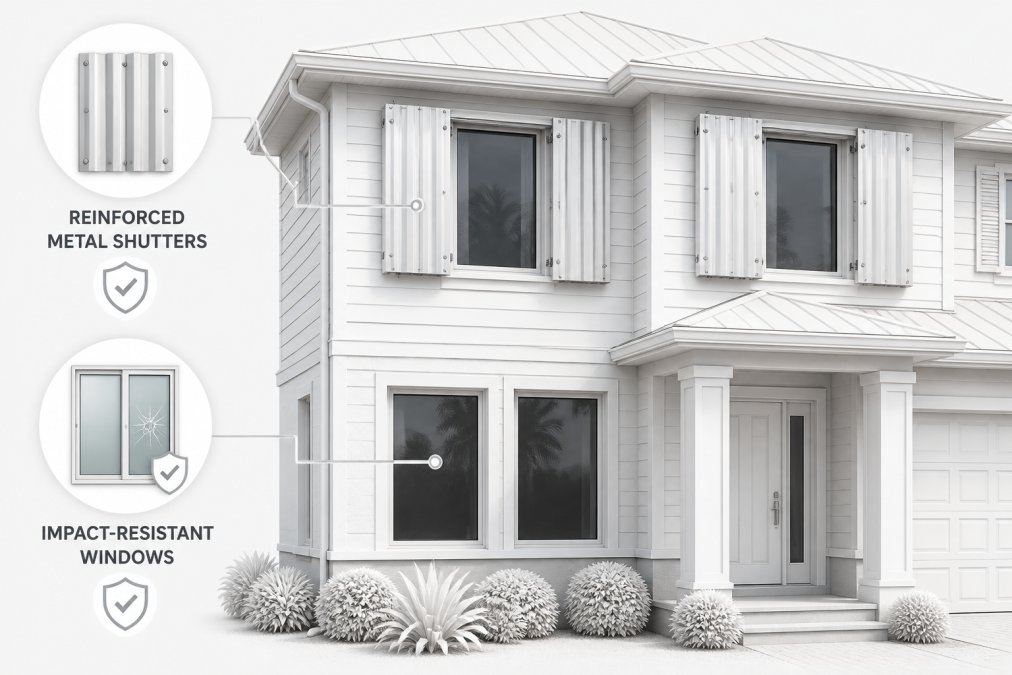
The payback period for mitigation improvements varies based on the specific work and your current premium. A $5,000 roof reinforcement that earns a $50 monthly premium discount pays for itself in about 100 months (roughly 8 years). The real value lies in the protection the improvements provide; reduced damage in an actual hurricane often exceeds the cost of the improvements many times over.
Difference Between Flood and Wind Damage
Understanding the distinction between flood damage and wind damage is essential because your homeowners policy covers wind damage while flood insurance covers water damage from rising water.
Wind damage includes damage from hurricane-force winds: roofs torn off, windows broken, siding torn away, trees snapped. Your homeowners policy's hurricane or named storm deductible applies to wind damage.
Flood damage includes damage from water rising above normal levels, storm surge, heavy rainfall overwhelming drainage systems, rivers overflowing their banks. Flood insurance covers this type of damage. If a hurricane causes a 6-foot storm surge that floods your home's interior, your homeowners policy does not cover the water damage.
The boundary between wind and flood damage can be surprisingly ambiguous in actual claims. Water that enters through a wind-created opening (a broken window or missing roof section) might be classified as wind damage by your carrier. Water that rises through intact walls is flood damage. This distinction affects which deductible applies and whether your homeowners policy or flood insurance pays.
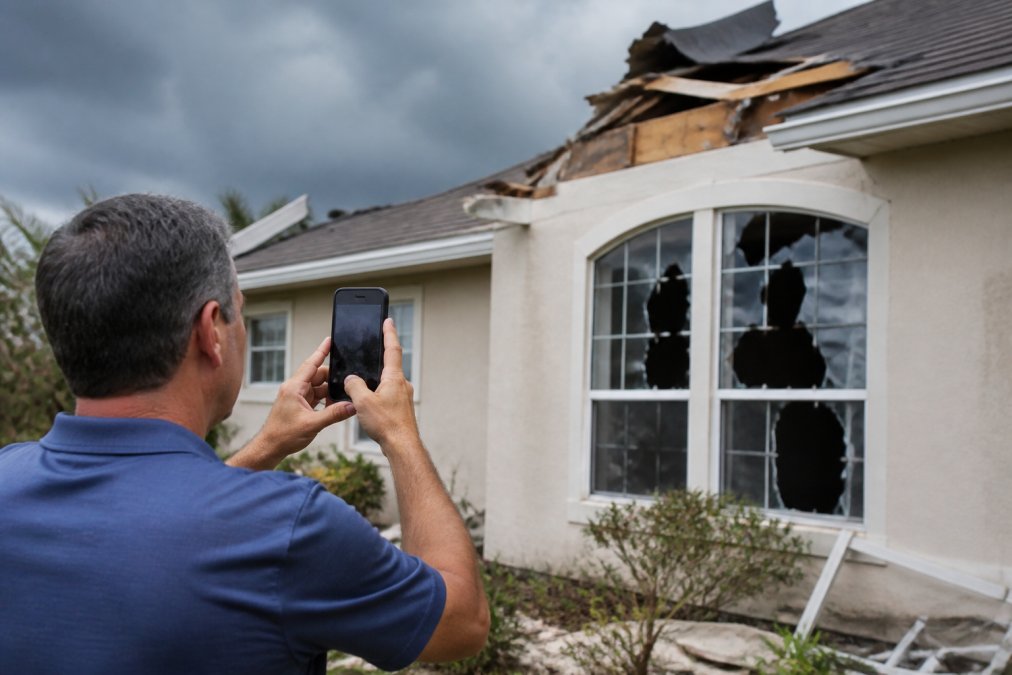
Documentation matters critically. Photographs taken immediately after the hurricane showing the sequence of damage, which windows broke first, where water entered, and what the water level reached help establish the cause of damage.
Call Us and Get a Quote Today! →
How to File a Hurricane Insurance Claim in Florida
Filing a hurricane insurance claim requires organization, documentation, and prompt action. The first 72 hours after a hurricane passes are critical for protecting your property from additional damage and beginning the claims process.
Immediately after the hurricane passes and it's safe to exit your home, document all damage with photographs and video. Capture wide shots showing overall damage to your home's exterior, then close-up shots of specific damaged areas. Contact your insurance carrier within the first few days. Most carriers activate emergency claims lines during hurricane season. Have your policy number, contact information, and a summary of the damage ready.
Do not make permanent repairs to your property until the adjuster has inspected the damage. Temporary repairs to prevent additional damage (tarping a roof, boarding broken windows) are acceptable and often necessary. Keep receipts for these temporary repairs; they're typically covered under your policy as emergency mitigation measures.
Documentation and Timeline Requirements
Your claim documentation should include:
- Original photographs and video of all damage, taken immediately after the hurricane
- Receipts for any emergency repairs or temporary mitigation measures
- Repair estimates from licensed contractors
- Inventory of damaged personal property with descriptions and estimated values
- Proof of ownership for high-value items
- Medical records if anyone was injured
- Documentation of additional living expenses if you're displaced from your home
Most carriers have 30-90 days from claim submission to issue an initial settlement offer. If you disagree with the settlement offer, you have the right to request a detailed explanation of how the carrier calculated the payment.
Policyholder Appeal Process
If you disagree with your insurance company's settlement offer or claim denial, Florida law provides an appeal process. You have the right to request an appraisal, which is a binding process where you and the insurance company each select an appraiser, and those two appraisers select a third neutral appraiser. The three appraisers review the dispute and issue a binding decision.
The appraisal process typically costs $500-$2,000 total, split between you and the insurer. Before pursuing appraisal, obtain repair estimates from at least two independent contractors and compare them to the carrier's valuation. If the gap is substantial (more than 10-15%), appraisal may be justified.
You also have the right to file a complaint with the Florida Department of Financial Services if you believe your carrier has acted in bad faith. Bad faith includes unreasonable delays in claims processing, denying valid claims without proper investigation, or systematically undervaluing claims.
State-Led Property Insurance Reforms and Mortgage Lender Mandates
Florida's property insurance market has experienced significant upheaval over the past five years, with multiple major carriers exiting the market. The 2026 legislative session brought several important changes affecting homeowners. New rules now require insurers to maintain specific reserve levels, which ensures carriers have sufficient funds to pay claims after catastrophic losses.
Mortgage lenders have simultaneously tightened their insurance requirements. Many lenders now require Coverage A limits that exceed FEMA's minimum thresholds and mandate that flood insurance be in place before closing. Some lenders require homeowners to maintain specific deductible levels as a condition of the mortgage. These lender requirements often exceed what Florida law requires, but lenders have the right to set their own standards.
The state has also expanded the Citizens Property Insurance Pool, which is the insurer of last resort for properties that cannot obtain coverage in the private market. However, Citizens policies are typically more expensive than private insurance. Using Citizens as a temporary solution while seeking private coverage makes sense; relying on Citizens long-term exposes you to higher costs and potential assessment surcharges.
Impact of 2026 Legislative Changes on Condo Associations
Condominium associations face unique insurance challenges that differ significantly from single-family homeowners. The 2026 legislative changes created new requirements specifically affecting condo associations, particularly regarding flood insurance for common areas and reserve funding.
Condo associations must now carry flood insurance on all common areas if those areas are in FEMA-designated flood zones. The 2026 changes also tightened reserve funding requirements for associations. Associations must now maintain reserves sufficient to cover deductibles for major claims, which means higher assessments for unit owners.
Individual unit owners within condominiums must also carry coverage for their personal property and any improvements they've made to their units. The association's master policy covers the building structure and common areas, but your personal belongings and unit-specific improvements require your own homeowners policy.
Condo owners should request a copy of their association's master insurance policy and review the coverage limits, deductibles, and exclusions. Many unit owners are surprised to discover their association's deductible is 5-10% of the building value. Your individual policy's deductible and your association's deductible are separate; you may be responsible for both if damage affects both your unit and common areas.
Navigating Florida's hurricane insurance requirements has become increasingly complex as state regulations evolve and carrier availability tightens. The 2026 changes to flood insurance mandates, coverage limits, and deductible structures require homeowners to review their policies carefully and ensure they understand their actual out-of-pocket exposure during a hurricane claim.
Dehlinger Insurance has guided Florida families through these changing requirements for over 38 years. Our team works with multiple top-tier carriers to secure coverage that meets your lender's requirements while protecting your financial security. Whether you need specialized coverage for an older home, flood insurance clarification, or help evaluating your current deductible structure, we provide personalized guidance tailored to your specific situation. Call us and get a quote today to ensure your hurricane insurance coverage is adequate for your home and peace of mind.
Frequently Asked Questions
Does standard homeowners insurance cover hurricane damage in Florida?
Standard homeowners insurance in Florida typically excludes wind and hail damage from named storms. Most insurers require a separate windstorm deductible or endorsement to cover hurricane damage. This is why many Florida homeowners carry dual policies: standard homeowners coverage plus windstorm protection. Your policy documents should clearly state whether hurricane damage is covered under your main policy or requires additional coverage.
What are the new Florida flood insurance requirements for 2026?
As of 2026, Florida has strengthened flood insurance mandates, particularly for properties in high-risk zones and those with mortgages from federally regulated lenders. If your home is in a Special Flood Hazard Area (SFHA) and you have a mortgage, your lender requires you to carry flood insurance through the National Flood Insurance Program (NFIP) or a private carrier. Even in moderate-risk zones, lenders increasingly mandate coverage. Check your flood zone designation and mortgage requirements to ensure compliance.
What is the difference between a hurricane deductible and a standard deductible?
A standard deductible (typically $500-$2,500) applies to most claims like theft or fire. A hurricane deductible is separate and much higher, often 2-10% of your home's insured value, meaning it can reach $5,000-$50,000 or more. This higher deductible reflects the catastrophic nature of hurricanes and helps insurers manage risk. You pay the hurricane deductible only when a named storm causes the loss, not for other types of damage.
How do I know if my property is in a high-risk flood zone?
You can check your flood zone designation using FEMA's Flood Map Service Center or your local county tax assessor's website. Properties in Special Flood Hazard Areas (SFHAs), designated as Zones A or V, are considered high-risk. Your mortgage lender will have already flagged this during closing. If you're unsure, contact your insurance agent or local floodplain management office. Knowing your zone helps you understand your flood insurance obligations and potential premium costs.
Can I reduce my hurricane insurance premiums through mitigation?
Yes. Florida offers windstorm mitigation grants and premium discounts for improvements like impact-resistant windows, reinforced roof attachments, and hurricane shutters. Some insurers offer 5-15% discounts for mitigation work. Additionally, the state's mitigation grant programs can help offset the cost of qualifying upgrades. Contact your insurance agent to learn which improvements your insurer recognizes and what discount rates apply to your policy.
What happens if my insurance claim is denied after a hurricane?
If your claim is denied, you have the right to appeal. Florida law requires insurers to provide a detailed explanation of the denial. You can request a formal review, provide additional documentation, or hire a public adjuster to represent your interests. If you believe the denial is unjust, you can file a complaint with the Florida Department of Financial Services. Document everything: photos, receipts, repair estimates, and all correspondence with your insurer to strengthen your appeal.
Are Citizens Property Insurance policyholders required to carry flood insurance in 2026?
Yes. Citizens Property Insurance, Florida's insurer of last resort, increasingly requires flood insurance for properties in flood-prone areas, especially those with mortgages from federally regulated lenders. If your property is in an SFHA and you hold a Citizens policy, your mortgage lender will mandate flood coverage. Even if your lender doesn't require it, carrying flood insurance is strongly recommended because wind policies do not cover water damage from storm surge or flooding.
This article was written using GrandRanker