 how-to
Insuring Homes Built Before 2026: A How-To Guide
Table of Contents
- Why Insuring Homes Built Before 2026 Requires a Different Approach
- Step 1: Get a Wind Mitigation Inspection to Unlock Savings
- Step 2: Understand Replacement Cost vs Actual Cash Value
- Step 3: Address Structural Vulnerabilities and Roof Age
- Step 4: Tips for Lowering Insurance Premiums on an Older Home
- Navigating Insurance for Homes in Transition or Renovation
- Your Pre-Purchase Insurance Vetting Checklist
- Final Steps to Secure Your Policy
- Frequently Asked Questions
Last Updated: September 5, 2026
Why Insuring Homes Built Before 2026 Requires a Different Approach
Insuring homes built before 2026 is rarely straightforward, particularly in Florida where the insurance market remains volatile. An aging structure does not automatically meet modern underwriting guidelines.
The condition of your roof, electrical system, and ability to withstand wind events will determine your insurability far more than the year it was built. Below, we show you how to navigate the inspection, valuation, and mitigation steps that separate approved applicants from those facing denial.
Step 1: Get a Wind Mitigation Inspection to Unlock Savings
A wind mitigation inspection is the single most effective tool for lowering your premium on an older home. This inspection documents features that reduce wind damage risk, such as roof-to-wall connections, hurricane straps, and impact-resistant glass. When your home demonstrates these features, carriers are required by Florida law to offer premium credits (flsenate.gov).
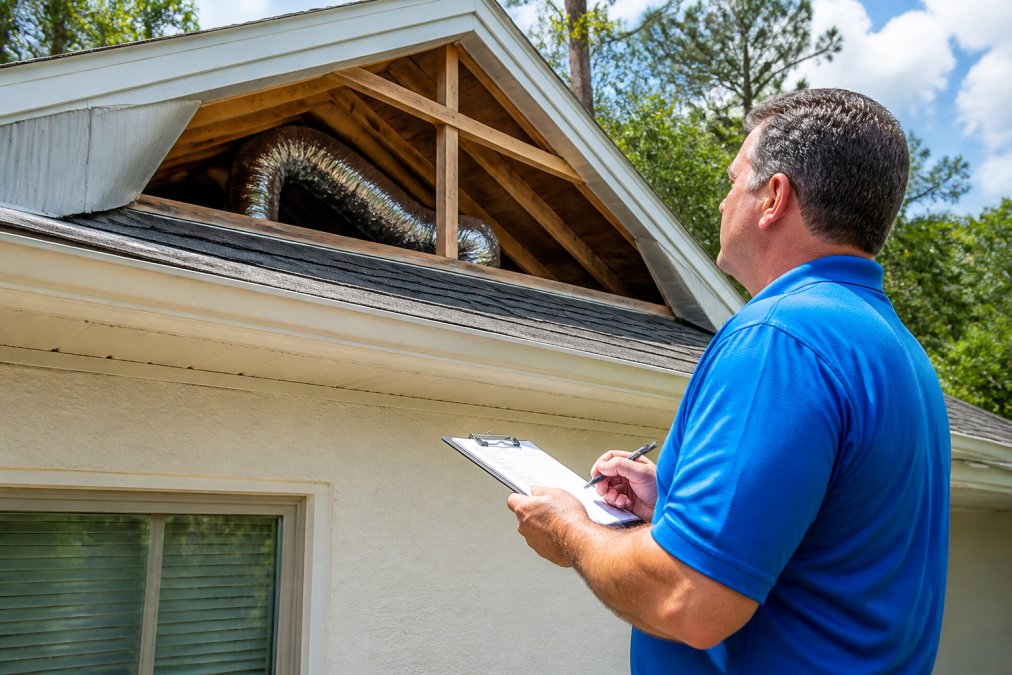
A solid inspection report can shift your home from a "high risk" to a "preferred" category in an underwriter's eyes. A common mistake is skipping this inspection because the owner assumes the structure cannot qualify. In practice, many older homes have been retrofitted over time, and those upgrades are exactly what the inspector will verify.
Step 2: Understand Replacement Cost vs Actual Cash Value
The distinction between replacement cost and actual cash value is the most consequential financial decision you will make. Replacement cost coverage pays to rebuild your home with similar materials at today's prices, without deducting depreciation. Actual cash value subtracts depreciation from the payout, which is particularly punishing for older homes.
For a home built before 2026, choosing actual cash value to save on your premium is often a false economy. If a hurricane destroys a 40-year-old roof, an actual cash value policy might only pay a fraction of replacement cost. Ensure the carrier's estimated rebuild price reflects current construction costs, not the original purchase price.
Step 3: Address Structural Vulnerabilities and Roof Age
Roof age is the primary gatekeeper for coverage eligibility in the current Florida insurance market. Most carriers will refuse to write a new policy on a roof near the end of its expected lifespan, typically 15 to 20 years for asphalt shingles (asphaltroofing.org). If your roof is older than that, you will likely face a stark choice: replace it before seeking coverage, or face a policy that only offers actual cash value.
Structural vulnerabilities in aging properties often hide in plumbing and electrical systems. Older homes may have outdated electrical panels, galvanized pipes, or a lack of flood-resistant elevation. A pre-purchase inspection that identifies these problems gives you leverage to negotiate the price and a roadmap for securing a policy.
Step 4: Tips for Lowering Insurance Premiums on an Older Home
The most effective tips for lowering insurance premiums on an older home center on home hardening, retrofitting your property to better withstand hurricanes and severe storms. Installing hurricane shutters, reinforcing your garage door, and upgrading your roof to meet current Florida building codes are all proven strategies that often pay for themselves within a few years through mitigation discounts.
Most guides tell you to harden your home but never show you the math. Below is a practical framework for comparing the out-of-pocket cost of each upgrade against the expected annual premium reduction, based on typical Florida wind mitigation credit schedules and contractor pricing patterns.
The DIY vs. Professional Retrofitting ROI Framework
Roof-to-wall connections (hurricane straps or clips). This is the highest-leverage retrofit for an older home. A licensed contractor will charge roughly $1,500 to $3,000 to install metal straps or clips in the attic. The wind mitigation credit typically ranges from 10% to 20% of your windstorm premium. On a home with a $4,000 annual wind premium, that is $400 to $800 in savings every year, meaning the retrofit pays for itself in roughly three to five years. A DIY homeowner can buy the straps for about $200 to $400 and install them over a weekend, but the inspection report must show proper nailing patterns and spacing.
Hurricane shutters or impact-resistant windows. This is the most expensive line item, and the ROI depends heavily on your home's exposure. Professional installation of accordion shutters on a typical 1,800-square-foot home runs $5,000 to $12,000; impact-resistant windows often run $15,000 to $30,000 for a full replacement. The credit for opening protection is substantial, often 15% to 30% of the wind premium, but the payback period stretches to 10 years or more. The smarter move is to install shutters only on the largest openings, such as sliding glass doors and large picture windows. A partial installation might cost $2,500 and still qualify for a meaningful credit.
Garage door bracing. This is the most cost-effective DIY retrofit on the list. A garage door that fails under wind pressure can allow hurricane-force winds to enter the home and lift the roof off. Professional bracing kits cost $300 to $600, and a homeowner can install them in an afternoon with basic tools. The credit is typically 5% to 10% of the wind premium, but the real value is in the eligibility it unlocks, some carriers will decline a policy entirely if the garage door is not wind-rated.
Roof replacement with wind-rated shingles. This is the single largest expense, often $10,000 to $20,000 for a typical asphalt shingle roof. A new roof with proper underlayment and fastening can reduce your wind premium by 20% to 40% compared to a roof with 10 years of wear. More importantly, it moves your home from the "actual cash value" bucket into the "replacement cost" bucket, protecting you from a devastating payout shortfall after a total loss. The payback period is long, but the alternative is often no coverage at all.
How to Prioritize When You Cannot Do Everything
Many homeowners assume a full roof replacement is the only path to savings, but that is rarely true. Many carriers will approve a policy on a home with a 15-year-old roof if the wind mitigation report shows strong roof-to-wall connections and proper roof deck attachment. By spending $2,000 on straps and bracing, you can often defer a $15,000 roof replacement. insurance discount requirements.
The Hidden Cost of Skipping the Math
The real risk of generic advice is over-improving your home beyond what the insurance market rewards. A homeowner who installs $20,000 worth of impact windows on a home with a strong wind mitigation report may only see a marginal premium reduction, because the carrier already capped available credits. Before spending on any retrofit, ask your agent to run a hypothetical wind mitigation credit calculation, a free "pre-retrofit underwriting review" that takes about 15 minutes.
| Upgrade | Typical Cost Range | Expected Annual Premium Impact | Payback Period | DIY Feasible? |
|---|---|---|---|---|
| Roof-to-wall connections (straps/clips) | $1,500 - $3,000 (pro) / $200 - $400 (DIY) | 10% - 20% of wind premium | 3 - 5 years | Yes, with inspection |
| Hurricane shutters (partial) | $2,500 - $5,000 | 10% - 15% of wind premium | 5 - 8 years | No, professional recommended |
| Garage door bracing | $300 - $600 | 5% - 10% of wind premium | 1 - 3 years | Yes |
| Full roof replacement | $10,000 - $20,000 | 20% - 40% of wind premium + eligibility | 7 - 10 years | No |
These figures are illustrative ranges based on typical Florida market conditions, not guarantees. Your actual costs and credits will vary based on your home's size, location, and the carrier's underwriting guidelines.
Navigating Insurance for Homes in Transition or Renovation
Insuring homes built before 2026 that are under renovation presents a unique challenge. Open walls, exposed wiring, and missing roof sheathing all increase the risk of loss, and many carriers will refuse to write a standard policy on a home in this state.
If you are buying a home that needs significant work, you have two primary paths: a renovation or construction policy, or delaying closing until critical systems like the roof and electrical are brought up to code. Failing to disclose a renovation can void your policy if a loss occurs.
Call Us and Get a Quote Today! →
Here is the practical playbook for maintaining continuous coverage through a renovation, whether you are a homeowner or a buyer.
The Policy Gap You Did Not Know You Had
A standard homeowners policy (HO-3) contains a vacancy clause (iii.org). Most carriers will not pay a claim if the home has been vacant for more than 30 to 60 consecutive days, and a home under active renovation is often effectively vacant.
A standard policy also excludes damage caused by "faulty, inadequate, or defective" construction methods. If a contractor's error leads to water damage or structural failure, your homeowners policy will not cover it; the contractor's liability insurance should, but if they are uninsured, you have no recourse.
The Two Policy Types That Fill the Gap
Builder's risk insurance (also called course of construction coverage). This policy covers the dwelling during active renovation, protecting against fire, theft, vandalism, and certain weather events. Policies are typically written for 6 to 12 months, with premiums based on the total project value, roughly 1% to 4% of the project value; a $100,000 renovation might carry a premium of $1,000 to $4,000 for the year.
Renovation or dwelling-under-construction endorsement. Some carriers offer an endorsement to your existing policy that extends coverage during a renovation. It is often less expensive than a standalone builder's risk policy but comes with strict conditions, including a detailed scope of work, timeline, and proof of a licensed contractor. The endorsement typically expires after 6 to 12 months.
The Disclosure Trap
When you notify your carrier, be specific about the scope of work. The carrier needs to know whether the home will be occupied, whether you are using licensed contractors, and whether any work involves the roof, electrical, or plumbing systems.
The Buyer's Angle: Renovation Loans and Insurance Timing
If you are buying a home built before 2026 with the intention of renovating, insurance timing is critical. Most mortgage lenders require proof of homeowners insurance before closing, but they will not accept a builder's risk policy as a substitute. You need a standard policy to close the loan, even if the home is uninhabitable.
The workaround is to secure a standard policy for closing, then immediately notify the carrier of your renovation plans. Some carriers allow a renovation endorsement after closing; others require switching to a builder's risk policy during renovation and back once complete.
A Practical Timeline for Renovation Coverage
- Before you make an offer: Ask your insurance agent whether the carrier you plan to use will write a policy on a home that needs significant renovation. Some carriers will decline outright, which means you need to factor a policy switch into your budget.
- At closing: Secure a standard homeowners policy to satisfy the lender. Disclose the renovation plans to the carrier in writing within 7 days of closing.
- During the renovation: If the carrier approves a renovation endorsement, keep it active. If not, purchase a standalone builder's risk policy. Do not let the home sit uninsured for even one day during the transition.
- Before the renovation is complete: Schedule a final inspection with your carrier to verify that the home meets current building codes. This inspection is often required to transition from the builder's risk policy back to a standard homeowners policy.
- After the renovation: Update your coverage limits to reflect the increased replacement cost of the home. A $50,000 kitchen remodel and a new roof can add $80,000 or more to your home's rebuild value. If you do not increase your coverage limit, you will be underinsured in the event of a total loss.
The Cost of Getting This Wrong
A homeowner who skips the renovation disclosure and suffers a fire during construction faces a worst-case scenario: the carrier denies the claim, the lender demands immediate repayment, and the homeowner has no financial recourse. Adjusters routinely look for signs of renovation work, including permits, contractor invoices, and building materials on the property.
Paying for a builder's risk policy or renovation endorsement adds a few thousand dollars to your project budget, a small price for protecting a six-figure renovation investment.
Your Pre-Purchase Insurance Vetting Checklist
Before you finalize a purchase agreement on an older home, you should complete a specific vetting process to ensure you can actually insure the property. This checklist is designed to prevent the stressful scenario of securing a mortgage, only to discover the home is uninsurable through standard carriers.
- Obtain a wind mitigation inspection report and review it for missing credits.
- Verify the roof age and material with the seller or county records.
- Request a four-point inspection covering HVAC, electrical, plumbing, and roofing.
- Check the property's flood zone designation and confirm if flood insurance is required.
- Ask your insurance agent for a preliminary underwriting review before closing.
- Confirm the home is not in a designated high-risk area for sinkholes or wildfire.
This proactive approach shifts the power back to you. Instead of discovering a coverage problem after you own the home, you can negotiate with the seller to fix issues or lower the price. A home that fails this checklist is not necessarily a bad purchase, but it requires a budget for hardening and retrofitting before you can secure a policy.
Final Steps to Secure Your Policy
Securing coverage for an older home comes down to preparation and working with an agency that understands the Florida insurance market. After completing your inspections and addressing structural vulnerabilities, submit a complete application with all supporting documentation, including your wind mitigation report, roof certification, and proof of upgrades.
Insuring homes built before 2026 does not have to be a losing battle. The key is to present your home in the best possible light by documenting every mitigation feature and upgrade. At Dehlinger Insurance, our team uses relationships with multiple top carriers to find the right fit for your property.
Finding affordable coverage for an older home requires navigating inspections, valuation methods, and carrier-specific underwriting guidelines. The Dehlinger Insurance team has the experience to guide you through every step, from interpreting your inspection report to securing a policy that protects your financial well-being. Call us today for a quote and let us put our 38 years of Florida expertise to work for you.
Frequently Asked Questions
Can a house be too old to insure?
Most insurers won't outright refuse coverage based on age alone, but homes built before 2026 often face stricter underwriting guidelines. The real issues are the condition of the roof, the age of the electrical and plumbing systems, and whether the home meets current building codes. An insurance carrier may deny a policy if the roof is near the end of its life or if there are unresolved structural vulnerabilities. An independent agent can help match you with a carrier that specializes in older properties.
How do insurance companies view homes built before 2026?
Carriers see older homes as a higher risk for claims, especially from wind damage and water intrusion. Their risk assessment focuses on structural integrity, the roof covering's remaining life, and the type of electrical panel installed. This perspective directly impacts your annual premium and coverage eligibility. Homes that lack modern hurricane strapping or impact-resistant windows may face higher rates or even nonrenewal. A wind mitigation inspection report can offer proof of upgrades that reduce that perceived risk.
What is the difference between replacement cost and actual cash value?
Replacement cost coverage pays to rebuild or repair your home with materials of similar kind and quality, without deducting for depreciation. Actual cash value pays the replacement cost minus depreciation based on the home's age, which leaves you with far less money after a total loss. For an older home, choosing replacement cost is critical because construction costs today are often higher than the original purchase price. While replacement cost raises your premium slightly, it protects your financial well-being when you need to rebuild.
This article was written using GrandRanker