 comparison
Is Personal Injury Protection Worth It in Florida 2026?
Table of Contents
- Personal Injury Protection in Florida: The 2026 Reality Check
- How Florida No-Fault Insurance Works and What PIP Covers
- PIP vs Bodily Injury Liability: What Each Policy Pays For
- Does Health Insurance Cover Car Accidents Instead of PIP?
- How to File a PIP Claim Without Getting Denied
- Who Benefits Most From Keeping PIP Coverage?
- Conclusion: Making the PIP Decision for 2026
- Frequently Asked Questions
Last Updated: September 9, 2026
Personal injury protection (PIP) is a mandatory part of auto insurance in Florida, but many drivers question whether it is worth the cost. The answer depends on your health coverage, your driving habits, and how the 2026 legislative changes affect your policy. This guide from Dehlinger Insurance breaks down what PIP actually pays for, where it falls short, and how to decide if keeping it makes financial sense for your household.
The core tension is simple: Florida law requires PIP, yet the coverage is often the first place adjusters look to deny or limit claims. Understanding the 14-day rule, the reimbursement rate, and how PIP interacts with private health insurance determines whether you ever see a benefit from the premiums you pay.
Personal Injury Protection in Florida: The 2026 Reality Check
Personal injury protection is a form of no-fault insurance that pays for medical expenses and lost wages after a car accident, regardless of who caused the crash. Florida drivers must carry at least $10,000 in PIP coverage to register a vehicle legally, but the benefits are capped and subject to strict verification rules (flsenate.gov).
PIP remains mandatory in 2026, despite ongoing confusion about a possible repeal. Legislative sessions have debated replacing the no-fault system with a bodily injury liability model, but no signed law has removed the requirement.
PIP is not designed to make you whole; it is a minimum-safety net that covers a fraction of accident costs. Whether personal injury protection is worth it in Florida 2026 comes down to your health insurance situation and accident risk.
How Florida No-Fault Insurance Works and What PIP Covers
Florida's no-fault system requires each driver's own policy to pay their medical bills after an accident, up to coverage limits. PIP covers medical expenses at 80% of necessary treatment and lost wages at 60% of income up to the policy maximum.
The coverage excludes certain costs entirely. Policy exclusions often include acupuncture, massage therapy, and chiropractic care beyond specific limits. If you have private health insurance, it may serve as secondary coverage after PIP benefits are exhausted, but coordination rules vary by policy and provider.
The 14-Day Rule and Medical Treatment Requirements
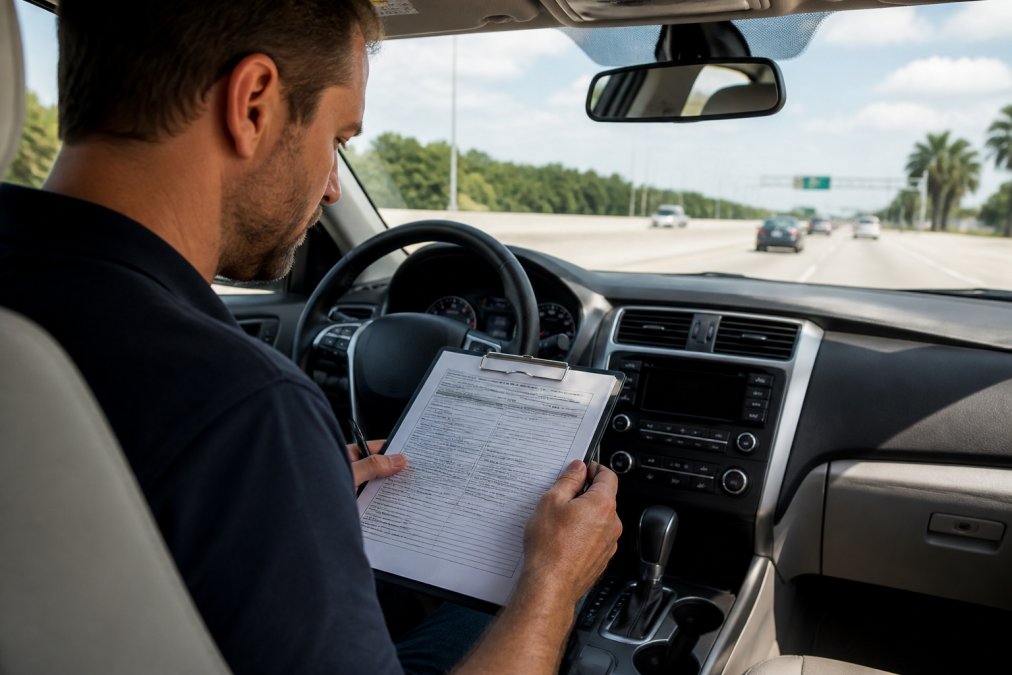
Florida law imposes a strict 14-day rule: you must seek medical treatment within 14 days of an accident to qualify for PIP benefits (flsenate.gov). Failing to do so means your claim can be denied entirely, even if symptoms develop later, a common gap for drivers who feel fine after a minor collision.
Emergency conditions receive full PIP benefits, but non-emergency treatment is capped at a lower rate. Document every accident and seek evaluation promptly, even if injuries seem minor.
PIP vs Bodily Injury Liability: What Each Policy Pays For
PIP and bodily injury liability serve opposite purposes: PIP covers your own medical expenses and lost wages, while bodily injury liability pays for injuries you cause to others. Florida requires PIP but does not mandate bodily injury liability for private passenger vehicles, though it is strongly recommended.
If you cause an accident, PIP pays your bills, but the other driver's medical costs fall to your bodily injury liability. Without that coverage, you face personal liability for their expenses. The table below summarizes the key differences:
| Coverage Type | Who It Pays | Required in Florida | Typical Benefit |
|---|---|---|---|
| Personal Injury Protection | Your medical bills and lost wages | Yes | $10,000 limit |
| Bodily Injury Liability | Other party's injuries when you are at fault | No (for private autos) | Varies by policy |
The decision to add bodily injury liability hinges on your assets and risk tolerance. Drivers with significant savings or property should carry higher limits to shield against lawsuits following a serious accident.
Does Health Insurance Cover Car Accidents Instead of PIP?
Yes, your private health insurance will cover medical treatment after a car accident, but it will almost never be the first payer. Florida’s no-fault law makes PIP primary, and your health insurer will require you to exhaust your PIP benefits before it pays. This coordination is governed by ERISA for employer-sponsored plans and by state law for individual market plans.
The Coordination of Benefits Mechanism
Your medical providers will bill your PIP coverage first. Once PIP benefits are exhausted, by hitting the $10,000 limit or the 80% reimbursement cap, providers submit the remaining balance to your private health insurer. This is called coordination of benefits.
The critical catch: Your health insurer will apply your normal deductible, copays, and coinsurance to the remaining balance. If you have a $6,000 deductible, and your PIP covers $8,000 of a $14,000 medical bill, you are now responsible for the remaining $6,000, which counts against your health deductible. This is where the 'worth it' analysis gets personal.
The HMO vs. PPO Provider Network Problem
PIP and health insurance have different provider networks. PIP generally allows treatment with any licensed provider, but your HMO requires in-network care. If treated by an out-of-network physician after an accident, your HMO may deny the claim, leaving you responsible for the balance after PIP is exhausted.
The practical workaround: If you have an HMO, your first visit after an accident should be to an in-network ER or urgent care center. If transported by ambulance, transfer follow-up care to an in-network provider as soon as medically feasible.
Subrogation: When Your Health Insurer Comes After Your PIP Settlement
A second complication is subrogation. If your health insurer pays for accident-related care after your PIP is exhausted, it has the legal right to seek reimbursement from any settlement you receive from the at-fault driver’s bodily injury liability policy. Health insurers routinely file subrogation liens to recover costs. hiring an injury attorney.
The strategy: When negotiating a settlement, your attorney will typically negotiate your health insurer’s subrogation lien down. Without an attorney, you may lose a significant portion of your settlement, a hidden cost of relying on health insurance as a backup to PIP.
The ERISA Preemption Issue
If your health insurance is through a self-funded employer plan (governed by ERISA), coordination rules can be more restrictive. ERISA plans often contain language giving them the right to be primary payer, or to demand reimbursement even if PIP has not been exhausted. In practice, most defer to PIP, but check your Summary Plan Description to confirm whether your plan is self-funded.
What This Means for Your 2026 Decision
The interaction between PIP and private health insurance is layered: PIP is the first layer, your health insurance the second, and your out-of-pocket exposure the final layer. PIP is most valuable when your health insurance has a high deductible, restrictive network, or aggressive subrogation; least valuable with a low-deductible PPO with a broad network. Call your health insurer and ask: (1) Do you coordinate benefits with auto PIP? (2) Do you have a subrogation right on auto claims? (3) What is my out-of-network coverage after an emergency?
How to File a PIP Claim Without Getting Denied
Filing a PIP claim requires precise documentation and timing. Report the accident to your carrier promptly, obtain an accident report if law enforcement responded, and seek medical treatment within the 14-day window with injuries documented as accident-related.
Claim denials often stem from missing documentation or missed deadlines. Common denial reasons include:
- Treatment sought after the 14-day rule deadline
- Lack of wage loss verification from an employer
- Medical necessity documentation deemed insufficient by the insurance adjuster
- Treatment received from a provider outside the approved network
To protect your claim, keep copies of every medical record, bill, and correspondence with your insurer. The Florida Department of Financial Services claims guide emphasizes that policyholders have the right to challenge denials through an appeals process. Persistence and organized records are the strongest tools you have against a denied claim.
Who Benefits Most From Keeping PIP Coverage?
The value of your $10,000 in mandatory PIP coverage isn’t fixed, it changes based on your health insurance plan, income, and accident risk. Here’s how to run the numbers for yourself.
Scenario 1: You Have a High-Deductible Health Plan (HDHP)
If you have an HDHP with a $5,000 deductible, PIP is arguably your most valuable auto coverage. PIP is the primary payer, covering 80% of necessary medical bills up to your $10,000 limit before your health insurance sees a claim, absorbing costs that would otherwise count against your HDHP deductible.
The math: An ER visit for a minor injury can cost $2,500; an MRI adds $1,500. Without PIP, you’d pay that $4,000 toward your HDHP deductible. With PIP, it’s covered by your auto insurer (minus your PIP deductible).
Scenario 2: You Have an HMO or Low-Copay PPO
If you have an HMO with a $500 deductible and $30 copays, the calculus shifts. Your health insurance still requires you to exhaust PIP first, but the gap PIP fills is smaller. The 80% reimbursement rate means you’ll face 20% coinsurance, and your health plan’s negotiated rates are often lower than PIP reimburses. Here, PIP is more about satisfying a legal requirement than financial protection.
The trade-off: You are paying a PIP premium for coverage that largely duplicates your low-deductible health plan. The smarter move is to raise your PIP deductible to the statutory maximum to lower your premium and rely on health insurance for the bulk of your care.
Scenario 3: You Have No Private Health Insurance
If you are uninsured or on a catastrophic-only plan, PIP is your only lifeline for accident-related care. The $10,000 limit is insufficient for a major injury, but it covers the initial ER visit, imaging, and follow-up care that would otherwise be unpayable. Keep your PIP deductible as low as possible and treat this as your primary health safety net.
The Commuter Factor
Your annual mileage and driving environment also matter. A driver commuting 30 miles each way on I-4 through Orlando faces a higher probability of a crash than someone driving two miles locally. The Florida Department of Highway Safety and Motor Vehicles reports the state consistently ranks among the top for total crashes and fatal accidents. More time on the road means a higher likelihood of triggering the 14-day rule and needing PIP benefits.
The Bottom Line on 'Worth It'
For 2026, the question isn't whether to carry PIP, it's how to structure it. If you have an HDHP or no health insurance, keep your PIP deductible low. If you have a low-deductible HMO/PPO and drive infrequently, raise your PIP deductible to the maximum to reduce your premium. Compare your PIP deductible against your health insurance deductible and choose the structure that minimizes your total out-of-pocket exposure in a crash.
Conclusion: Making the PIP Decision for 2026
PIP remains mandatory in Florida for 2026, so the question is how to structure it intelligently. Drivers with strong private health insurance may choose a higher deductible to lower premiums, while those relying on PIP as primary coverage should keep deductibles low. The 14-day rule and documentation requirements demand attention regardless of your choices.
At Dehlinger Insurance, we have spent over 38 years helping Florida residents navigate these decisions. Our team works with multiple top insurance carriers to tailor policies that fit your financial requirements, whether you need specialized coverage for an older home or affordable payment plans for auto insurance premiums.
Frequently Asked Questions
Is personal injury protection mandatory for drivers in Florida in 2026?
Yes, personal injury protection remains mandatory for Florida drivers in 2026. You must carry at least $10,000 in PIP coverage to register your vehicle legally. This no-fault coverage pays for your medical expenses and lost wages after an accident, regardless of who caused the crash. While lawmakers debate future changes, the current statutory requirements still mandate PIP, so dropping it is not an option if you want to stay legal on the road.
How much does PIP pay in Florida for medical bills and lost wages?
Florida PIP provides up to $10,000 in coverage per accident. Of that amount, $2,500 is reserved for emergency medical conditions if you seek treatment within 14 days. PIP typically covers 80% of necessary medical expenses and 60% of lost wages, up to your policy limits. You must see a doctor within 14 days of the accident to qualify for full benefits, otherwise your coverage may be limited to $2,500.
Does health insurance cover car accidents in Florida instead of PIP?
Your health insurance can cover car accident injuries, but it does not replace PIP. Florida law requires PIP as primary coverage for medical bills up to $10,000. Once PIP benefits are exhausted, your health insurance may cover remaining medical expenses, depending on your policy terms. However, health insurance does not cover lost wages or the $1,000 death benefit that PIP provides. Keeping both policies creates a financial protection safety net.
What is the difference between PIP and bodily injury liability coverage?
PIP is no-fault coverage that pays your own medical bills and lost wages after an accident, regardless of who caused it. Bodily injury liability covers injuries you cause to other people in an at-fault accident. Florida requires $10,000 in PIP but does not mandate bodily injury liability for private passenger vehicles, though it is strongly recommended. A serious at-fault accident without bodily injury liability can expose you to significant out-of-pocket costs.
Ready to review your auto policy before the next renewal? Call Dehlinger Insurance and get a quote today. We will help you compare PIP deductibles, evaluate optional coverages, and build a policy that protects your financial well-being without unnecessary overlap.