 how-to
Tips for Insuring Mobile Homes: A Step-by-Step Guide
Table of Contents
- Understanding Mobile Home Insurance Basics
- Mobile Home Insurance Cost Factors That Impact Your Premium
- Actual Cash Value vs. Replacement Cost for Mobile Homes
- How to Lower Mobile Home Insurance Premiums
- Gathering Documentation and Getting a Quote
- Special Considerations for Older Mobile Homes
- Understanding Park Requirements and Policy Exclusions
- Conclusion
Last Updated: August 20, 2026
Understanding Mobile Home Insurance Basics
Mobile home insurance protects your manufactured dwelling and personal belongings from damage, theft, and liability claims. Unlike standard homeowners policies, mobile home insurance accounts for unique characteristics including foundation type, anchoring systems, and mobility risks.
Dehlinger Insurance has spent over 38 years helping Florida residents navigate coverage options for mobile homes. A mobile home's construction, age, and anchoring all influence premiums and available coverage limits. Most policies bundle dwelling coverage, personal property protection, liability coverage, and medical payments into a single package.
What Mobile Home Insurance Covers
Mobile home insurance typically covers physical damage to the structure, personal belongings, and liability if someone is injured on your property. Dwelling coverage protects the manufactured home's walls, roof, and permanent fixtures. Personal property coverage reimburses you for damaged or stolen items, typically at actual cash value, though replacement cost options are available. Personal liability protection covers legal expenses and medical bills if you're found responsible for injuring someone or damaging their property. Loss of use coverage reimburses temporary housing costs if your home becomes uninhabitable after a covered loss.
Key Coverage Types Explained
Dwelling coverage reimburses repair or replacement costs for structural damage from covered perils like fire, wind, theft, vandalism, and weather events. The coverage limit should reflect your home's replacement cost, not its market value.
Personal liability protects your finances if you're sued after someone is injured at your property. Coverage limits usually range from $100,000 to $300,000, with most agents recommending at least $100,000 for basic protection.
Actual cash value versus replacement cost is a critical distinction. Actual cash value pays the replacement cost minus depreciation based on the item's age. Replacement cost coverage pays the full amount to replace an item new, with no depreciation deduction. Replacement cost costs more but leaves you whole after a loss.
Endorsements and exclusions modify your base policy. Common endorsements add coverage for jewelry, electronics, or business property. Standard exclusions typically include flood damage, earthquake damage, and wear-and-tear.
National Association of Insurance Commissioners guidance on manufactured home coverage
Mobile Home Insurance Cost Factors That Impact Your Premium
Your premium reflects the risk an insurer believes you represent. Age is one of the most significant factors, older manufactured homes often carry higher premiums because structural integrity becomes harder to assess and repair costs may be unpredictable.
The home's physical condition matters enormously. Insurers inspect roof condition, foundation type, anchoring system quality, and overall maintenance. A well-maintained home with a newer roof and secure anchoring typically qualifies for better rates.
Location affects premiums substantially. Homes in areas prone to hurricanes, flooding, or hail face higher premiums. Your claims history directly impacts pricing, a clean record keeps premiums lower, while each claim increases your risk profile for years.
The type of perils covered influences cost. A basic policy covering only named perils costs less than comprehensive coverage. Choosing a higher deductible reduces your premium but increases out-of-pocket costs when you file a claim. Your credit score can also affect pricing, as insurers use credit-based insurance scores to predict claim likelihood.
Actual Cash Value vs. Replacement Cost for Mobile Homes
Understanding the difference between actual cash value and replacement cost is essential when insuring mobile homes.
Actual cash value calculates what an item is worth today, accounting for depreciation. If your five-year-old refrigerator is destroyed, the insurer determines its current market value and pays that amount. This approach keeps premiums lower because insurers pay less per claim.
Replacement cost pays the full price to buy a new item of similar quality, with no depreciation deduction. You're made whole financially, but premiums are higher because insurers expect larger payouts.
For mobile home personal property coverage, replacement cost is often worth the extra expense. When your air conditioning unit fails after a covered event, replacement cost ensures you can install a new unit without absorbing the difference yourself.
For older mobile homes, actual cash value sometimes becomes the only option available. As homes age past 20-30 years, some carriers stop offering replacement cost coverage. Dehlinger Insurance helps clients evaluate this trade-off based on their home's age, contents value, and financial situation.
How to Lower Mobile Home Insurance Premiums
Reducing your premium requires a multi-pronged approach. Raising your deductible from $500 to $1,000 or $1,500 typically cuts premiums by 15-25%. Bundle your home and auto insurance with the same carrier for 10-25% discounts.
Improve your home's physical condition. Install a new roof, secure your anchoring system, and address maintenance issues. Many insurers offer discounts for upgraded roofs, storm-resistant features, or security systems.
Ask about loyalty discounts for staying with the same insurer for multiple years. Maintain a clean claims history by avoiding small claims you could cover yourself, each claim increases premiums for three to five years.
Shop your policy annually. Rates change, new carriers enter markets, and your circumstances shift. Comparing quotes from multiple carriers ensures you're not overpaying. Dehlinger Insurance works with multiple top-tier carriers to find competitive rates matching your specific situation.
Call Us and Get a Quote Today! →
Insurance Information Institute guide to lowering homeowners insurance costs
Gathering Documentation and Getting a Quote
Requesting a quote for insuring mobile homes requires specific information about your property. Preparing this documentation upfront speeds up the quoting process and ensures accurate rate estimates.

What Information You'll Need
Gather details about your manufactured home: year of manufacture, make and model, square footage, bedrooms, bathrooms, and HUD code information. Document the roof type and age, foundation type, and anchoring system. Collect information about your location, mobile home park name, and proximity to flood zones.
Prepare your personal information: name, date of birth, driver's license number, and current insurance information. Document your claims history and create a rough inventory of major items with estimated values to determine appropriate personal property coverage limits.
Steps to Request and Compare Quotes
Contact multiple carriers or work with an independent agent like Dehlinger Insurance who represents several insurers. Provide the same information to each carrier to ensure quotes are comparable.
Request quotes for identical coverage limits and deductibles. Ask each carrier about available discounts for bundling, safety features, claims-free history, or loyalty. Review quote details carefully and request explanations for significant premium differences.
| Factor | Impact on Quote | How to Optimize |
|---|---|---|
| Home age | Higher for older homes | Improve maintenance documentation |
| Roof condition | Significant impact | Replace old roofs before quoting |
| Anchoring system | Moderate impact | Ensure secure, documented anchoring |
| Claims history | Major impact | Avoid small claims |
| Deductible choice | Direct reduction | Raise deductible if you have savings |
| Bundle discount | 10-25% savings | Consolidate policies with one carrier |
Special Considerations for Older Mobile Homes
Insuring older mobile homes presents unique challenges. Carriers become increasingly cautious about homes built before 1990 because structural integrity becomes harder to verify and repair costs become unpredictable.
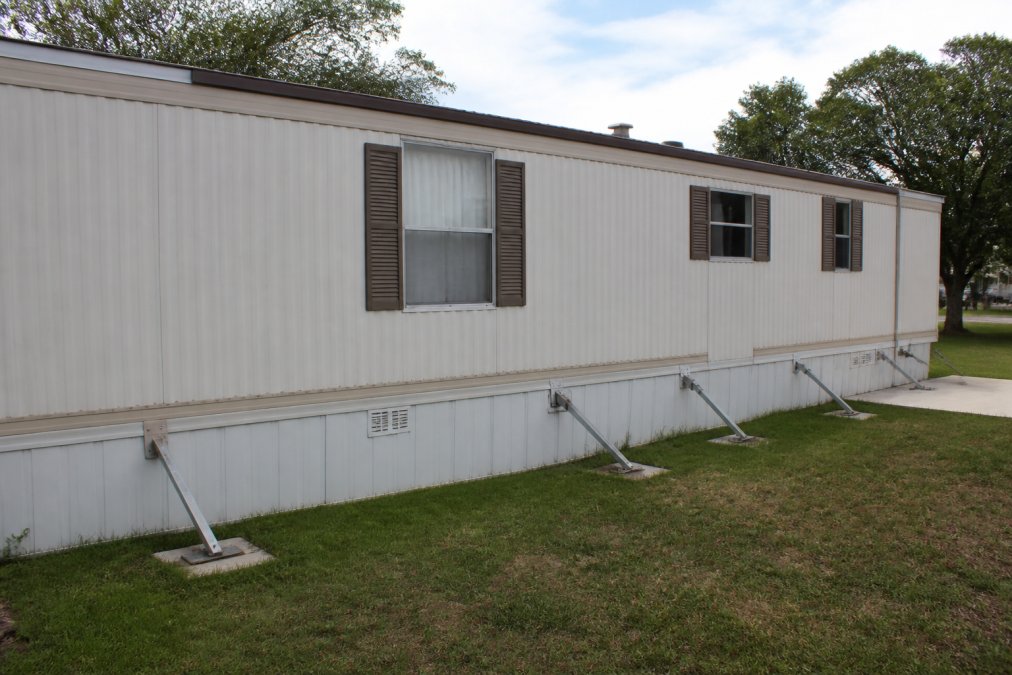
Older homes often have outdated electrical and plumbing systems that increase fire and water damage risk. Many insurers either decline coverage or charge substantially higher premiums for homes beyond a certain age threshold. Finding coverage for vintage mobile homes requires working with agents who specialize in this market. Dehlinger Insurance has relationships with multiple carriers experienced in covering older manufactured homes that larger, national insurers decline.
Documentation becomes critical for older homes. Carriers want proof of recent roof replacement, electrical system updates, plumbing repairs, and general maintenance. Collecting receipts and photos of improvements strengthens your application and may lower premiums.
Actual cash value coverage often becomes the only option for homes beyond 30-40 years old. Understanding this limitation helps you plan for potential losses and adjust your emergency savings accordingly.
Understanding Park Requirements and Policy Exclusions
Mobile home parks often impose insurance requirements that go beyond standard coverage. Your lease or park rules may mandate minimum liability limits, specific coverage types, or endorsements. Violating these requirements can result in eviction.
Many parks require liability coverage of at least $100,000 or $300,000. Review your lease carefully and discuss requirements with your insurance agent before purchasing a policy.
Standard policy exclusions typically include flood damage, earthquake damage, and wear-and-tear. Flood damage requires separate flood insurance purchased through the National Flood Insurance Program or private carriers. Windstorm damage is sometimes excluded or limited in high-risk coastal areas. Maintenance-related damage isn't covered, insurance covers sudden, unexpected damage, not gradual deterioration from neglect.
Florida Department of Financial Services information on manufactured home insurance requirements
Insuring mobile homes requires understanding your home's specific characteristics and matching them to appropriate coverage. The process starts with gathering accurate information about your property, comparing quotes from carriers experienced with manufactured housing, and selecting coverage limits that reflect your actual replacement costs and liability exposure.
Dehlinger Insurance brings 38 years of experience helping Florida residents navigate mobile home insurance. With relationships across multiple top-tier carriers, the team identifies coverage options for homes, including older manufactured homes, that national insurers decline. They work with you to balance comprehensive protection with affordable premiums, ensuring your mobile home and personal property stay protected without overpaying.
Call Dehlinger Insurance today and get a quote that reflects your home's actual value and risk profile. Their team speaks your language, understands Florida's unique insurance landscape, and delivers personalized service.
Frequently Asked Questions
What factors influence the cost of mobile home insurance?
Mobile home insurance premiums depend on several factors: the age and condition of your unit, foundation type and anchoring system, location and exposure to perils like wind or flooding, coverage limits you select, deductible amount, claims history, and whether the home is in a mobile home park. Underwriting also considers the structural integrity of your manufactured home and whether it meets current HUD-code standards. Each insurance agent evaluates these risk factors individually to determine your premium.
How can I lower my mobile home insurance premiums?
To reduce costs, increase your deductible if you can afford it, bundle your mobile home and auto insurance policies, install safety and security features like storm shutters or tie-down systems, maintain your home in good condition, and review your coverage annually. Ask your insurance agent about available discounts for things like multiple policies or completing a homeowner safety course. Shopping around and comparing quotes from multiple carriers can also help you find more affordable coverage without sacrificing protection.
What is the difference between actual cash value and replacement cost coverage?
Actual cash value coverage reimburses you for the depreciated value of your mobile home at the time of loss, accounting for age and wear. Replacement cost coverage pays to rebuild or replace your home at current market prices without deducting depreciation. For older manufactured homes, replacement cost is typically more expensive but provides better protection. Actual cash value is usually cheaper but may not fully cover rebuilding costs. Your choice depends on your financial situation and how much protection you want for your dwelling coverage.
Are mobile homes difficult to insure?
Mobile homes can be more challenging to insure than traditional houses, but it's absolutely possible to find coverage. Insurers evaluate manufactured homes differently because of factors like foundation type, anchoring systems, and exposure to wind damage. Older mobile homes may face more difficulty finding standard carriers, but specialized insurers and agents with experience in mobile home coverage can help. Working with an experienced insurance agent who has relationships with multiple carriers increases your chances of getting approved and finding affordable premiums for your manufactured home.
This article was written using GrandRanker