 how-to
Tips for Lowering Florida Insurance Premiums
Table of Contents
- Understand Your Homeowners Insurance Deductible Options
- Increase Your Deductible to Lower Monthly Costs
- Bundle Home and Auto Policies for Maximum Savings
- Invest in Wind Mitigation Inspection Benefits
- How to File for Insurance Premium Discounts
- Fortify Your Roof and Home Structure
- Review Rebuilding Costs vs. Market Value
- Conclusion
- Frequently Asked Questions
Last Updated: September 1, 2026
Understand Your Homeowners Insurance Deductible Options
Your deductible is the amount you pay out of pocket when you file a claim before your insurance coverage kicks in. In Florida, homeowners typically choose deductibles ranging from $500 to $5,000, though some policies offer higher options. Understanding how deductibles work is the foundation for lowering your overall insurance costs.
A higher deductible means lower monthly premiums, but it also means you'll pay more when you actually need to file a claim. The key is finding the balance that works for your financial situation. Many homeowners overlook this option because they focus only on the monthly bill rather than the total cost of ownership.
At Dehlinger Insurance, we help Florida residents evaluate their deductible strategy as part of a comprehensive approach to managing their insurance expenses. The deductible choice you make today directly affects both your short-term affordability and long-term financial exposure.
Consider your emergency fund when selecting a deductible. If you have three to six months of expenses saved, you're in a better position to handle a higher deductible. If your savings are limited, a lower deductible provides more peace of mind, even if your monthly premium is slightly higher.
Increase Your Deductible to Lower Monthly Costs
Raising your deductible is one of the most direct ways to reduce your monthly insurance bill. For every $500 increase in your deductible, many policyholders see meaningful reductions in their annual premiums. This strategy works because you're accepting more financial responsibility in exchange for lower ongoing costs.
The math is straightforward: a $1,000 deductible typically costs less per month than a $500 deductible for the same coverage. Over a year, that difference compounds. If you go five years without filing a claim, you've already saved significantly compared to what you'd have paid with a lower deductible.
However, this approach requires honest self-assessment. Ask yourself: How often do I file claims? What's my actual risk profile? If you live in an area prone to hurricanes or hail, or if your home has older roofing, frequent claims might offset the premium savings. Conversely, if your home is well-maintained and you rarely file claims, a higher deductible makes financial sense.
The timing of this decision matters. Many homeowners increase their deductible after experiencing a claim and seeing their rates rise. That's reactive. A better approach is to proactively adjust your deductible during your annual policy review, before any claims occur. This positions you to capture savings immediately.
Bundle Home and Auto Policies for Maximum Savings
Bundling your homeowners insurance with auto insurance is one of the most reliable ways to lower your overall insurance costs. Insurance companies offer substantial discounts, often ranging from 10% to 25% of your total premium, when you consolidate multiple policies with them (iii.org).
Beyond the headline discount, bundling simplifies your life. You have one agent, one billing cycle, one renewal date, and one point of contact for questions. If you need to file a claim on either policy, you're working with someone already familiar with your complete insurance profile.
The bundling advantage extends to coverage coordination. Your agent can ensure your liability limits are consistent across policies and that you're not over-insuring or under-insuring in any area. This holistic review often reveals gaps or redundancies that individual policies might miss.
When shopping for insurance, always ask about bundle discounts explicitly. Some companies advertise them prominently; others bury them in the fine print. Dehlinger Insurance specializes in helping Florida residents identify these savings opportunities by working with multiple top-tier carriers. The goal is to find the combination that gives you the best coverage at the lowest total cost.
Invest in Wind Mitigation Inspection Benefits
A wind mitigation inspection evaluates your home's ability to withstand high winds and hurricanes (fema.gov). This assessment examines your roof, windows, doors, foundation, and overall structural integrity. In Florida, where hurricanes are a real concern, this inspection often qualifies you for significant insurance discounts.
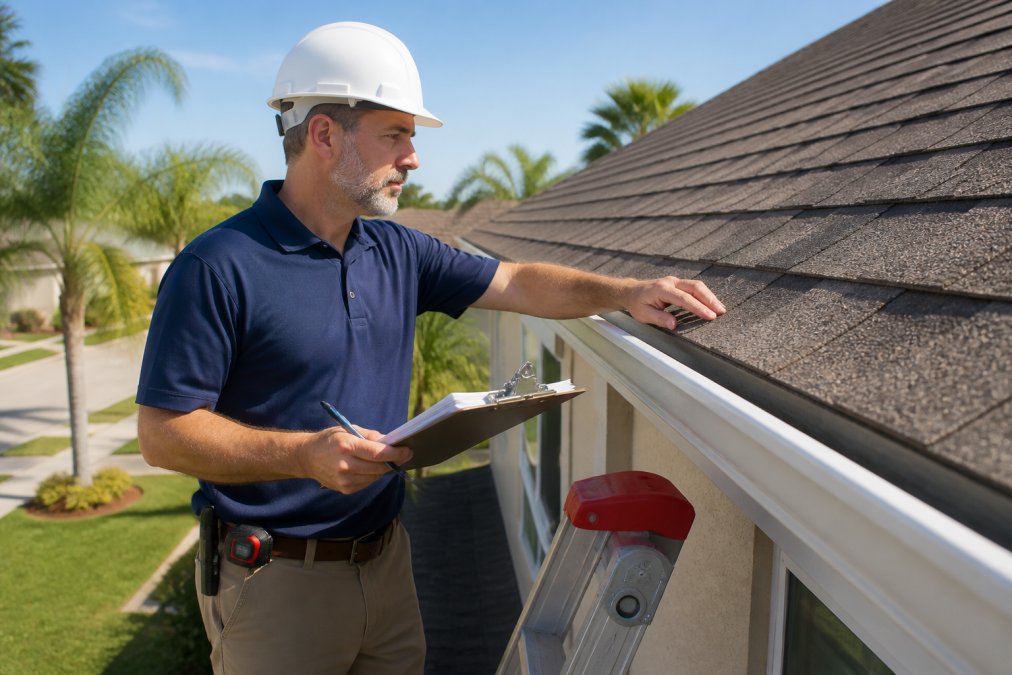
Insurance companies offer discounts because a wind-resistant home is less likely to suffer damage claims. The inspection identifies specific improvements, reinforced roof connections, impact-resistant windows, reinforced garage doors, that reduce your risk profile. When your home meets these standards, insurers recognize that and reward you with lower premiums.
The cost of a wind mitigation inspection typically ranges based on your home's size and complexity, but the premium savings often recoup this investment within the first year or two of coverage. Many homeowners find that a single inspection leads to multiple discount opportunities across their policy.
Beyond insurance savings, wind mitigation improvements protect your family and property. Reinforced roofing, impact-resistant windows, and structural bracing aren't just discount qualifiers, they're genuine safety upgrades. You're investing in both lower insurance costs and better home protection.
How to File for Insurance Premium Discounts
Insurance companies offer numerous discounts beyond bundling and wind mitigation. The challenge is knowing which ones apply to you and how to claim them. Here's a systematic approach to uncovering available discounts:
Standard discounts to request:
- Security systems and alarm monitoring
- Fire protection systems and sprinklers
- Smoke detectors and carbon monoxide detectors
- Completed home improvements and renovations
- Claims-free history (often called a "good claims record")
- Loyalty discounts for long-term customers
- Paperless billing and automatic payments
- Completion of a homeowners' safety course
Request a discount review: Contact your insurance agent directly and ask for a comprehensive discount audit. Provide documentation of any home improvements, security installations, or safety features you've added. Many homeowners leave money on the table simply because they don't ask.
The My Safe Florida Home Program advantage: This state-funded program is a game-changer for Florida homeowners seeking to lower premiums. Administered by the Department of Financial Services, the My Safe Florida Home Program provides matching grants (up to $10,000 per homeowner) to help pay for wind mitigation improvements on owner-occupied homes. Eligible improvements include roof reinforcement, impact-resistant windows and doors, and structural bracing.
What makes this program critical for premium reduction: improvements completed through the My Safe Florida Home Program often unlock additional insurance discounts beyond what you'd receive for the same work done independently. Insurance companies recognize the program's rigorous standards and reward participants accordingly. Additionally, completing improvements through this program creates documented evidence of mitigation work, which strengthens your discount claims with insurers.
To apply, you must own and occupy the home, have homeowners insurance, and meet income guidelines (generally up to 140% of state median income, though limits vary by county). The application process involves a free initial inspection to assess your home's vulnerabilities, followed by a detailed mitigation plan. Once approved, you can select from approved contractors to complete the work, with the state covering up to 50% of costs (up to the $10,000 cap).
Document improvements: Keep receipts and photos of any home upgrades, whether completed through the My Safe Florida Home Program or independently. If you've reinforced your roof, installed hurricane shutters, upgraded your electrical system, or made other improvements, these qualify for discounts. Your agent needs evidence to submit to the insurance company.
Call Us and Get a Quote Today! →
Timing matters for program eligibility: The My Safe Florida Home Program operates on a first-come, first-served basis within each fiscal year, and funding can be limited in high-demand counties. If you're considering wind mitigation improvements, applying early in the fiscal year (July) increases your chances of approval and funding. This also accelerates your timeline to insurance discounts.
Fortify Your Roof and Home Structure
Your roof is your home's first line of defense against wind and weather damage. Strengthening your roof and overall home structure is one of the most effective ways to lower your insurance premiums while genuinely protecting your property.
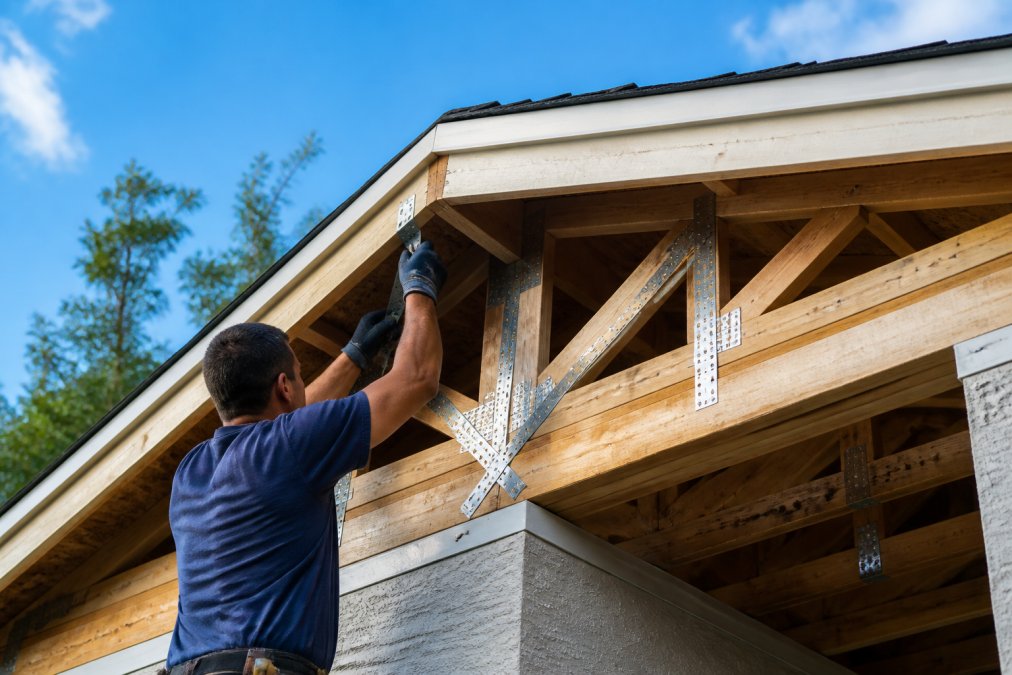
Roof reinforcement typically involves upgrading the connection between your roof and walls. Older homes often have roofs that are simply nailed down, vulnerable to uplift during high winds. Modern reinforcement uses hurricane straps or clips that create a continuous load path from roof to foundation.
Impact-resistant roofing materials also qualify for discounts. These materials are designed to withstand hail and debris impact. While the upfront cost is higher than standard shingles, the combination of reduced insurance premiums and longer material lifespan often justifies the investment.
Windows and doors are another critical focus area. Single-pane windows are vulnerable; impact-resistant windows with reinforced frames are much more durable. Similarly, reinforced garage doors prevent wind from entering your home and destabilizing the structure. These upgrades often qualify for meaningful insurance discounts.
Your foundation matters too. Homes on concrete slabs are generally more wind-resistant than those on pilings. If your home is on pilings, ensuring proper bracing and connection to the foundation improves structural integrity and may qualify for discounts.
Review Rebuilding Costs vs. Market Value
Many homeowners insure their homes based on market value, what the home would sell for today. This is a mistake. Insurance should be based on rebuilding costs, what it would actually cost to rebuild your home from the ground up if it were destroyed.
Rebuilding costs and market value can differ significantly. A home worth $400,000 might cost $500,000 to rebuild due to labor, materials, and current construction costs. Conversely, a home in a desirable neighborhood might have a market value of $600,000 but only cost $400,000 to rebuild if the land value is high.
Undeinsuring based on market value leaves you exposed. If your home is destroyed and your policy limits don't cover rebuilding costs, you're responsible for the gap. This is a critical mistake that many homeowners don't discover until it's too late.
Professional rebuilding cost assessment: A professional rebuilding cost assessment examines your home's square footage, construction type, materials, systems, and finishes. This detailed analysis produces a much more accurate insurance requirement than a simple market value estimate. Many insurance companies will adjust your coverage limits based on this assessment. Some insurers provide these assessments at no cost; others charge a fee that is often waived if you increase your coverage limits.
Overinsuring is also possible, though less common. If your policy limits significantly exceed rebuilding costs, you're paying unnecessary premiums. A proper assessment ensures your coverage is adequate but not excessive.
The Citizens Property Insurance Corporation factor: Understanding rebuilding costs becomes even more critical if you're insured through Citizens Property Insurance Corporation, the state's insurer of last resort. Citizens exists to provide coverage to homeowners who cannot obtain insurance in the private market, typically due to location, age of home, or prior claims history. Citizens' rates are generally higher than private insurers, and coverage is more limited.
If you're a Citizens policyholder, accurate rebuilding cost assessment is essential because: (1) you're already paying a premium for limited market access, so overinsuring compounds that cost; (2) Citizens policies have specific coverage limits and exclusions that differ from private policies, making precise coverage alignment even more important; and (3) if your home is difficult to insure in the private market, you need to ensure your Citizens coverage is adequate, since finding alternative coverage may be challenging.
Many homeowners end up in Citizens because they've had claims or their home doesn't meet private insurers' underwriting standards. If this is your situation, work with your agent to establish accurate rebuilding costs so your Citizens policy provides genuine protection without unnecessary overage. Some agents specialize in helping Citizens policyholders transition back to private insurance once home improvements or claims history improve, and accurate rebuilding cost documentation supports that transition.
Rebuilding cost inflation: Material and labor costs in the construction industry have risen significantly in recent years (bls.gov). If your last rebuilding cost assessment was more than two years ago, request an updated estimate. Construction cost inflation can be 5-10% annually or higher in active markets, meaning a home assessed at $400,000 three years ago might now cost $460,000 to rebuild. Annual policy reviews should include a rebuilding cost check-in, especially if you've made substantial improvements or if local construction costs have shifted.
Conclusion
Lowering your insurance premiums requires a strategic combination of smart choices: adjusting your deductible, bundling policies, completing wind mitigation improvements, and pursuing available discounts. These steps work together to reduce your costs while maintaining the protection your home and family deserve.
Dehlinger Insurance has spent over 38 years helping Florida residents navigate these decisions. Our team works with multiple top-tier carriers to find the right balance of coverage and affordability for your specific situation. Whether you own an older home that's difficult to insure, a luxury property requiring specialized coverage, or a standard home where you simply want better rates, we have the experience and carrier relationships to help.
The key is taking action. Schedule a comprehensive policy review with our team today. We'll evaluate your deductible, identify bundling opportunities, discuss wind mitigation improvements, and uncover every discount you qualify for. Call Dehlinger Insurance and get a quote today to see how much you can save.
Frequently Asked Questions
Does raising my deductible actually lower my premium?
Yes. Increasing your deductible from $500 to $1,000 or $2,500 reduces your annual homeowners insurance premium because you're accepting more financial responsibility in a claim. The higher your deductible, the lower your premium. However, ensure you can afford the out-of-pocket expense if a claim occurs. This is one of the fastest ways to lower your monthly costs.
How do wind mitigation inspection benefits reduce my insurance costs?
A wind mitigation inspection documents structural improvements that protect your home from hurricane damage, such as roof reinforcement, impact-resistant windows, and proper fastening. Insurance carriers offer mitigation credits, sometimes 5-15% off your premium, because these upgrades reduce claim risk. Getting a professional inspection and sharing the report with your insurer unlocks these discounts automatically.
What home improvements are most effective at lowering insurance rates?
Roof reinforcement, hurricane shutters, impact-resistant windows, and proper roof-to-wall fastening deliver the biggest rate reductions. Security systems and updated electrical wiring also qualify for discounts. The My Safe Florida Home Program offers grants to help with these improvements. Prioritize roof upgrades first, as they address the largest risk factor in Florida's storm-prone environment.
Can bundling my home and auto policies save me money?
Yes. Bundling home and auto insurance with the same carrier typically saves 10-25% on your combined premiums. Insurance companies reward customer loyalty and simplified administration with multi-policy discounts. Request a bundled quote from your current insurer or shop for new carriers that offer competitive bundle rates to maximize your savings.
This article was written using GrandRanker