 how-to
Average Cost of Flood Insurance in Orlando
Last Updated: October 24, 2026
Quick Summary
The average cost of flood insurance in Orlando depends on your property's flood zone, elevation, distance to water, and coverage limits you select. Most homeowners pay varying premiums based on their specific address and risk level, with properties in high-risk zones paying significantly more than those in lower-risk areas.
- Your flood zone is the single biggest driver of premium cost, and zones can change from one block to the next in Orlando.
- Risk Rating 2.0 considers individual property elevation, distance to water, and building details, so two homes in the same zone can have different premiums.
- NFIP maximum building coverage for a single-family home is $250,000 and contents coverage is $100,000.
- Properties in Special Flood Hazard Areas with federally backed mortgages must maintain flood insurance throughout the loan term.
- An Elevation Certificate documenting your lowest floor above the base flood elevation can meaningfully reduce your premium.
Table of Contents
- What Does Flood Insurance Cost in Orlando
- Understanding Orlando Flood Zones and Risk Levels
- How Risk Rating 2.0 Affects Your Premium
- Flood Insurance Coverage Limits and What They Mean
- NFIP vs. Private Flood Insurance in Florida
- Flood Insurance Requirements for Mortgages
- Getting Your Personalized Orlando Flood Insurance Quote
- Frequently Asked Questions
What Does Flood Insurance Cost in Orlando
Flood insurance protects your home and belongings from water damage that standard homeowners policies don't cover. In Orlando, the average cost of flood insurance in Orlando depends on where your property sits, how close it is to water, and what coverage level you choose.
Most homeowners pay between moderate and higher premiums for flood coverage. The exact amount varies significantly based on your specific address and flood risk level. A single-family home in a lower-risk area might cost less per year than a property in a high-risk zone.
At Dehlinger Insurance, we work with Florida residents to find flood coverage that fits their financial situation. With over 38 years serving the community, we've helped homeowners navigate their flood insurance options.
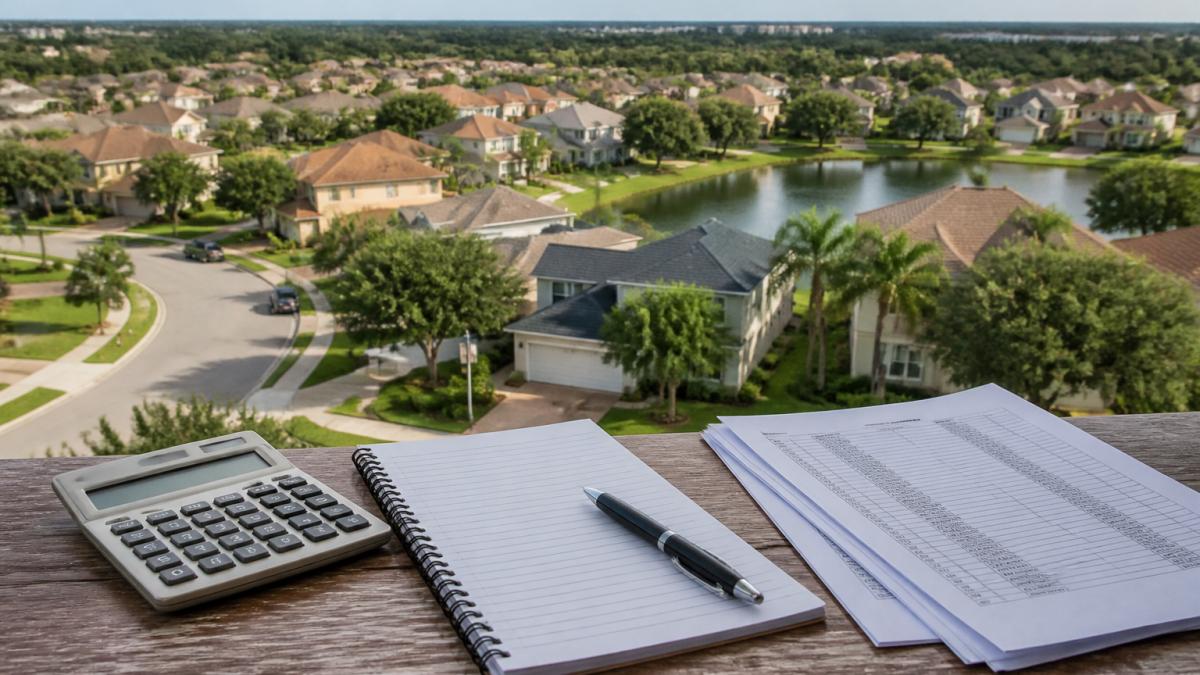
Several factors affect what you'll pay for flood insurance in Orlando:
- Your property's elevation relative to the base flood elevation
- Distance from rivers, lakes, and coastal areas
- The flood zone your address falls into
- Building type (single-family home, condo, rental property)
- Coverage limits you select
- Your chosen deductible amount
Understanding Orlando Flood Zones and Risk Levels
Your flood zone is the single biggest driver of what you pay, but in the Orlando area the zone can change from one block to the next. FEMA's Flood Insurance Rate Maps (FIRMs) assign every parcel a zone based on modeled flood hazard, and the same street can straddle a high-risk boundary. That is why a regional average is only a starting point, the number that matters is tied to your address.
FEMA's zone designations you will see on Orlando-area maps include:
- Zone A: High-risk Special Flood Hazard Area (SFHA) with no base flood elevation (BFE) published. Because no BFE is shown, insurers often rely on other elevation data or assume a conservative elevation, which can push premiums higher than an AE-zone property nearby.
- Zone AE: High-risk SFHA with a published BFE. If your lowest floor is at or above the BFE, your rate is typically lower than a property at or below it.
- Zone AH and AO: Shallow flooding hazards (ponding or sheet flow) with published depth data. These are common near retention areas and low-lying subdivisions.
- Zone X (shaded): Moderate-risk area, usually the 0.2% annual-chance floodplain (often called the 500-year floodplain). Preferred-risk pricing is generally available, but lenders may still flag it.
- Zone X (unshaded): Minimal-risk area outside the mapped floodplain. Preferred-risk pricing is typically available and is the least expensive zone category.
- Zone D: Undetermined risk where FEMA has not completed an analysis. Underwriting can be unpredictable here.
A practical pattern in the Orlando area: properties near the Kissimmee Chain of Lakes, the St. Johns River basin, and the many stormwater retention ponds and canals that thread through subdivisions often sit in or near AE, AH, or shaded X zones, while older in-town neighborhoods can carry unshaded X designations that still flood during heavy summer storms.
A low-risk zone is not a guarantee. Heavy rainfall, drainage failures, and development upstream can flood properties that FEMA maps show outside the SFHA. Many Orlando-area flood claims come from Zone X properties.
How to check a specific address
- Go to FEMA's Flood Map Service Center and enter the full street address to pull the effective FIRM panel and zone.
- Confirm the map's effective date, an older panel may not reflect current development or map revisions.
- Ask your insurance agent to run the address through the NFIP rating engine, which uses the zone plus property-specific data under Risk Rating 2.0.
- If your lender is involved, request the flood determination the lender will use; it should match the FEMA map, but discrepancies happen and are worth resolving before closing.
- If the property is in or near an SFHA, ask whether an Elevation Certificate exists, it can lower your rate if your lowest floor is above the BFE.
Because two homes on the same street can land in different zones, comparing ZIP-code averages is only a rough guide. Get the zone for your exact address before you treat any estimate as your number.
How Risk Rating 2.0 Affects Your Premium
Risk Rating 2.0 changed how the NFIP calculates premiums. Instead of using just flood zone data, this system considers individual property characteristics. Your specific elevation, distance to water, and building details now shape your rate.
This shift means two homes in the same flood zone can have different premiums. A property elevated above the base flood elevation pays less than one at or below it. A home farther from water costs less than one closer to a river or lake.
The system also factors in:
- Exact elevation data from elevation certificates
- Property-specific flood hazard depth
- Type of construction (wood frame, concrete, mobile home)
- Number of stories above ground level
- Year the building was constructed
Understanding Risk Rating 2.0 helps explain why your neighbor's premium differs from yours. The NFIP now prices based on actual property risk rather than broad zone categories. This typically results in more accurate pricing, though some properties see increases while others see decreases.
Flood Insurance Coverage Limits and What They Mean
Coverage limits decide how much the policy pays after a flood, and they interact with your deductible and lender requirements in ways that change your real out-of-pocket exposure.
NFIP maximums. For a residential single-family home, the NFIP maximum building limit is $250,000 and the maximum contents limit is $100,000.
Deductibles. NFIP policies use a deductible that applies separately to building and contents claims. Common options start at $1,000 and rise to $2,000, $5,000, and higher.
Elevation certificates. An Elevation Certificate documents your lowest floor elevation relative to the BFE.
Compare policies on three numbers, not one: the annual premium, the deductible (and whether it applies separately to building and contents), and the building and contents limits relative to your replacement cost and lender requirement. The lowest premium is not always the lowest total cost.
If your replacement cost is above the NFIP cap, ask your agent about private flood or excess flood options before you assume the NFIP policy is enough.
NFIP vs. Private Flood Insurance in Florida
The National Flood Insurance Program (NFIP) is the largest flood insurance provider in the country. It's backed by the federal government and available in most areas where flooding is possible.
Call Us and Get a Quote Today! →
Private flood insurance companies offer an alternative. These insurers operate outside the NFIP system and can sometimes offer competitive rates, especially for lower-risk properties.
NFIP policies follow standardized rules across the country. Rates are based on federal risk assessments. Coverage limits are capped at federal maximums. Claims are processed through a national system.
Private flood insurance varies by company. Rates can be more flexible based on individual property assessment. Some insurers offer higher coverage limits. Underwriting standards differ from the NFIP.
Key differences to understand:
| Feature | NFIP | Private Insurance |
|---|---|---|
| Availability | Nationwide in participating communities | Select areas and properties |
| Rate flexibility | Standardized federal rates | Varies by insurer |
| Coverage limits | Federal maximums apply | Often higher limits available |
| Claims process | Federal system | Individual company process |
| Eligibility | Most properties qualify | Stricter underwriting standards |
For many Orlando homeowners, the NFIP remains the most accessible option. Private insurance works better for those with lower-risk properties seeking higher coverage limits or more flexible terms.
Flood Insurance Requirements for Mortgages
If you have a mortgage on a property in a high-risk flood zone, your lender requires flood insurance. This is a federal requirement, not optional. You must maintain coverage throughout your loan term.
Lenders want protection for their investment in your property. If flooding damages your home and you lack insurance, the lender's collateral loses value. Flood insurance ensures the property can be repaired or rebuilt.
The requirement applies specifically to properties in Special Flood Hazard Areas (SFHAs). These are the high-risk zones where FEMA determines flood probability is significant.
You can understand whether flood insurance is mandatory for your situation by reviewing your mortgage documents or asking your lender directly.
Some key points about mortgage-related requirements:
- Coverage must be in place before loan closing
- Amount must equal the property's replacement cost or the loan amount, whichever is less
- Lender must be named as loss payee on the policy
- Coverage must remain active for the entire loan term
- If you let coverage lapse, the lender can purchase it and charge you for the premium
Renters typically don't face this requirement since they don't have mortgages. However, renters' flood insurance still protects personal belongings and provides additional living expenses if flooding forces evacuation.
Getting Your Personalized Orlando Flood Insurance Quote
Your actual premium depends on your specific property details. Online quotes give estimates, but working with an agent provides accurate pricing based on your exact address and situation.
To get a quote, you'll need:
- Your property address
- Year the building was constructed
- Type of building (single-family home, condo, etc.)
- Number of stories
- Square footage of the structure
- Elevation information if available
The agent will look up your flood zone, check elevation data, and calculate your premium based on Risk Rating 2.0. This process typically takes a few minutes once you provide the basic information.
Prices vary between insurers, so comparing quotes makes sense before committing.
Getting an accurate quote involves:
- Verifying your property's flood zone through FEMA maps
- Obtaining elevation certificate information if needed
- Selecting your desired coverage limits
- Choosing your deductible
- Comparing rates from multiple providers
Work with an agent familiar with Orlando properties. Local expertise helps you understand why your property's risk level affects pricing the way it does. An experienced agent can also guide you toward flood insurance options in Florida by explaining your options and finding policies that fit your budget.
Frequently Asked Questions
How much does flood insurance cost in Orlando?
Flood insurance costs in Orlando vary widely based on your property's flood zone, elevation, and distance to water. Private flood insurance options may offer different pricing. Contact Dehlinger Insurance for a personalized quote based on your specific address and property details.
What factors affect flood insurance rates for Orlando homes?
Your flood insurance premium depends on your property's flood zone designation, elevation relative to the base flood elevation, building type (single-family home, condo, etc.), coverage limits selected, deductible amount, and the distance from your home to bodies of water. Risk Rating 2.0, the NFIP's updated rating system, also considers additional property characteristics. Each factor influences whether you fall into a moderate-risk or high-risk category, directly affecting your annual cost.
Is flood insurance required for homes in Orlando?
Flood insurance is required if your home is in a high-risk flood zone (Special Flood Hazard Area) and you have a mortgage from a federally regulated lender. Even if you're not in a high-risk zone, flood insurance is strongly recommended because standard homeowners insurance does not cover flood damage. Many Orlando properties fall into zones where lenders require coverage before loan approval. Dehlinger Insurance can help you understand your specific requirements.
What does a standard flood insurance policy cover?
A standard NFIP flood insurance policy covers building coverage (your home's structure, foundation, and permanently installed systems) up to $250,000 and contents coverage (personal belongings) up to $100,000. Coverage includes damage from rising water but excludes items in basements and certain valuables. Private flood insurance policies may offer higher limits and different coverage options. Your deductible affects your annual premium.
Finding the right flood insurance protects your home and gives you peace of mind. Dehlinger Insurance has spent over 38 years helping Florida residents secure the coverage they need. Our team works with multiple carriers to find policies that match your property's risk profile and your financial situation. Call us and get a quote today to discover how affordable protection can be for your Orlando home.