 how-to
Florida Flood Insurance for Older Homes: Coverage Guide
Quick Summary
Florida flood insurance for an older home is not included in a standard homeowners policy, so it must be bought separately through the NFIP or a private carrier. Older homes face extra underwriting factors like elevation, foundation type, and renovation history, and valuation method often matters more than the coverage limit.
- Most standard homeowners policies exclude flood damage entirely, so separate flood coverage is needed.
- Gather your elevation certificate, permit history, and renovation receipts before shopping for quotes.
- Ask in writing whether your building is settled on replacement cost or actual cash value.
- Insure the dwelling to at least 80% of its replacement cost to keep replacement-cost treatment.
- Confirm the policy's waiting period so coverage starts before your closing date.
Table of Contents
- Why Older Florida Homes Face Different Flood Insurance Challenges
- Flood Zones, FEMA Maps, and When Lenders Require Coverage
- NFIP vs. Private Flood Insurance for an Older Home
- Flood Insurance Coverage Limits for Dwelling and Contents
- Flood Insurance Exclusions That Older-Home Owners Often Miss
- How the Flood Insurance Waiting Period Affects Your Closing Timeline
- Booking Your Older-Home Flood Coverage Review With Dehlinger Insurance
- Frequently Asked Questions
Florida flood insurance is not as simple as buying a standard homeowners policy and assuming water damage is covered. For older homes, the gaps can be wider and more expensive than owners expect.
The core issue is that flood damage and wind damage are treated differently, and most standard homeowners policies exclude flood entirely.
In this guide, we cover the basics of flood zones and lender requirements, compare federal and private coverage, explain coverage limits, point out exclusions owners often miss, and explain how the waiting period affects closing timelines.
Why Older Florida Homes Face Different Flood Insurance Challenges
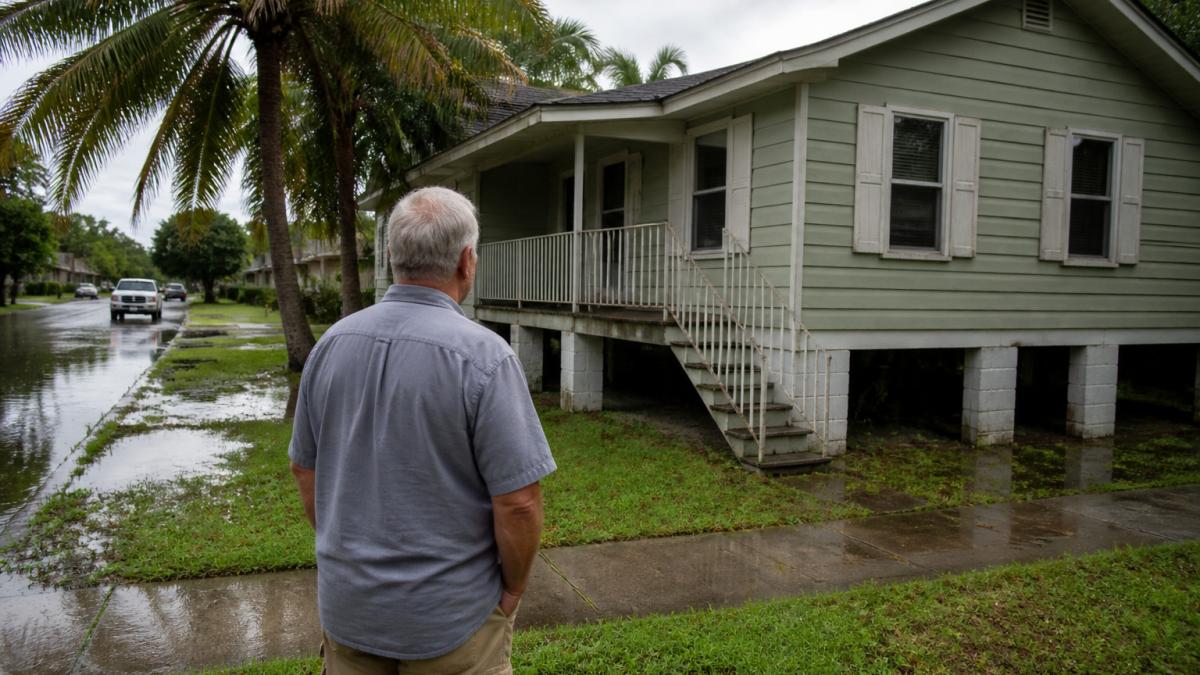
Older homes are not simply "riskier" in the abstract, they trip specific underwriting and claims mechanisms that newer construction usually avoids. Understanding those mechanisms is what separates a policy that pays a fair claim from one that leaves the owner short.
The underwriting inputs that matter most for older structures
Insurers and the National Flood Insurance Program (NFIP) evaluate an older home on a handful of concrete data points:
- Elevation certificate. The Elevation Certificate (EC) records the elevation of the lowest floor relative to the Base Flood Elevation (BFE). An EC is generally a key input to a flood quote for older homes.
- Pre-FIRM vs. post-FIRM status. Pre-FIRM homes are often rated differently than post-FIRM homes, and that distinction affects both NFIP and private pricing. A renovation that changes the lowest floor can reclassify a home, so document improvements carefully.
- Foundation and enclosure type. Crawlspace, pier-and-beam, slab-on-grade, and basement foundations are rated differently. Enclosed areas below the lowest floor (including crawlspaces with utilities) can trigger higher rates or limited coverage.
A common misconception is that a home that has never flooded is automatically low-risk. Underwriters look at elevation and flood zone first; a clean claims history is supporting evidence, not a substitute.
The 50% Substantial Improvement / Substantial Damage rule
For homes in a Special Flood Hazard Area (SFHA), the Substantial Improvement and Substantial Damage rules matter enormously for older properties. If the cost of reconstruction, rehabilitation, addition, or other improvement equals or exceeds 50% of the market value of the structure before the work starts, the structure must be brought into compliance with current floodplain ordinances, which can mean elevating the lowest floor.
Documentation gaps that slow underwriting
Older homes frequently lack the paper trail insurers want:
- An elevation certificate that reflects the current structure (not a prior addition)
- Permits and receipts for renovations, especially those that finished a lower level or replaced the roof
- A prior-loss letter or claims history (CLUE report) if the home changed hands
- Photos and a replacement-cost worksheet for unique or historic features
Before you shop, pull together the EC, permit history, and any renovation receipts. Having these ready shortens underwriting and often improves the quote because the insurer is not pricing around unknowns.
What this means in practice
Older homes are not uninsurable, they are simply underwritten on more variables. Reviewing the elevation certificate, foundation type, and prior-loss record before you bind coverage can help you understand how they may affect your quote.
Flood Zones, FEMA Maps, and When Lenders Require Coverage
Flood zones are designated on maps maintained by the Federal Emergency Management Agency (FEMA). A property in a high-risk Special Flood Hazard Area with a federally backed mortgage generally must carry flood insurance.
Check your property's flood zone on FEMA's official flood map service before you close. For more on how mortgage requirements tie into Florida home insurance, see our guide on Is Florida Home Insurance Required With a Mortgage?
To understand the legal rules that apply to flood coverage for your situation, read Is Flood Insurance Mandatory for Florida Seniors? This covers the requirements owners and homeowners should verify.
NFIP vs. Private Flood Insurance for an Older Home
The National Flood Insurance Program (NFIP) is a federal program that sells flood policies through participating insurers. Private flood insurance is sold by private carriers and can offer different limits, pricing, and terms.
For many older homes, the comparison comes down to these points:
- NFIP offers standardized coverage and is often the only option for some properties.
- Private policies may offer higher limits, different deductible structures, or more flexible valuation.
- Premiums vary based on elevation, flood zone, home age, and coverage selected.
Compare both options side by side, and ask each carrier how it values an older structure. For practical ways to find affordable flood coverage in Florida, see How to Get Affordable Flood Insurance in Florida 2026.
The two main options differ in several ways that matter for an older home.
| Option | Key point | Note |
|---|---|---|
| NFIP | Standardized federal coverage | Sometimes the only option for a property |
| Private policy | Higher limits, different deductibles | Valuation terms can differ |
| Premium | Varies by elevation and zone | Depends on home age and coverage selected |
Flood Insurance Coverage Limits for Dwelling and Contents
Flood policies split coverage into building (dwelling) and contents (personal property), and each has its own limit. But the number that matters most for an older home is not the limit, it is the valuation method the policy uses to pay a claim.
Call Us and Get a Quote Today! →
NFIP limits at a glance
The NFIP writes standardized limits for residential properties:
Those are federal program maximums, not guarantees. Private carriers can offer higher limits, different deductibles, and different valuation terms, which is one reason older-home owners sometimes shop both.
Replacement cost vs. actual cash value, and why it matters more on an older home
- Replacement Cost Value (RCV) pays to repair or replace with materials of like kind and quality, without deducting depreciation, up to the policy limit.
- Actual Cash Value (ACV) pays replacement cost minus depreciation. On an older home, depreciation on roofing, flooring, cabinetry, and mechanical systems can be substantial, so an ACV settlement may be a fraction of what a rebuild actually costs.
A simple illustration: a 40-year-old home with original kitchen cabinetry, older flooring, and a roof near the end of its useful life will see a much larger depreciation deduction under ACV than a 5-year-old home with the same square footage. The limit may be identical; the check is not.
NFIP residential building coverage is generally written on a replacement cost basis only when the home is the principal residence and insured to at least 80% of its replacement cost. Otherwise, claims may be settled on an actual cash value basis. Contents are typically settled on an ACV basis under the NFIP. Confirm the valuation basis in writing before you bind.
The 80% replacement-cost rule
For NFIP replacement-cost treatment on a principal residence, the building must be insured for at least 80% of its full replacement cost. Insuring to the limit is not the same as insuring to 80% of replacement cost, on an older home with custom or historic features, replacement cost can exceed what the owner expects. An underinsured older home can therefore lose RCV treatment at claim time.
How older-home features change the math
- Original materials. Heart-pine floors, plaster walls, and period millwork can be expensive or impossible to match. Ask how the policy handles "like kind and quality" when materials are unavailable.
- Finished lower levels. Below-grade finished space is treated differently from above-grade space, and coverage for improvements and contents in basements is limited under many policies.
- Detached structures. Garages, sheds, and guest houses may need separate limits or endorsements.
- Ordinance or law coverage. If rebuilding must meet current codes (including elevation under the Substantial Improvement rule), ordinance-or-law coverage may be needed to pay for that upgrade. It is often limited or excluded by default.
A practical checklist before you buy
- Get a replacement-cost estimate for the dwelling, not just a market value.
- Confirm whether the building will be settled on RCV or ACV, and under what conditions.
- Confirm the contents valuation basis and any sublimits (e.g., jewelry, art, business property).
- Ask whether ordinance-or-law coverage is included and at what limit.
- Compare NFIP and private quotes on the same valuation basis so the comparison is apples-to-apples.
The limit is the ceiling; the valuation method is what determines the check. On an older home, always ask two questions in writing: "Is this RCV or ACV?" and "What replacement-cost figure is this policy built on?"
Flood Insurance Exclusions That Older-Home Owners Often Miss
Flood policies come with exclusions that surprise many owners. Read the exclusions section closely, because a claim denial is often traced back to language the owner never reviewed.
Common exclusions and gaps to review in your policy include basement or below-grade damage, mold, items stored outside the home, and sewer backup or groundwater seepage, depending on how the policy defines flood. Proactive maintenance remains the most effective strategy to prevent water damage in older homes where structural vulnerabilities often exacerbate these common coverage gaps.
Watch out: Ask specifically whether your policy covers basements, detached structures, and sewer backup. These are the areas where owners of older homes most often find unexpected gaps.
How the Flood Insurance Waiting Period Affects Your Closing Timeline
Most flood policies have a waiting period before coverage takes effect. Confirm the current waiting period with your agent, as rules can change. This matters most when you are buying a home, because coverage that starts after closing can leave you exposed on day one.
Plan ahead by:
- Starting your flood insurance application as soon as your purchase contract is signed
- Confirming the effective date with your agent and your lender
- Asking whether your closing date and the policy start date line up
Confirm current waiting period rules directly with your agent, since they can change.
Booking Your Older-Home Flood Coverage Review With Dehlinger Insurance
Flood coverage for an older Florida home involves flood zones, valuation, exclusions, and timing, and each piece affects the others.
Dehlinger Insurance works with multiple top carriers. Our team can review your property, explain your options in plain terms, and help you understand the trade-offs between NFIP and private coverage.
Call us and get a quote today to schedule your older-home flood coverage review.
Frequently Asked Questions
Is zone AE a bad flood zone?
Zone AE is a high-risk flood zone on FEMA flood maps, meaning the property has at least a 1% annual chance of flooding. Federal rules require homeowners with federally backed mortgages in Zone AE to carry flood insurance, so it is a higher-risk designation, not a sign that a home is unlivable. Lenders in these areas typically require coverage at closing, and premiums are generally higher than in lower-risk zones. Check the property's flood zone on the FEMA Flood Map Service Center before you make an offer.
Does homeowners insurance cover flood damage to an older home?
Standard homeowners policies generally exclude flood damage, including water rising from the ground, storm surge, and overflowing bodies of water. An older home can still have water damage from plumbing or a roof leak, which may be covered, but flood damage requires a separate policy. Because many older Florida homes sit in or near flood-prone areas, owners should ask their agent to confirm exactly what their homeowners policy excludes and whether a standalone flood policy is needed.
Can an older home qualify for flood insurance?
Yes. Age alone does not disqualify a home from flood insurance, whether through the National Flood Insurance Program or a private carrier. Insurers look at the property's flood zone, elevation, foundation type, and condition. Older homes may need an elevation certificate and an inspection of the foundation, electrical systems, and HVAC equipment placement. Gather prior repair records and permits before applying, since they help underwriters evaluate the structure accurately.
Is NFIP or private flood insurance better for an older home?
Neither is better in every case. NFIP policies are backed by the federal government and are available in every participating community, which makes them a reliable option for older homes that private carriers decline. Private flood policies can offer higher limits, different deductible options, and sometimes lower premiums, but they must meet federal coverage standards. Compare quotes from both before choosing, and confirm the coverage limits and exclusions in each policy.