 comparison
Florida Insurance Agency Alternatives: 2026 Guide
Table of Contents
- Why Compare Insurance Agency Alternatives
- Captive vs Independent Insurance Agents: Which Serves You Better
- Independent Insurance Agent Benefits for Florida Residents
- Digital Insurance Platforms and Online Alternatives
- How to Compare Homeowners Insurance Quotes Across Providers
- Coverage Gaps and Specialty Insurance Needs
- Making Your Choice: Agency vs. Platform vs. Direct Insurer
- Conclusion
Last Updated: August 26, 2026

Why Compare Insurance Agency Alternatives
When shopping for home or auto insurance in Florida, you face a fundamental choice: work with a traditional agent, go direct to an insurer, or use an online platform to compare quotes. This decision determines which carriers you can access, your cost, coverage options, and how claims get handled.
Many Florida residents default to whatever agent their parents used or whoever their friend recommends. The real problem isn't finding an alternative, it's understanding which model serves your specific situation. A captive agent offers exceptional service but limited options. An independent agent can shop multiple carriers but may prioritize commissions. Digital platforms promise speed but require you to understand coverage requirements. Direct insurers cut out the middleman but offer no personalized guidance.
At Dehlinger Insurance, we've spent over 38 years helping Florida residents navigate these choices. The insurance agency alternative you choose determines whether you're overpaying, underinsured, or actually protected when disaster strikes. This guide walks you through the real differences so you can make an informed decision based on your actual needs.
Captive vs Independent Insurance Agents: Which Serves You Better
A captive agent represents a single insurance company and sells only that company's policies. An independent agent holds contracts with multiple carriers and can quote policies from different companies.

The captive model creates a fundamental misalignment. Your captive agent's income depends on selling their company's policies, not finding you the best coverage at the best price. If their company doesn't offer specialty coverage for older homes or doesn't write policies in high-risk zones, they can't help you, even if another carrier would approve you instantly.
Independent agents operate under different incentives. They earn commissions from multiple carriers, meaning they theoretically benefit when they place you with whoever offers the best fit. If an independent agent consistently steers clients toward overpriced options, those clients eventually leave.
For Florida residents, this distinction matters more than elsewhere. Florida's insurance market is fragmented. Some carriers have exited the state entirely. Others specialize in high-risk coastal properties or older homes. A captive agent working for a company that doesn't serve your risk profile can't help you. An independent agent with relationships across multiple carriers has options when the first few companies decline you.
The trade-off is service depth. A captive agent knows their company's policies inside and out. An independent agent working with multiple carriers can't know each one as deeply, though some specialize in certain coverage types to compensate.
Independent Insurance Agent Benefits for Florida Residents
Independent agents bring specific advantages that matter in Florida's unique insurance landscape.
An independent agent can help when you've been declined elsewhere. Florida's insurance market has tightened dramatically over the past five years. Carriers have raised rates, tightened underwriting, and exited certain markets. If you own an older home, live in a coastal high-risk zone, or have had previous claims, you've likely experienced rejection from mainstream carriers. An independent agent maintains relationships with specialty carriers and non-standard markets that still write policies for these situations.
The rate shopping benefit is real but often overstated. An independent agent can quote multiple carriers, but they only have access to carriers they hold appointments with, typically 10-20 companies. More importantly, the best rate depends on your specific situation. A carrier offering the lowest quote for a standard suburban home might be significantly more expensive for a 1995 mobile home or waterfront property. An experienced independent agent understands these nuances and can predict which carriers will offer competitive pricing before running quotes.
The personalized guidance independent agents provide is their actual competitive advantage. They explain why one policy structure makes sense for your situation while another doesn't. They understand Florida-specific coverage like PIP (Personal Injury Protection) for auto insurance, hurricane deductibles for homeowners policies, and the role of flood insurance in a coastal state. They help you identify coverage gaps you didn't know existed.
Claims advocacy is where independent agents prove their value. When you file a claim, an independent agent can advocate on your behalf, help you understand the claims process, and escalate issues if the carrier isn't handling your claim appropriately. They've built relationships with claims adjusters and can sometimes accelerate resolution.
The relationship continuity independent agents offer has become increasingly valuable. You work with the same person over years. They know your property, situation, and preferences. When your circumstances change, you add a second car, renovate your kitchen, buy investment property, they proactively reach out to adjust your coverage.
Digital Insurance Platforms and Online Alternatives
Digital platforms act as quote aggregators or marketplaces that connect you with multiple carriers or licensed agents. These platforms appeal to people who want to avoid agent sales tactics. You enter your information once, get quotes from multiple carriers instantly, and can compare rates side by side.
The trade-off is guidance. A platform shows you quotes but doesn't tell you whether those quotes represent good value for your specific situation. It doesn't flag coverage gaps or explain why one carrier's homeowners policy might be better than another's, even if priced similarly. You're making a decision based on price and your own understanding of insurance.
Kin Insurance: Specialized Coverage for High-Risk Zones
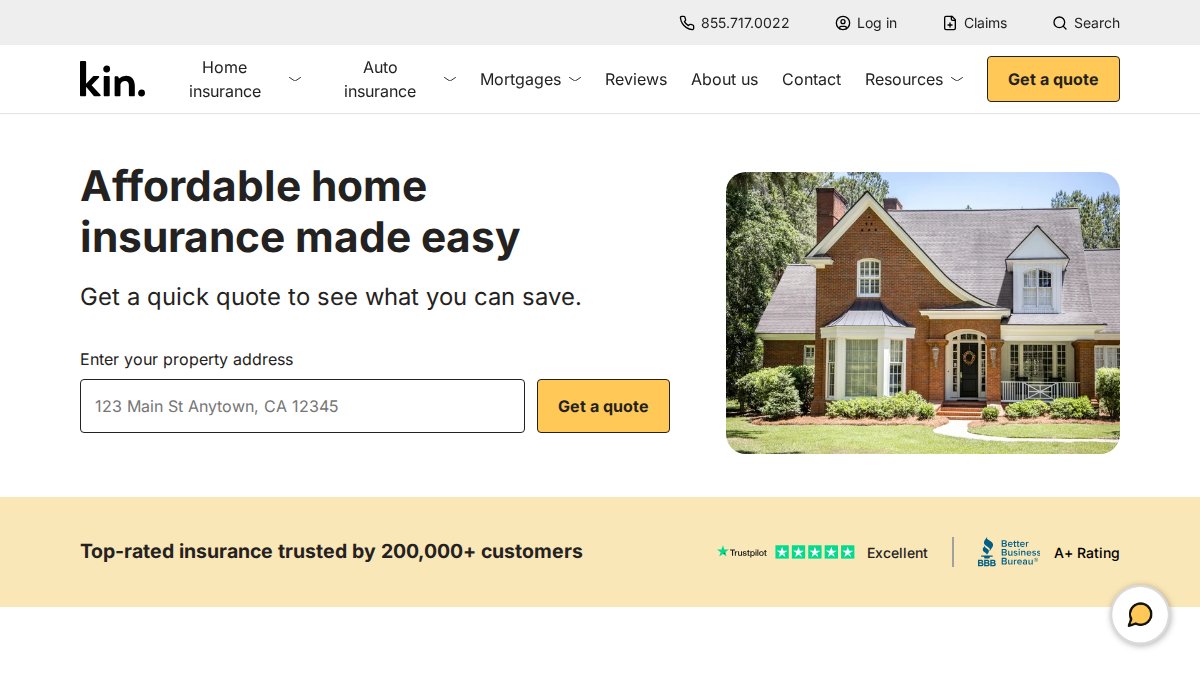
Kin Insurance specializes in homeowners coverage for catastrophe-prone states, including Florida. The company was founded specifically to serve homeowners in high-risk areas that traditional carriers were abandoning.
Kin's digital-first approach means you can get a quote online, bind coverage immediately, and manage your policy entirely through their app. The company offers replacement cost coverage for dwelling, structures, personal property, and liability. They've recently added auto insurance in Florida, so you can bundle coverage.
Customer satisfaction ratings are strong, with high marks for ease of use and claims handling. The limitation is scope. Kin specializes in homeowners insurance, not the full range of coverage an independent agent can access. If you need specialty coverage, high-value home protection, older home coverage, or non-standard auto insurance, Kin's options are limited.
Hippo Insurance: Tech-Forward Homeowners Protection
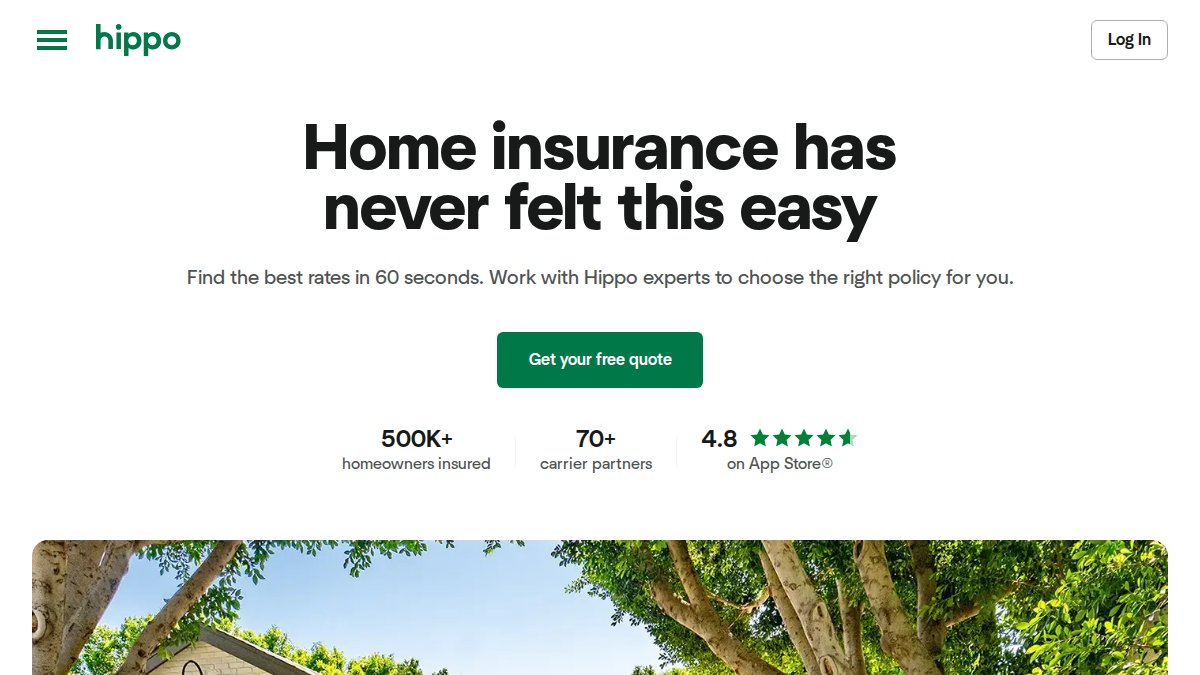
Hippo Insurance integrates smart home technology into coverage. The company offers higher-than-standard limits for home office equipment, computers, and service line connections. They provide complimentary smart home monitoring systems that can lower your rates.
Hippo's model works well for tech-savvy homeowners with newer properties. However, Hippo's rates are often higher for older properties, and the company may decline to insure homes built before certain years. If you own a 1998 home, which is common in Florida, Hippo might not be an option. The company also doesn't bundle homeowners and auto insurance.
Policygenius: Multi-Carrier Quote Comparison
Policygenius functions as an online broker connecting you with multiple carriers. You enter your information once, and the platform generates quotes from various insurance companies. Licensed agents working for Policygenius are salaried, not commission-based, which reduces incentive misalignment.
The platform's strength is breadth. You can compare homeowners, auto, life, and disability insurance in one place. The weakness is depth. The quote process can be tedious, and Policygenius doesn't provide the personalized guidance an independent agent would.
Insurtty: Florida-Focused Quote Marketplace
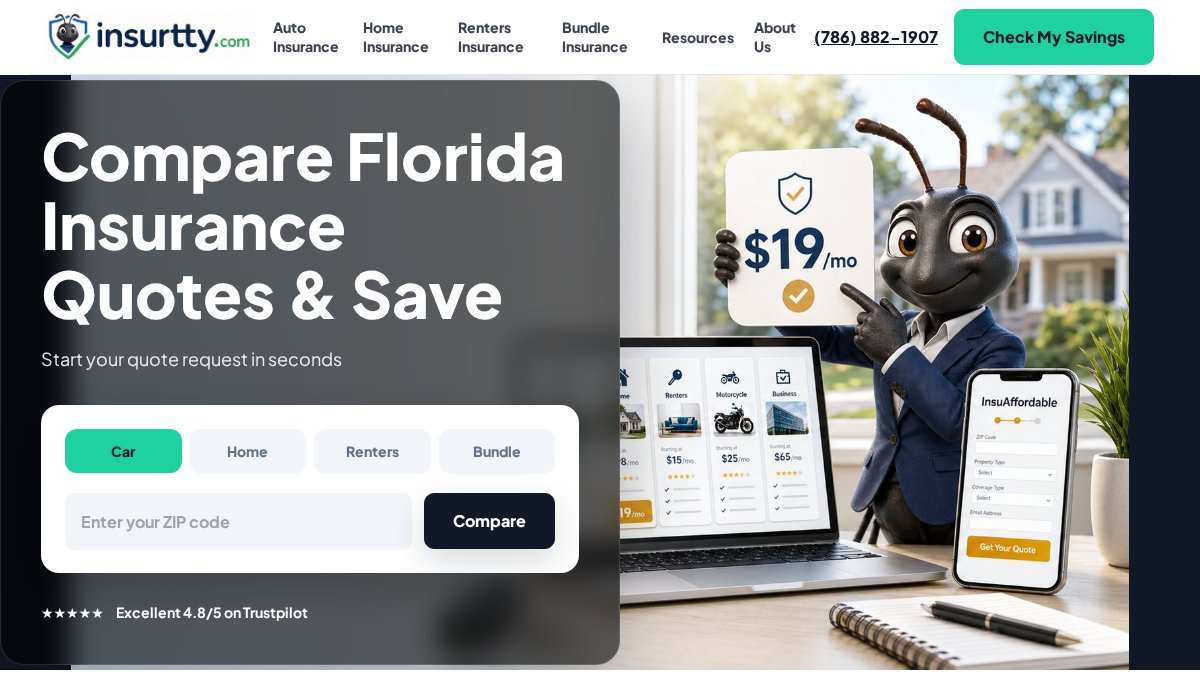
Insurtty is built specifically for Florida residents and focuses on the state's unique insurance landscape. The platform helps you understand PIP requirements for auto insurance, hurricane deductibles, and other Florida-specific coverage considerations.
You provide information once, and Insurtty connects you with quotes from multiple carriers. The platform also provides guidance on available discounts and helps you evaluate coverage options. If you want personalized assistance, Insurtty can connect you with licensed agents.
The advantage for Florida residents is obvious: the platform is built for your state's specific needs. The disadvantage is that Insurtty is primarily a quote tool. You ultimately purchase through partner agents or carriers, which adds a step compared to platforms where you can bind coverage instantly.
How to Compare Homeowners Insurance Quotes Across Providers
Comparing quotes effectively requires more than looking at the lowest price. You need to ensure you're comparing equivalent coverage across carriers.
Start by establishing your baseline coverage needs. Determine the replacement cost of your home's structure, the value of your personal property, and your desired liability limit. Request quotes with identical coverage limits across all carriers. If you quote one carrier with a $500,000 dwelling limit and another with $750,000, you can't compare rates directly.
Document the specific coverage each quote includes. Does the quote include replacement cost or actual cash value for personal property? What's the limit for valuable items like jewelry? Is water damage covered? Are service line repairs included? Two carriers might quote the same premium but with significantly different coverage.
| Comparison Element | What to Check | Why It Matters |
|---|---|---|
| Dwelling coverage | Replacement cost of structure | Ensures your home can be rebuilt |
| Personal property limit | Coverage for belongings | Protects furniture, electronics, clothing |
| Liability limit | Usually $100K-$500K | Protects you if someone is injured on property |
| Deductible | Amount you pay before insurance | Directly affects your premium |
| Water damage coverage | Included or excluded | Critical in Florida; standard policies exclude flood |
| Service line coverage | Underground utilities | Valuable add-on in many areas |
Ask about discounts explicitly. Carriers offer discounts for bundling home and auto, installing security systems, completing home improvements, or maintaining a claims-free history. These discounts can dramatically affect your actual rate.
Evaluate the carrier's financial stability and claims reputation. A lower quote from a carrier with poor claims service or weak financial ratings is a false economy. Check ratings from agencies like AM Best or Standard & Poor's. Read independent reviews of claims handling.
Coverage Gaps and Specialty Insurance Needs
Standard homeowners policies exclude certain types of damage and have limits on specific coverage. Understanding these gaps is essential, particularly in Florida.
Flood damage is the most critical gap. Standard homeowners insurance explicitly excludes flood damage, whether from hurricane storm surge, heavy rainfall, or overflowing rivers (iii.org). If you live in a flood zone, which includes most of coastal Florida and many inland areas, you need separate flood insurance. The National Flood Insurance Program (NFIP) is the primary source, though some private carriers now offer flood coverage. Flood insurance has a 30-day waiting period, so you can't buy it after a storm is forecast (fema.gov).
Water damage from other sources, burst pipes, roof leaks, water heater failure, is typically covered by homeowners insurance, though there's often a limit and damage from poor maintenance may be excluded.
Earthquake and landslide damage are excluded from standard policies. High-value property has limits in standard policies. Jewelry, art, and collectibles are typically limited to $1,500-$2,500, regardless of actual value (iii.org). Business property and inventory are excluded from homeowners policies.
For luxury homeowners in Florida, the gaps in standard coverage are particularly significant. High-value properties often need specialized coverage that standard carriers don't offer. An independent agent's access to specialty carriers becomes invaluable.
Making Your Choice: Agency vs. Platform vs. Direct Insurer
Your decision depends on your specific situation and what you value most.
Choose an independent agent if you have a non-standard situation, have been declined by other carriers, or value personalized guidance. An independent agent can access specialty markets and non-standard carriers that direct insurers and platforms can't reach. They'll advocate for you during claims. The trade-off is that you'll likely pay slightly more than the absolute lowest online quote, though an experienced agent often finds better rates by understanding which carriers value your specific profile.
Choose a digital platform if you have straightforward insurance needs, are comfortable making insurance decisions independently, and want speed and transparency. Platforms like Insurtty (for Florida-specific needs) or Policygenius (for broader options) let you compare quotes quickly. The trade-off is that you're making decisions without expert guidance and might miss coverage gaps.
Choose a direct insurer if you want the simplest digital experience and don't need specialty coverage. Companies like Kin or Hippo offer simplified online experiences and instant binding. The trade-off is limited carrier options. If they don't serve your risk profile, you're out of luck.
For many Florida residents, the best approach combines elements. You might use a platform like Insurtty to get baseline quotes and understand market pricing, then consult with an independent agent to explore specialty options or get guidance on coverage gaps.
Dehlinger Insurance offers the independent agent advantage with deep expertise in Florida's unique insurance landscape. With over 38 years of experience serving Florida residents, we understand the specific challenges you face, older homes, coastal risks, specialty coverage needs. We work with multiple top-tier carriers to find coverage options that direct insurers and platforms can't access. Whether you need specialized coverage for a luxury property, approval for an older home that mainstream carriers have declined, or expert guidance on structuring your coverage, we can help. Call us and get a quote today to see how an independent agent's access and expertise can serve your situation better than online platforms alone.
Frequently Asked Questions
What is the difference between a captive agent and an independent insurance agency?
Captive agents represent a single insurance carrier and can only sell that company's policies. Independent agents work with multiple carriers, giving you access to different coverage options and rates. Independent agents typically have broader market access and can help you find the best fit across several insurers, while captive agents offer deeper knowledge of one company's products. For Florida residents with specific needs like older home coverage, independent agents often provide more solutions.
How can I compare homeowners insurance quotes without using a single agency?
You can request quotes directly from multiple insurers through their websites, use online quote comparison platforms like Policygenius or Insurtty, or contact several independent agents. When comparing, ensure you're using identical coverage limits, deductibles, and policy terms across all quotes. Document the dwelling coverage amount, liability limits, deductible levels, and any additional endorsements. This approach takes time but reveals significant rate differences and helps you understand what each carrier offers for your specific property.
Are online-only insurance providers reliable alternatives to local agencies?
Online-only insurers like Kin and Hippo offer competitive pricing, fast quote processes, and digital policy management. However, they may have limitations: some don't offer all coverage types (like flood insurance), may decline older homes, or lack local expertise for Florida-specific risks. Local agencies provide personalized service, access to multiple carriers, and hands-on claims support. For straightforward coverage needs and newer homes, online platforms work well. For complex situations, older properties, or high-value homes, local expertise adds significant value.
What should I look for when switching insurance providers?
Check for coverage gaps between your old and new policies, especially regarding liability limits, deductibles, and additional endorsements. Review renewal dates to avoid lapses in coverage. Compare total annual costs including all discounts. Verify that the new provider covers your specific needs (older homes, luxury properties, or high-risk zones). Request quotes from multiple sources before committing. Ensure the new carrier is licensed by the Florida Office of Insurance Regulation (OIR). Ask about claims handling reputation and customer service availability, especially for emergency situations.
Choosing an insurance agency alternative isn't just about finding the lowest quote. It's about finding a partner who understands your specific situation and can help you navigate Florida's complex insurance landscape. Whether you choose an independent agent, a digital platform, or a direct insurer depends on your priorities, but understanding the real differences between these models ensures you make an informed decision rather than defaulting to whoever is most convenient.
This article was written using GrandRanker