 how-to
How to Pass a 4-Point Inspection for Insurance
Table of Contents
- What a 4-Point Inspection Covers and Why Insurers Ask for One
- 4-Point Inspection Requirements You Should Confirm Before Booking
- The 4-Point Inspection Checklist: Prepare Each System Before the Inspector Arrives
- Common Defects That Lead to Coverage Restrictions or Denial
- What Happens if You Fail a 4-Point Inspection
- 4-Point Inspection Cost, Timing, and How Long the Report Stays Valid
- How to Choose a Licensed Inspector and Read the Report
- Conclusion
- Frequently Asked Questions
Last Updated: October 18, 2026
What a 4-Point Inspection Covers and Why Insurers Ask for One
A 4-point inspection is a limited review of four major home systems: roof, electrical, plumbing, and HVAC.
At Dehlinger Insurance, we have spent over 38 years helping homeowners through this process. The inspection is straightforward; the preparation is where people lose time and money.
Most 4-point inspections are not pass-or-fail exams. They are documentation exercises: an inspector records what they see, and the underwriter decides what risk that represents.
4-Point Inspection Requirements You Should Confirm Before Booking
Requirements vary by insurer, state, and policy, two carriers looking at the same home can ask for different things. Call your agent first and confirm:
- Which four systems the carrier wants documented
- Whether the report must come from a licensed inspector
- Whether photos are required for each system
Many insurers accept a standard form, but some want their own paperwork, getting this wrong means paying for a second inspection. Also ask whether the report can be reused; if you are shopping coverage, one report may serve several carriers.
The 4-Point Inspection Checklist: Prepare Each System Before the Inspector Arrives
Preparation is the part most homeowners skip. An inspector documents visible condition only, what they cannot see, they cannot credit. The checklist below follows how the report is organized and how an underwriter will read it.
Before the appointment, clear the path:
- Clear access to the electrical panel and water heater
- Replace missing outlet and switch cover plates
- Fix active leaks under sinks and at supply lines
That last item matters: if you know a system is near the end of its useful life, you can plan for it instead of being surprised by the report.
Roof: Age, Covering, and Visible Condition
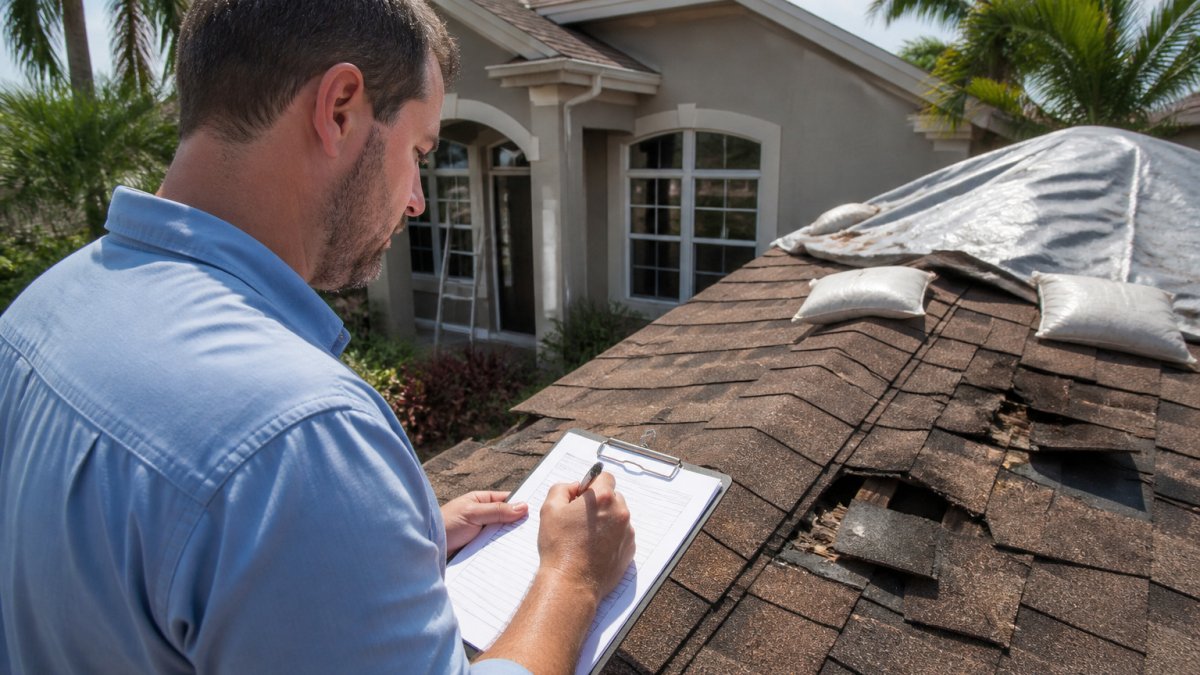
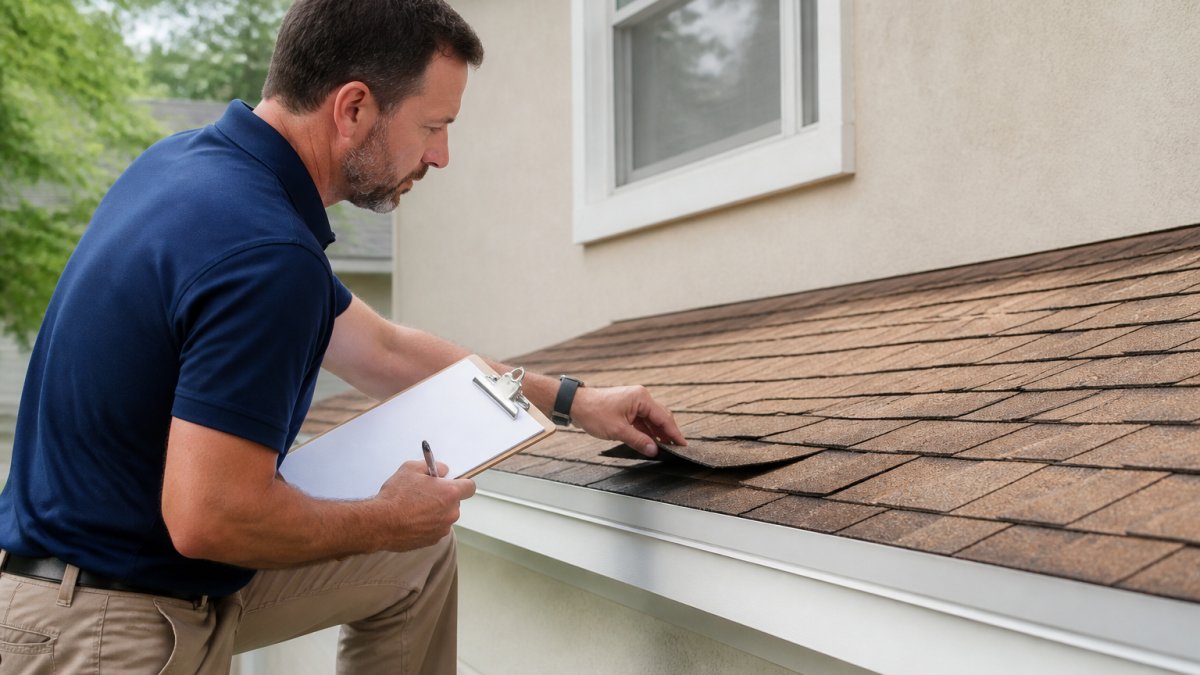
The inspector looks at roof age, covering type, and visible condition, missing shingles, sagging, active leaks, patched areas, and notes remaining useful life. A few worn shingles may draw a note; visible sagging often draws a requirement.
Records to gather before the inspection:
- The roof permit or installation invoice, if you have it
- Any warranty paperwork from the roofing contractor
- Receipts for recent repairs or patching
Visible issues to address:
- Replace missing or lifted shingles where it is safe to do so
- Clear moss, leaves, and debris from valleys and gutters
- Trim limbs that touch or overhang the roof surface
A roof with documented age and a recent repair receipt reads better than one of the same age with no paperwork. The inspector is not grading shingles; they are recording what the underwriter needs to price the risk.
Electrical: Panel, Wiring, and Safety Hazards
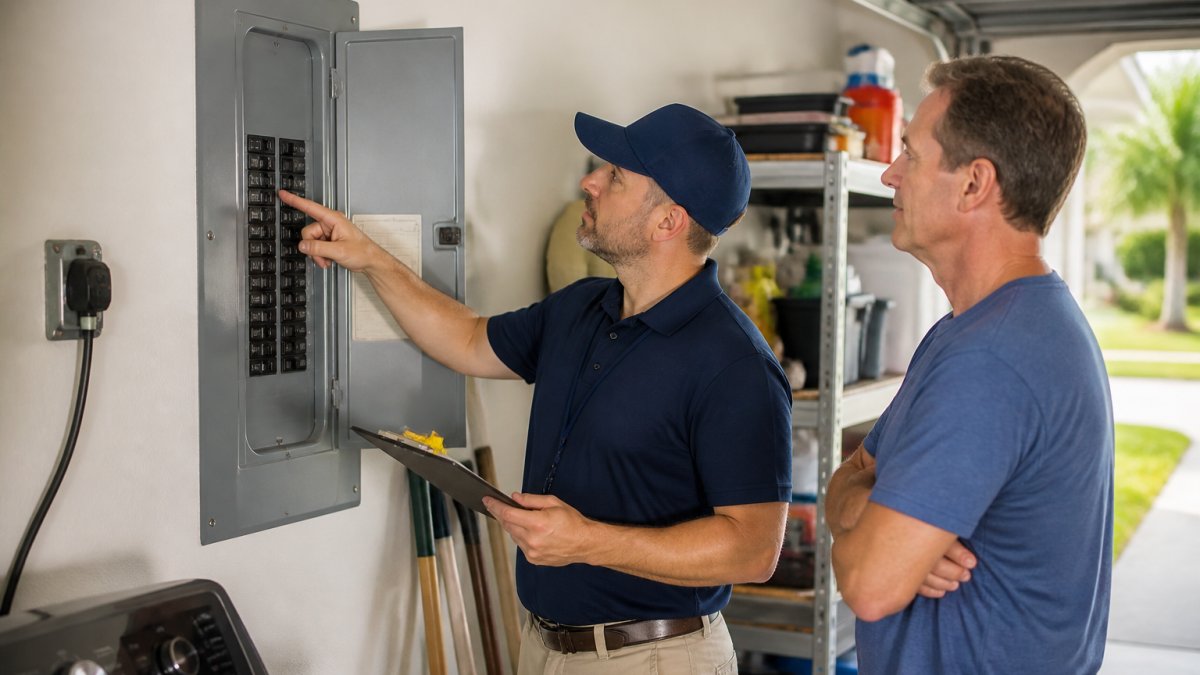
Electrical is where underwriters get nervous. The inspector checks panel type and brand, wiring type, and obvious safety hazards, double-tapped breakers, exposed wiring, and outdated panel brands all get recorded.
Records to gather before the inspection:
- The panel label photo showing brand and model
- Any electrician invoice for panel replacement or repair
- Permits for any added circuits or subpanels
Visible issues to address:
- Replace missing breaker panel cover screws and dead-front covers
- Label each breaker clearly
- Remove stored items blocking the panel
If a panel is already scheduled for replacement, tell the inspector, a report showing a plan in motion reads very differently to an underwriter than an open hazard with no plan.
Plumbing: Supply Lines, Drain Lines, and Water Heater
Plumbing covers supply lines, drain lines, and the water heater. The inspector looks for active leaks, corrosion, and the water heater's age and condition.
Polybutylene supply lines are a frequent flag. A water heater past its expected service life usually gets noted even when it still works.
Records to gather before the inspection:
- The water heater label photo showing manufacture date
- Any plumber invoice for repiping or leak repair
- Receipts for water heater service or replacement
Visible issues to address:
- Fix active leaks under sinks and at supply lines
- Replace a water heater that shows heavy rust or corrosion at the tank or fittings
- Clear stored items away from the water heater and main shutoff
A water heater with a manufacture date and a service receipt is easier for an underwriter to accept than the same unit with no records.
HVAC: Heating and Cooling Equipment
The HVAC portion documents the age and visible condition of the heating and cooling equipment. The inspector does not run a full diagnostic. They record what they can see and hear.
A working system with a documented service history reads better than an aging unit with no records. Keep your service receipts.
Records to gather before the inspection:
- The equipment label photo showing model and manufacture date
- The most recent service invoice from an HVAC technician
- Any warranty paperwork for the furnace or condenser
Visible issues to address:
Call Us and Get a Quote Today! →
- Replace a dirty filter before the appointment
- Clear space around the outdoor condenser and indoor air handler
- Remove debris, vines, or stored items blocking airflow
What Counts as an Acceptable Condition
Homeowners often ask which defects are fixable and which force replacement. It depends on the insurer, but a few patterns hold across most carriers:
- Usually fixable with documentation: missing cover plates, dirty filters, minor debris, single missing shingles, a labeled panel, a service receipt for a working system.
- Often requires repair before issuance: active leaks, exposed wiring, a water heater with heavy tank corrosion, a roof with active leaks or sagging.
- Often requires replacement or a specialist evaluation: Federal Pacific or Zinsco panels, polybutylene supply lines, a roof at or past expected service life, aluminum branch wiring in some cases.
Do not assume cosmetic improvements will change the outcome. A fresh coat of paint on a rusted water heater does not change what the inspector records. What changes the underwriter's view is documented repair or replacement, with receipts and photos.
Common Defects That Lead to Coverage Restrictions or Denial
Some defects worry underwriters more than others and most often lead to restrictions or a declined application:
- Roofs at or past expected service life
- Federal Pacific or Zinsco electrical panels
- Polybutylene plumbing supply lines
Underwriters are not grading your home; they are pricing risk. A defect that is documented and scheduled for repair often gets a different response than the same defect with no plan.
What Happens if You Fail a 4-Point Inspection
A failed 4-point inspection is not the end of the road, it means the report showed conditions the carrier will not accept as-is. Most carriers respond in one of three ways:
- Accept with conditions. Coverage is issued, but a specific system must be repaired or replaced within a set window.
- Require repair before issuance. No policy until the work is done and documented.
- Decline the risk. The carrier will not write the policy at all.
If you get an unfavorable report, do not panic and do not hide it. Get the specific defect in writing, get a repair estimate, and talk to your agent about which carriers handle that situation. A reinspection after repairs is common, so keep photos and receipts. Documenting these proactive maintenance steps now creates a clear paper trail that simplifies the process should you ever need to handle insurance claims for future property damage.
4-Point Inspection Cost, Timing, and How Long the Report Stays Valid
A 4-point inspection cost typically depends on the provider, home size, and whether you need a rush appointment. We do not quote a set price because it varies by inspector and location, ask for the fee upfront and confirm what it includes.
What the fee usually covers, and what it may not:
- Usually included: the on-site visit, the written report, and photos of each system.
- Sometimes extra: rush scheduling, a reinspection after repairs, a second report for a different carrier, or a report formatted for a specific insurer's form.
- Worth asking about: whether the fee is flat or per system, and whether a reinspection is billed separately.
Timing works like this:
| Stage | Typical Timing | What to Do |
|---|---|---|
| Booking | Days to a week out | Confirm carrier requirements first |
| On-site inspection | Under an hour | Have all four systems accessible |
| Report delivery | A few business days | Review every entry before submitting |
| Validity window | Varies by carrier | Confirm with your agent at application |
Report validity is the detail people forget. Some carriers want a recent report at policy issuance, so if your closing date slips, an older report may no longer qualify. Ask your agent how long it stays valid for your policy.
How Requirements Vary by Insurer, State, and Policy
There is no single national rule for what a 4-point inspection must contain, how old the report can be, or who may perform it. Requirements are set by each insurer and shaped by state regulation. To confirm the criteria:
- Ask your agent for the carrier's written inspection requirement before you book. Get it in writing, not just over the phone.
- Confirm the accepted form. Many insurers accept a standard inspection form, but some want their own paperwork. Getting this wrong means paying for a second inspection.
- Confirm who may perform the inspection. Some carriers require a licensed inspector; others accept a report from a qualified contractor.
- Confirm the accepted report age. Ask how recent the report must be at policy issuance, not just at application.
- Confirm whether the report can be reused. If you are shopping coverage, one report may serve several carriers. That saves both time and money.
What to Do After an Unfavorable Report
An unfavorable report means the report showed conditions the carrier will not accept as-is. A practical path forward:
- Get the specific defect in writing. Ask the inspector to identify the exact system and condition the underwriter will question.
- Get a repair estimate from a licensed contractor for that specific defect.
- Talk to your agent about which carriers handle that situation. Some carriers will accept a documented repair plan; others will not.
- Complete the repair and keep the paperwork. Save the invoice, the permit if one is required, and before-and-after photos.
- Request a reinspection or an updated report. A reinspection after repairs is common, and it is often billed separately from the original visit.
- Submit the updated report with the repair documentation. The underwriter will want to see both the corrected condition and the proof of work.
Keep photos and receipts, because the underwriter will want documentation. Do not hide an unfavorable report or shop for an inspector who will omit a defect. A report that omits a known problem can create problems at claim time.
How to Choose a Licensed Inspector and Read the Report
Choose an inspector who is licensed, insured, and familiar with insurance inspections specifically. A general home inspector may do excellent work and still produce a report that misses what underwriters look for.
Ask three questions before booking:
- Are you licensed in this state?
- Do you use the carrier's required form?
- Will the report include photos of each system?
When the report arrives, read it line by line, the age of each system, the condition notes, and any flagged safety hazard. If something is wrong, say so before the report goes to the carrier; corrections are far easier before submission than after.
Conclusion
Passing a 4-point inspection comes down to preparation and documentation, not luck.
This is where an experienced agency pays off. At Dehlinger Insurance, we help homeowners prepare for inspections and match their property with the right carrier.
Call us and get a quote today. We will walk you through the requirements before you pay for an inspection you do not need.
Frequently Asked Questions
What do inspectors check during a 4-point inspection?
A 4-point inspection looks at four systems: the roof, electrical, plumbing, and HVAC. The inspector documents roof age and covering condition, the electrical panel and visible wiring, supply and drain lines plus the water heater, and the age and working condition of the heating and cooling equipment. Findings go into an inspection report with photos that your insurance carrier uses during underwriting. The focus is on visible condition, safety hazards, and remaining useful life, not cosmetic issues.
What happens if you fail a 4-point inspection?
A failed report does not automatically end your insurance application. The carrier may decline coverage, offer a policy with restrictions, or ask you to complete repairs and submit documentation before policy issuance. Common next steps include replacing a roof, updating an electrical panel, or repairing plumbing defects, then requesting a reinspection. Ask the insurer which specific items must be corrected, since requirements vary by carrier and policy.
How long is a 4-point inspection valid for insurance?
Validity depends on the insurance carrier. Many accept reports that are recent, often within the last year, but some require a newer report or a reinspection after major repairs. If you switch insurers during the closing process, the new carrier may ask for its own inspection even if you already have a report. Confirm the acceptance window with your agent before you pay for a second inspection.
Can you get insurance if your home fails a 4-point inspection?
Yes, in many cases. Some carriers will issue a policy after specified repairs are completed and documented with photos or invoices. Others may offer coverage with exclusions for the failing system, or place the home with a specialty carrier that handles older homes. The practical step is to get the report in writing, ask the underwriter which defects matter, and fix those items first. An experienced agent can match your home to carriers that accept its condition.