 how-to
What a Mobile Home Insurance Policy Actually Covers
Table of Contents
- What Mobile Home Insurance Covers: The Four Core Protections
- Dwelling Coverage for the Structure Itself
- Other Structures and Site Work on the Property
- Personal Liability and Medical Payments
- Mobile Home Personal Property Coverage: What Belongs to You
- Covered Perils: Fire, Wind, Hail, Theft, and Severe Weather
- Mobile Home Insurance Wind and Hurricane Coverage
- Mobile Home Insurance Exclusions: What the Policy Will Not Pay For
- Mobile Home Insurance Replacement Cost vs. Actual Cash Value
- How to File a Claim and Document Your Loss
- Conclusion
- Frequently Asked Questions
Last Updated: October 17, 2026
What Mobile Home Insurance Covers: The Four Core Protections
A mobile home insurance policy covers four core things: the structure itself, other structures on your lot, your personal belongings, and your legal liability. Most people assume a mobile home policy works exactly like a standard homeowners policy. It mostly does, but the details matter.
Here is the short version before we go deeper:
- Dwelling coverage pays to repair or rebuild the home itself.
- Other structures coverage pays for sheds, carports, and attached additions.
- Personal property coverage pays for what is inside the home.
- Personal liability coverage pays when someone is hurt or their property is damaged because of you.
Most policies also add medical payments as a fifth piece. It covers small injuries to guests, no lawsuit required.
The sections below break down each one, plus the exclusions that surprise people most.
Dwelling Coverage for the Structure Itself
Dwelling coverage is the part of a mobile home insurance policy that pays to repair or rebuild the physical structure of your home after a covered loss. It covers the walls, roof, flooring, built-in cabinets, and permanently attached fixtures.
This is the largest piece of most policies. The dwelling limit should reflect what it would cost to rebuild your home today, not what you paid for it. Those two numbers are often very different.
A few things to know:
- Manufactured homes are usually insured on a replacement cost basis, but some carriers only offer actual cash value on older units.
- Attached additions like a Florida room or a porch may fall under dwelling coverage or under other structures, depending on how they are built.
- The dwelling limit is a ceiling. If rebuilding costs more, you pay the difference.
Other Structures and Site Work on the Property
Other structures coverage pays for detached structures on your lot that are not attached to the home. Think sheds, detached garages, carports, fencing, and freestanding decks.
Site work is where mobile home policies get interesting. Things like foundation, steps, and utility connections are often handled differently than a site-built home policy would handle them.
Ask specifically about:
- The foundation or pier system your home sits on
- Steps, stairs, and access ramps
- Utility hookups and underground lines
- Fencing and retaining walls
- Driveways and walkways
If your home is in a community where you lease the lot, the land itself is not yours to insure.
Personal Liability and Medical Payments
Personal liability coverage pays when someone is injured on your property or when you accidentally damage someone else's property. It also covers legal defense costs if you are sued.
Typical liability claims on a mobile home policy include:
- A guest trips on your steps and breaks an arm
- Your dog bites a visitor
- A delivery driver slips on your wet walkway
- Your child accidentally damages a neighbor's property
Medical payments coverage handles smaller injuries without any question of fault. It pays the medical bills of a guest hurt on your property, up to a set limit, no lawsuit needed.
Liability coverage is usually sold in round numbers. Higher limits cost relatively little more.
Mobile Home Personal Property Coverage: What Belongs to You
Personal property coverage pays to replace the belongings inside your home if they are damaged, destroyed, or stolen.
Two things trip people up here.
First, the personal property limit is usually a percentage of the dwelling limit. If your home is insured for a lower amount, your belongings coverage drops with it.
Second, certain categories have sub-limits. A mobile home insurance policy typically caps payouts for:
- Jewelry and watches
- Cash and coins
- Firearms
- Silverware and goldware
- Business equipment kept at home
- Collectibles and art
If you own something valuable in one of these categories, ask about a scheduled endorsement. It lists the item separately and insures it for a stated value.
Covered Perils: Fire, Wind, Hail, Theft, and Severe Weather
A covered peril is a specific cause of loss the policy agrees to pay for. Most mobile home policies list the covered perils by name rather than covering everything.
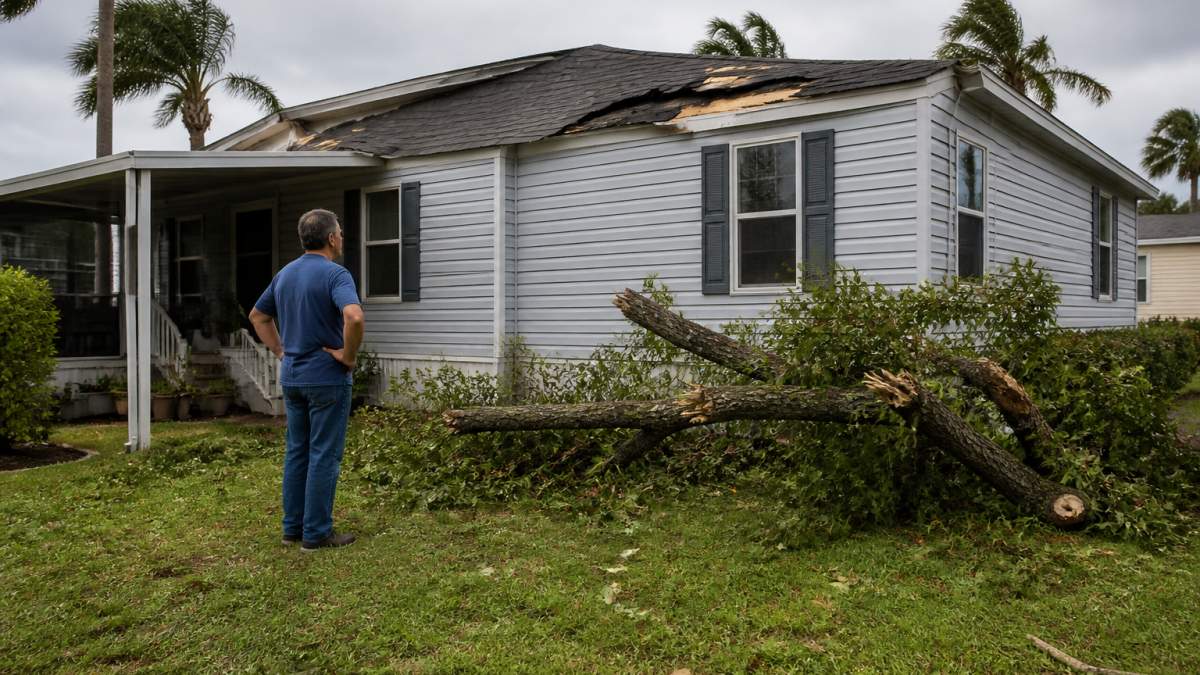
Fire and wind drive most large claims. Theft and vandalism are more common than people expect, especially in homes that sit empty part of the year.
Here is how the main perils usually break down:
| Peril | Typically Covered | Watch For |
|---|---|---|
| Fire and lightning | Yes | Smoke damage limits |
| Wind and hail | Yes | Separate hurricane deductible |
| Theft | Yes | Vacancy exclusions |
| Vandalism | Yes | Vacancy exclusions |
| Freezing pipes | Often | May require heat maintenance |
| Flood | No | Separate policy needed |
Notice the flood line. We will come back to that.
Call Us and Get a Quote Today! →
Mobile Home Insurance Wind and Hurricane Coverage
Wind coverage is included on most mobile home policies, but in coastal states the terms change. Insurers often apply a separate hurricane deductible that is much higher than the standard deductible.
Standard deductibles are usually a flat dollar amount. Hurricane deductibles are often a percentage of the dwelling limit. A percentage deductible on a home insured for a higher amount adds up fast. Read the declarations page and find the hurricane deductible line before you assume anything.
Wind coverage also comes with conditions:
- Age of roof. Older roofs may be excluded or depreciated.
- Tie-downs and anchoring. Many carriers require them and may inspect.
- Screens and awnings. These are often limited or excluded.
- Vacancy. A home left empty for an extended period may lose wind coverage.
Hurricane Deductibles and Separate Wind Policies
In high-risk coastal areas, some carriers stop offering wind coverage at all. Homeowners then buy a separate wind policy or turn to a state-backed insurer of last resort.
If you get a quote that looks unusually cheap, check whether wind is actually included. A policy that excludes wind in a hurricane zone is not much protection.
Mobile Home Insurance Exclusions: What the Policy Will Not Pay For
Policy exclusions are the losses your mobile home insurance policy will not pay for. They are listed in the policy, and they are not negotiable after a loss happens.
The ones that catch people most often:
- Flood damage. Rising water, storm surge, and overflowing waterways are excluded.
- Earthquake and earth movement. Sinkholes, settling, and landslides are usually excluded.
- Normal wear and tear. Rot, rust, and deterioration are maintenance, not claims.
- Pest and insect damage. Termites and rodents are excluded.
- Intentional damage. Obviously.
- Vacancy. Homes empty beyond a set period lose coverage.
- Business use. A home-based business may need an endorsement.
- Ordinance or law. Upgrading to current code after a loss may not be covered.
Flood, Earthquake, and Other Separate-Policy Needs
Flood insurance is not part of a standard mobile home policy. It comes from a separate flood policy, typically through the National Flood Insurance Program or a private carrier. FEMA's flood insurance guidance explains how the program works and who can buy it.
Earthquake coverage is a separate endorsement or policy in most of the country. Sinkhole coverage, where it is available, is also separate and often requires an inspection.
The rule is simple: if the water came from the sky and pooled, that is flood. If it came through the roof, that is usually wind or rain damage. The distinction decides who pays.
Mobile Home Insurance Replacement Cost vs. Actual Cash Value
Replacement cost and actual cash value are the two ways a policy can settle a claim, and the difference is large.
A quick example. A ten-year-old refrigerator is destroyed in a fire. Under replacement cost, the policy pays for a comparable new refrigerator.
Which one applies depends on the policy and the item:
- Dwelling: often replacement cost, but older mobile homes may be limited to actual cash value
- Personal property: frequently actual cash value unless you buy the replacement cost endorsement
- Roofs: many carriers now settle roofs at actual cash value based on age
Ask two questions before you buy: is the dwelling settled at replacement cost, and is the personal property settled at replacement cost? The answers change what you pay and what you get.
How to File a Claim and Document Your Loss
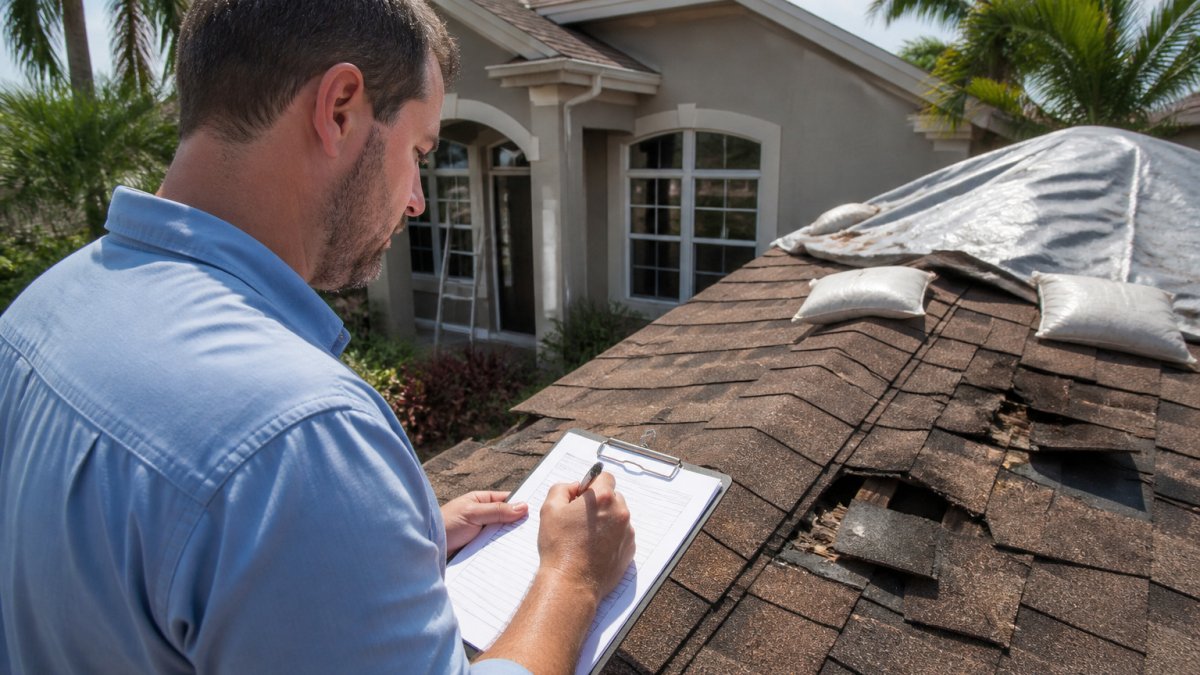
Filing a claim well comes down to speed and evidence. Report the loss promptly, document everything before you clean up, and keep every receipt.
Here is the process to follow:
- Make it safe. Stop further damage. Board windows, tarp the roof, shut off water.
- Photograph everything. Wide shots of each room, then close-ups of damage. Do this before cleanup.
- Call your agent. Report the claim and get the claim number the same day.
- Keep damaged items. Do not throw anything away until the adjuster has seen it or approved disposal.
- Save receipts. Hotel, meals, and temporary repairs may be reimbursable under loss of use.
- Get repair estimates. Two or three written estimates help the adjuster move faster.
- Track every conversation. Names, dates, and what was agreed.
- Review the settlement. Compare the adjuster's estimate to your own. Ask about anything missing.
For guidance on how claims and consumer protections work, the Florida Department of Financial Services publishes resources for policyholders, and the Insurance Information Institute explains how home claims are generally handled.
Conclusion
Mobile home coverage is not complicated once you see the four pieces clearly: the structure, the other structures, your belongings, and your liability.
That is where a real conversation with an agent pays off. Dehlinger Insurance has served homeowners for over 38 years, and we work with multiple top carriers to match coverage to your home and your budget.
Call us and get a quote today. We will walk you through what your policy actually covers, line by line.
Frequently Asked Questions
Does mobile home insurance cover personal belongings?
Yes. Mobile home personal property coverage pays to repair or replace items like furniture, appliances, clothing, electronics, and kitchenware if they are damaged by a covered peril such as fire, wind, hail, or theft. Most policies set a personal property limit that is a percentage of your dwelling coverage, often 50% to 70%. High-value items like jewelry and cash usually have small sub-limits, so ask about scheduling those separately if they matter to you.
Does mobile home insurance cover wind, hail, or hurricane damage?
Wind and hail damage to the structure and your belongings is typically covered under a standard mobile home policy. Hurricane damage may also be covered, but many policies apply a separate hurricane deductible calculated as a percentage of your dwelling limit, often 1% to 5%. In coastal areas, wind coverage may sit with a separate carrier or a state-backed program. Read the wind and hurricane sections of your policy before storm season so you know exactly what you owe out of pocket.
What is the difference between replacement cost and actual cash value on a mobile home policy?
Replacement cost pays to rebuild or replace your home and belongings at today's prices, with no deduction for age. Actual cash value pays replacement cost minus depreciation, so a 10-year-old roof pays out far less than what a new one costs. Replacement cost coverage costs more in premium but usually leaves you with a smaller gap after a total loss. Check which settlement method applies to your dwelling and your personal property separately, because some policies mix the two.
What does a mobile home insurance policy usually exclude?
Standard mobile home insurance exclusions typically include flood damage, earthquake, normal wear and tear, insect or rodent infestation, neglect, and damage from poor maintenance. Land is never covered, and site work such as wells, septic systems, and fencing may have low limits or no coverage. Flood requires a separate policy, often through the National Flood Insurance Program or a private carrier. Review the exclusions page of your policy and ask about endorsements for anything you cannot afford to lose.