 ultimate-guide
Florida Wind Mitigation Inspections: 2026 Guide
Table of Contents
- How a Wind Mitigation Inspection Cuts Your Florida Home Insurance Premium
- Wind Mitigation Inspection Checklist: What Inspectors Actually Examine
- Florida Wind Mitigation Credits: How Insurers Calculate Your Discount
- The Wind Mitigation Inspection Report Form: A Field-by-Field Walkthrough
- Wind Mitigation Inspection Validity Period: When You Need a New Report
- Wind Mitigation vs. Four-Point vs. Home Inspection: What's the Difference?
- When a Feature Is Hidden or a Report Is Wrong: Your Options
- Conclusion: Turning Inspection Findings into Real Savings
- Frequently Asked Questions
Last Updated: October 4, 2026
How a Wind Mitigation Inspection Cuts Your Florida Home Insurance Premium
A wind mitigation inspection is a professional assessment of the storm-resistant features built into your home, and understanding Florida home insurance wind mitigation inspections is often the single fastest way to lower a premium that has climbed for years.
Here is the part most guides get wrong: the inspection does not make your home safer. It proves what is already there. Insurers price wind risk on evidence, and without a report they assume the worst.
Wind Mitigation Inspection Checklist: What Inspectors Actually Examine
Inspectors examine seven core features, and each one maps to a line on the state's uniform report form.
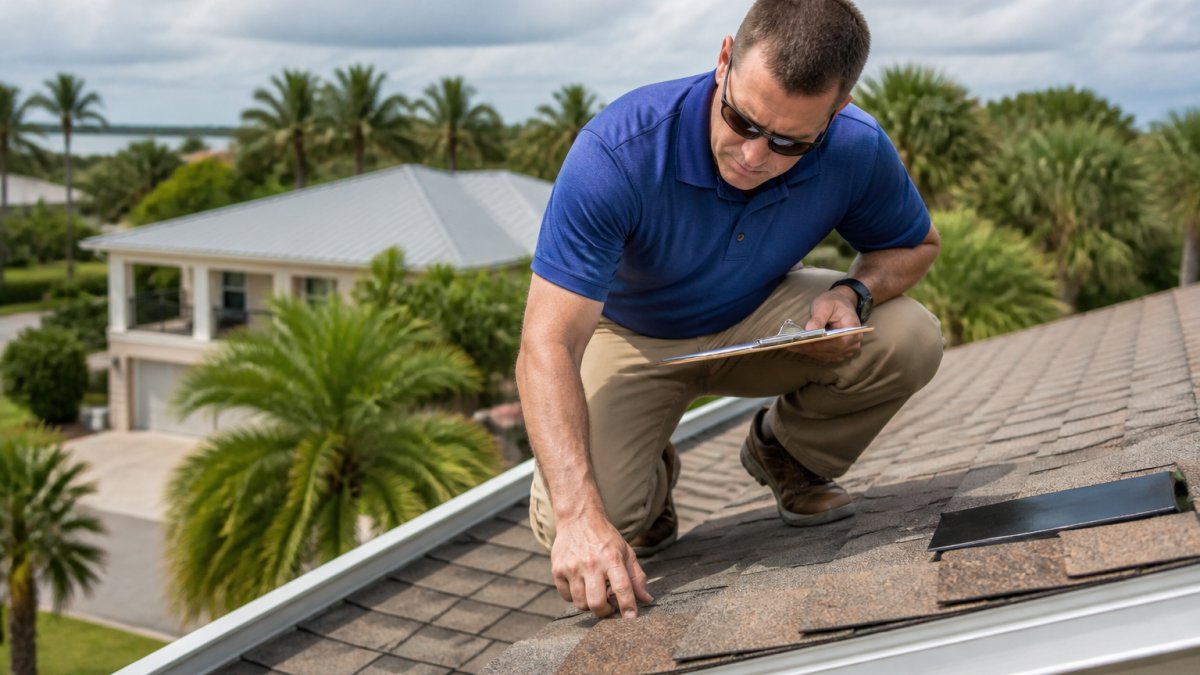
Roof Covering, Roof Age, and Roof Shape
The inspector records the roof covering material, its age, and the roof shape. A hip roof, which slopes on all sides, performs better in high winds than a gable roof because it deflects wind rather than catching it. Roof age matters because older coverings lose rating credit.
Roof Deck Attachment and Roof-to-Wall Attachment
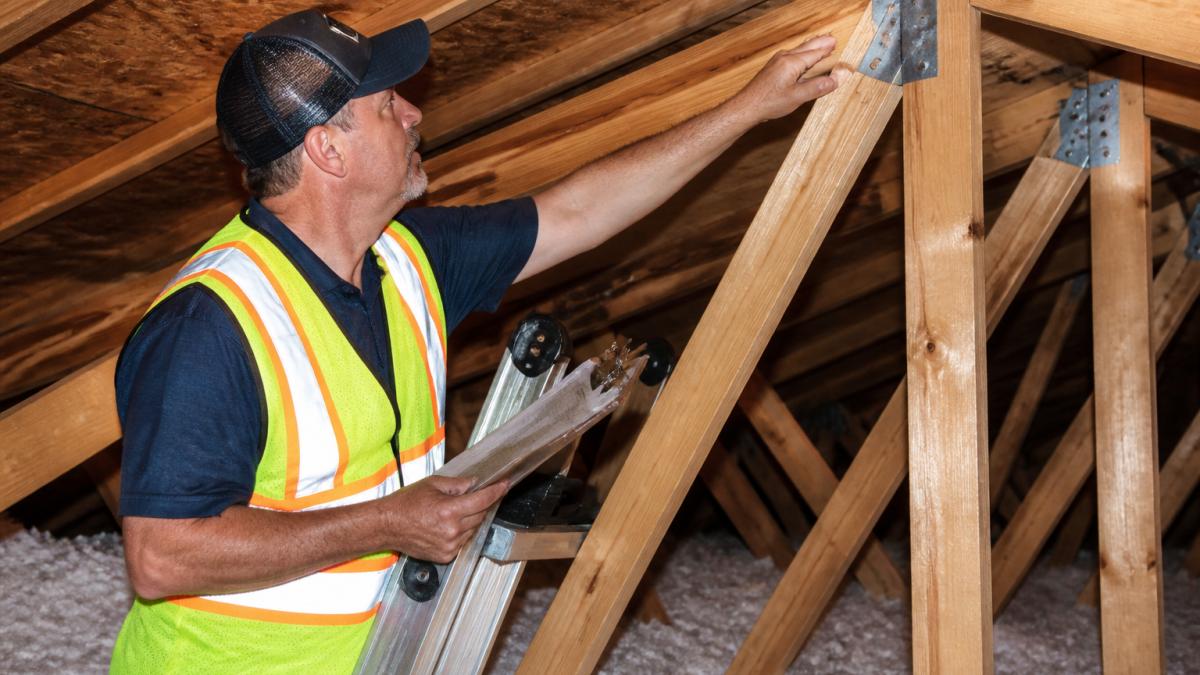
Roof deck attachment describes how the plywood sheathing is fastened to the trusses. Roof-to-wall attachment describes how the roof structure connects to the walls. Hurricane clips, single wraps, double wraps, and toe nails each carry different credit values, ranked from strongest to weakest.
Secondary Water Resistance and Opening Protection
Secondary water resistance is a sealed underlayment layer that keeps water out if the roof covering fails. Opening protection covers impact-resistant windows, storm shutters, exterior doors, garage doors, and skylights that resist wind-borne debris.
Florida Wind Mitigation Credits: How Insurers Calculate Your Discount
Wind mitigation credits are not a single flat percentage off your premium. They are built feature by feature, and the way most carriers apply them is worth understanding before you order an inspection.
The mechanism: construction type, then feature credits
Most carriers start by classifying your home into a wind mitigation construction type based on the uniform report.
That last point matters. Your total bill includes wind, non-wind, liability, contents, and other components. A wind mitigation credit reduces the wind portion, so the dollar impact depends on how large that portion is for your home, your carrier, and your territory.
What actually drives the size of a credit
- Roof-to-wall attachment is typically the most heavily weighted item. Double wraps and single wraps generally earn more credit than clips, and clips earn more than toe nails.
- Roof deck attachment depends on the fastener type and the spacing between fasteners. Closer, stronger fastening generally scores better than widely spaced or unknown fastening.
- Roof shape favors hip roofs over gable roofs because a hip deflects wind rather than catching it.
Realistic expectations, not guarantees
There is no universal savings figure, and any article that promises one is guessing.
A useful way to think about it: the inspection tells your insurer the truth about your roof. The size of the credit is the insurer's decision, based on its filed rating plan. Treat the report as the input, not the outcome.
How to sanity-check your credit
After your policy renews, compare the wind premium line before and after the report was applied. If the change looks smaller than the features on your report suggest, ask your agent or carrier for a written breakdown of how each feature was credited.
Florida Office of Insurance Regulation publishes consumer resources on how wind mitigation credits and rate filings work.
The Wind Mitigation Inspection Report Form: A Field-by-Field Walkthrough
The wind mitigation inspection report form is the state's uniform document, and every insurer reads the same fields. Here is what each section captures:
| Form Section | What It Records | Credit Weight |
|---|---|---|
| Roof covering | Material, age, permit date | High |
| Roof deck attachment | Fastener type and spacing | High |
| Roof-to-wall attachment | Clips, wraps, or toe nails | Highest |
| Roof shape | Hip, gable, or flat | Moderate |
| Secondary water resistance | Sealed or unsealed | Moderate |
| Opening protection | Windows, doors, garage | High |
A common mistake is assuming your contractor's invoice counts as proof. It does not. Only the completed uniform form, signed by a qualified inspector, carries weight with an underwriter.
Wind Mitigation Inspection Validity Period: When You Need a New Report
A wind mitigation report does not last forever, and understanding the timing rules keeps you from paying for an inspection you did not need, or losing a credit you already earned.
How long a report stays valid
Most carriers treat a wind mitigation report as valid for about five years from the inspection date. Some accept reports a little longer, and some require a new one sooner.
A practical habit is to note the inspection date and set a reminder about a month before the five-year mark, so you can decide whether to re-inspect before renewal rather than after.
Call Us and Get a Quote Today! →
What an inspection typically costs and what moves the price
Costs vary by inspector, region, and the complexity of the home. Factors that tend to push the price up include:
- A steep or multi-story roof that takes longer to access safely
- A tile or metal roof that requires more careful examination
- A home where key features are concealed and the inspector has to work harder to document them
Many inspectors offer a bundled price if you order a wind mitigation inspection together with a four-point inspection. Ask about that before you book.
How to find a qualified inspector
Not everyone who inspects homes can sign the uniform wind mitigation form. Look for an inspector who is authorized to complete that specific form, and ask up front whether they carry the credentials your carrier accepts. A good inspector will also tell you what they can and cannot see, and will photograph the features they document so the report is defensible if it is ever questioned.
Scheduling and turnaround
Inspection appointments are usually quick, often under an hour for a straightforward home, but the report itself may take a few business days to arrive. If you are under a deadline, such as a renewal date or a real estate closing, tell the inspector when you book. Rush turnaround is sometimes available for an added fee.
When a feature is hidden or documentation is missing
This is the most common obstacle. If a feature is buried behind drywall or otherwise concealed, the inspector cannot credit what they cannot see. In that situation:
- Ask the inspector to document what is visible and note what is concealed.
- Gather supporting evidence: permits, contractor invoices, product approvals, or photographs taken during construction.
- Provide that evidence to your carrier and ask whether it will accept it in place of a visible inspection.
Some carriers will accept alternative documentation; others will not. It is worth asking before you assume the credit is lost.
How to challenge an inaccurate report or credit decision
If you believe the report contains an error, contact the inspection company first and request a corrected form. Inspectors make mistakes, and most will fix them.
If the report is correct but your insurer appears to have misread it, request a written explanation of how the credit was calculated. Escalate to the carrier's underwriting department if the first response does not resolve it.
Wind Mitigation vs. Four-Point vs. Home Inspection: What's the Difference?
These three inspections answer different questions, and mixing them up wastes money. A wind mitigation inspection measures storm-resistant features for insurance credit. A four-point inspection checks the roof, electrical, plumbing, and HVAC systems for insurability.
- Wind mitigation: drives premium credits
- Four-point: determines whether a carrier will write the policy at all
- Home inspection: informs the purchase decision
For an older home, you may need all three. The Florida Office of Insurance Regulation publishes consumer guidance on how each report is used.
When a Feature Is Hidden or a Report Is Wrong: Your Options
If an inspector cannot see a feature, it gets no credit, even when it exists. Ask your inspector to document what is visible and note what is concealed. If a report contains an error, contact the inspection company first and request a corrected form. If your insurer misreads a valid report, request a written explanation of the credit calculation and escalate to the carrier's underwriting department.
Conclusion: Turning Inspection Findings into Real Savings
The gap between what your home has and what your insurer knows about it is where money disappears every renewal. Closing that gap takes one inspection and one form. Dehlinger Insurance has served Florida residents for over 38 years, working with multiple top carriers to match older homes and luxury properties with coverage that reflects their real risk profile.
Frequently Asked Questions
How much does a wind mitigation report save on insurance in Florida?
Savings vary by insurer, home features, and location, but discounts commonly range from a few hundred to over a thousand dollars per year for homes with qualifying features like a hip roof, secondary water resistance, and impact-resistant openings. The exact credit depends on your policy and the specific features documented on the inspection form. Ask your insurance agent for a personalized estimate based on your home's construction.
What do they look for in a wind mitigation inspection?
Inspectors document eight key areas: roof covering, roof age, roof shape, roof deck attachment, roof-to-wall attachment, secondary water resistance, opening protection, and any other qualifying features. They check for hurricane clips, single or double wraps, toe nails, and impact-rated windows or shutters. The findings go on the Florida wind mitigation form and determine which insurance credits you qualify for.
How many years is a wind mitigation inspection good for in Florida?
Most Florida insurers accept a wind mitigation report for five years, but some carriers require a new inspection every three years or after any roof replacement or major renovation. Always confirm your insurer's specific validity period. If your report is older than the accepted window, you may need a new inspection to keep your credits active.
Can you fail a wind mitigation inspection in Florida?
No, you cannot fail a wind mitigation inspection. The inspection is a documentation process, not a pass/fail test. It simply records the wind-resistant features your home has. If certain features are missing or not visible, you will not receive credits for them, but the report itself is still valid. You can make upgrades later and schedule a new inspection to capture additional credits.
What is the difference between a wind mitigation inspection and a 4-point inspection?
A wind mitigation inspection focuses only on wind-resistant features and determines insurance discounts. A 4-point inspection examines four systems: roof, electrical, plumbing, and HVAC. It is typically required for older homes to assess overall insurability. Both may be required by your insurer, but they serve different purposes and are not interchangeable.
How do I prepare my home for a wind mitigation inspection?
Clear attic access, gather any permits or receipts for roof upgrades, and note the year of roof replacement. Ensure the inspector can safely reach the attic and see the roof-to-wall connections. If you have impact windows or shutters, have documentation ready. Providing this information upfront helps the inspector complete an accurate report and may help you qualify for more credits.
Does every Florida homeowner qualify for wind mitigation credits?
Not every home qualifies for every credit. Older homes may lack features like secondary water resistance or hurricane clips, reducing the available discounts. However, most homes qualify for at least some credits. A wind mitigation inspection identifies exactly which features are present, so you know what you can claim. Upgrading missing features can increase your eligibility over time.