 ultimate-guide
Electrical Safety Standards for Older Homes: 2026 Guide
Table of Contents
- Why Electrical Safety Standards Matter for Older Homes
- Understanding Old House Wiring Hazards
- Conducting an Electrical Safety Inspection for Older Homes
- GFCI Requirements in Older Homes
- Home Rewiring Checklist and Upgrade Decisions
- Hiring a Licensed Electrician and Ensuring Code Compliance
- Electrical Safety Tips for Homeowners
- How Electrical Safety Affects Your Home Insurance
- Frequently Asked Questions
Last Updated: October 19, 2026
Why Electrical Safety Standards Matter for Older Homes
Electrical safety older homes isn't just about preventing inconvenience, it's about protecting your family and property from real, preventable hazards. Homes built decades ago were wired to different standards, and those aging systems often can't handle modern electrical demands safely. Understanding what makes an older system risky helps you make informed decisions about upgrades and coverage.
Older wiring degrades over time: insulation breaks down, connections corrode, and circuit capacity falls short of contemporary needs. These are legitimate fire and shock hazards that insurers take seriously when underwriting policies. The good news is you don't necessarily need to rewire your entire home. Strategic upgrades and a professional inspection can often bring your system into compliance with current code while keeping costs manageable.
Understanding Old House Wiring Hazards
Electrical systems installed 30, 40, or 50 years ago operated under different safety assumptions than today's code. The National Electrical Code has evolved significantly, reflecting lessons learned from failures and advancing technology. Understanding what made those old systems acceptable then, and what makes them risky now, helps you prioritize which hazards to address first.
Common Outdated Wiring Types
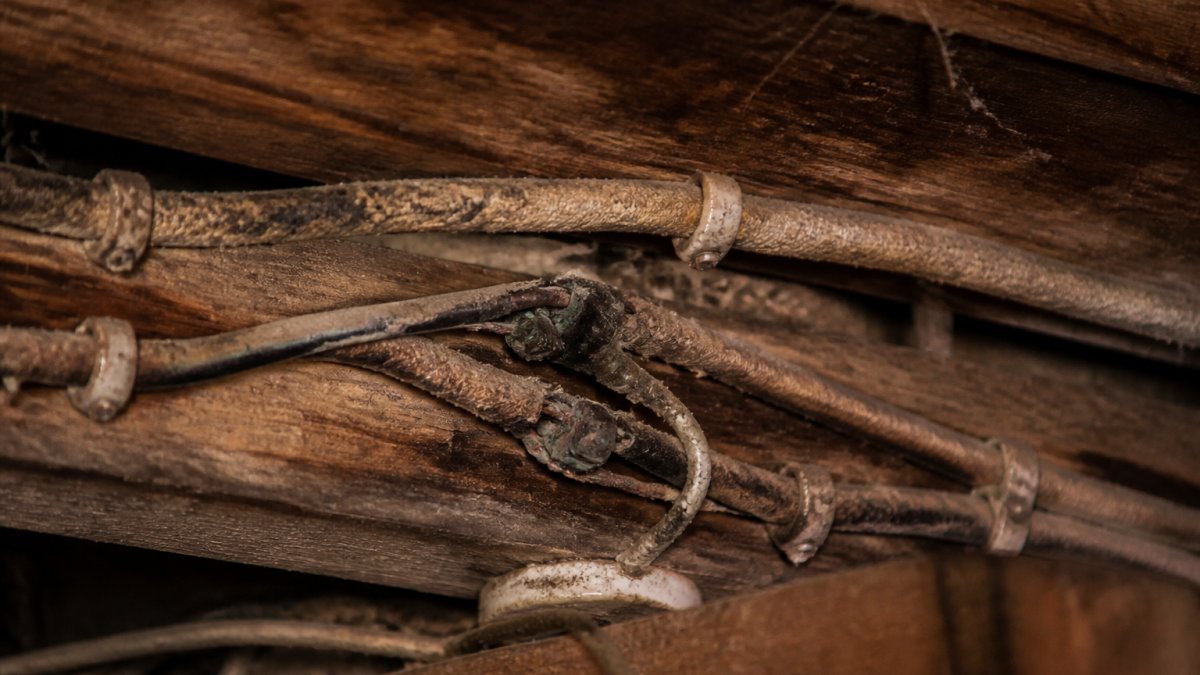
Several wiring types were common in older homes but are now considered problematic. Knob-and-tube wiring, installed in homes built before the 1950s, consisted of copper wires supported by ceramic insulators with cloth wrapping.
These wiring types weren't dangerous when new, but decades of heat cycling, moisture, and dust degrade them. Modern wiring uses plastic insulation rated for higher temperatures and designed to resist deterioration. If your home still has any of these older types, a licensed electrician should evaluate whether replacement is necessary based on current condition and your home's electrical load.
Fire and Shock Hazards in Legacy Systems
Deteriorated insulation is the primary fire hazard in older electrical systems. When insulation breaks down, live conductors can contact wood framing, drywall, or other flammable materials, and fire can spread inside walls hidden from view. Aluminum wiring presents a specific risk: it expands and contracts more than copper at connection points, loosening connections and creating arcing that generates intense heat.
Shock hazards stem from inadequate grounding and lack of modern safety devices. Older homes often lack proper grounding in bathrooms and kitchens, where moisture makes shock particularly dangerous. Without GFCI (ground-fault circuit interrupter) protection in wet locations, a fault can deliver a lethal shock before a standard breaker trips. Similarly, homes without AFCI (arc-fault circuit interrupter) protection can't detect dangerous arcing that standard breakers miss.
Conducting an Electrical Safety Inspection for Older Homes
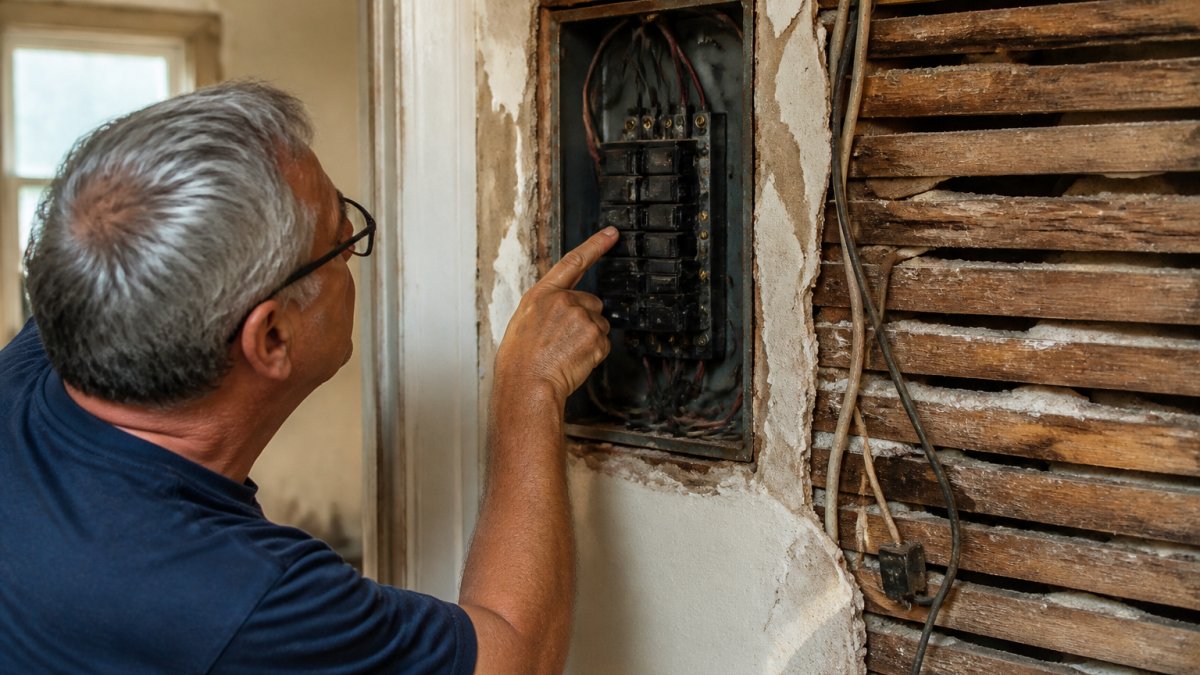
A professional electrical inspection is the foundation of any electrical safety older homes assessment. An inspector examines the entire system, from the service entrance and panel to individual outlets and fixtures, looking for code violations, deterioration, and hazardous conditions. This inspection informs your decisions about which upgrades matter most and helps establish your home's current safety status for insurance purposes.
What a Professional Inspection Covers
A thorough inspection covers the service entrance, main panel, branch circuits, outlets, switches, and grounding systems. The inspector checks whether the panel can safely handle your home's load, whether breakers trip properly, and whether grounding is adequate. They examine visible wiring for deterioration, verify wire sizing and support, and confirm connections are secure and corrosion-free.
The inspector also evaluates code compliance in high-risk areas like kitchens, bathrooms, and laundry rooms, confirming GFCI protection where required and AFCI protection on circuits serving bedrooms and living areas. They look for overloaded circuits, improper splicing, and non-compliant DIY work, then document findings with photographs and specific remediation recommendations.
Red Flags to Watch For
Several warning signs warrant immediate professional evaluation. Flickering lights or lights that dim when appliances start suggest an overloaded circuit or loose connection. Warm outlets or switches indicate excessive resistance and fire risk. Discolored or scorched outlets, switches, or surrounding wall areas suggest arcing or overheating. A burning smell near outlets or the panel is an emergency: turn off power and call an electrician immediately.
Frequent breaker trips mean the circuit is protecting you from an overload, but also that your system is stressed. Occasional trips are normal; repeated trips on the same circuit indicate a circuit problem or genuine overload requiring reduced load or upgraded capacity. Buzzing from the panel, outlets, or switches suggests arcing inside the equipment, another urgent issue.
GFCI Requirements in Older Homes
Ground-fault circuit interrupters are one of the most important safety upgrades for older homes. A GFCI detects the tiny current imbalance that occurs when electricity finds an unintended path, like through a person touching a live wire in wet conditions, and cuts power in milliseconds to prevent electrocution. Code now requires GFCI protection in bathrooms, kitchens, outdoor outlets, and other wet locations, yet most older homes lack it entirely.
Where GFCI Protection Is Required
Current code requires GFCI protection on all outlets within 6 feet of a sink, all bathroom outlets, all outdoor outlets, outlets in garages and crawl spaces, and outlets serving wet-location appliances like dishwashers and hot tubs. In kitchens specifically, all countertop outlets must be GFCI-protected. Many older homes have outlets in these locations without any GFCI protection whatsoever.
Installing GFCI protection is often straightforward: replace an existing outlet with a GFCI outlet, or install a GFCI breaker in the panel. A GFCI outlet protects only itself and downstream outlets on the same circuit; a GFCI breaker protects the entire circuit.
AFCI Protection and Older Wiring
Arc-fault circuit interrupters detect dangerous arcing that standard breakers miss. An arc is a sustained electrical discharge across a gap, the kind that occurs when insulation deteriorates and live conductors come close to each other or to ground.
AFCI breakers are installed in the main panel and protect the entire circuit. Unlike GFCI protection, AFCI protection is most practical as a breaker upgrade rather than outlet replacement. If your home's panel has space, upgrading to AFCI breakers on circuits serving bedrooms and living areas is a high-priority safety improvement for older homes with aging wiring. The cost is moderate, and the protection is significant.
Home Rewiring Checklist and Upgrade Decisions
Deciding whether your older home needs rewiring, a partial upgrade, or targeted improvements requires understanding your wiring's condition and your home's electrical demands. A complete rewire is expensive and disruptive, but selective upgrades can address the most critical hazards while keeping costs reasonable.
Signs Your Home Needs Rewiring
Your home is a candidate for rewiring if it has knob-and-tube wiring, aluminum wiring showing corrosion or loose connections, deteriorated cloth-insulated wiring, or widespread code violations. Homes built before 1950 with original wiring often benefit, as do 1960s and 1970s homes with aluminum wiring. After water damage, fire, or pests, wiring in affected areas may need replacement.
Call Us and Get a Quote Today! →
Also consider your home's electrical load. If you're adding major appliances, a hot tub, a home office with multiple computers, or upgraded heating and cooling, your existing panel and wiring may not safely support the demand. An inspection reveals whether your system can handle actual usage or whether upgrades are necessary.
Partial Upgrade vs. Full Rewire
A full rewire replaces all wiring throughout the home, typically costing several thousand dollars and requiring opened walls, ceilings, and sometimes floors. It's justified when wiring is deteriorated throughout, when the home has knob-and-tube or heavily corroded aluminum wiring, or when major renovation already requires opening walls.
Partial upgrades address specific hazards or circuits without rewiring the whole home: replacing deteriorated wiring in attics and crawl spaces, upgrading the main panel with GFCI and AFCI breakers, installing new circuits for high-demand appliances, or replacing knob-and-tube wiring in one section. These targeted improvements can bring your home into compliance for specific hazards while deferring full rewiring until renovation or budget allows.
Hiring a Licensed Electrician and Ensuring Code Compliance
All electrical work on your home should be performed by a licensed electrician and permitted through your local building department. Permits ensure that work is inspected and meets current code.
When hiring an electrician, verify their license with your state's licensing board, ask for references from recent projects, and confirm they pull permits and arrange inspections. Get written estimates breaking down labor and materials, and clarify whether permits and inspections are included.
Code compliance matters for both safety and insurance. Insurance companies often require that older homes meet certain electrical standards before providing coverage or may charge higher premiums for non-compliant systems. Dehlinger Insurance works with homeowners to understand what upgrades insurers require.
Electrical Safety Tips for Homeowners
Beyond professional upgrades, everyday practices reduce hazards. Never overload outlets or use extension cords as permanent wiring. Use surge protectors for sensitive electronics and replace them if damaged or after a major surge. Keep electrical equipment away from water, and never use appliances in bathrooms or outdoors without GFCI protection.
Test GFCI outlets monthly: pressing test should cut power, and reset should restore it. If a GFCI fails to trip, replace it. Have your electrical system inspected every 10 years, or sooner if you notice warning signs. If you rent out a property or run a business from home, safety becomes even more critical since you're responsible for protecting tenants or employees.
How Electrical Safety Affects Your Home Insurance
Insurers assess electrical hazards during underwriting. Homes with outdated wiring, missing GFCI protection, deteriorated panels, or code violations present higher fire-loss risk and may be declined for standard coverage or offered only at higher premiums.
Dehlinger Insurance has worked with Florida homeowners for over 38 years to find coverage solutions for older homes.
If you're facing insurance challenges due to electrical concerns in your older home, call us for a quote.
Older homes deserve careful attention to electrical safety, and you don't need to choose between safety and affordability. Strategic upgrades, GFCI protection, AFCI breakers, and targeted wiring replacement address the most critical hazards while keeping costs reasonable.
Frequently Asked Questions
How can I tell if the wiring in an older home is unsafe?
Signs of unsafe wiring include flickering lights, discolored outlets or switches, a burning smell near electrical components, frequently tripping breakers, and visible cloth or rubber insulation on wires. If your home has knob-and-tube wiring, aluminum wiring, or a Federal Pacific panel, these are known hazards. A licensed electrician can identify unsafe conditions during an electrical inspection and recommend repairs or rewiring.
Do older homes need GFCI or AFCI protection?
Most older homes lack adequate GFCI and AFCI protection. GFCI outlets are required in bathrooms, kitchens, garages, and outdoor areas to prevent shock hazards. AFCI protection is required in bedrooms and living areas to prevent arc-fault fires. Many older homes do not have these devices, making retrofitting them an important safety upgrade that also improves code compliance and may reduce insurance risk.
When should an older home's electrical system be inspected?
Have your electrical system inspected before purchasing an older home, after any major renovation, if you plan to upgrade appliances or add circuits, or every 3-5 years as routine maintenance. If you notice warning signs like tripping breakers or flickering lights, schedule an inspection immediately. A professional inspection identifies hazards, ensures code compliance, and helps prevent fire and shock risks.
Can outdated wiring affect homeowners insurance?
Yes, outdated or unsafe wiring can affect your ability to obtain homeowners insurance or result in higher premiums. Many insurance carriers require electrical inspections for older homes and may deny coverage or impose restrictions if hazardous conditions are found. Upgrading your electrical system to meet current code standards can improve your insurability and may qualify you for better rates with carriers experienced in covering older homes.
What electrical safety devices should an older home have?
Older homes should have GFCI outlets in wet areas, AFCI circuit breakers in bedrooms and living spaces, a properly grounded electrical panel with modern circuit breakers, properly rated light bulbs and electrical devices, and updated wiring free of deterioration. Smoke detectors with battery backup and surge protectors for sensitive equipment also enhance safety. A licensed electrician can assess your home and recommend necessary safety devices.
What are common electrical hazards in older homes?
Common hazards include knob-and-tube wiring, aluminum wiring, cloth or rubber insulation that has deteriorated, outdated or undersized panels, overloaded circuits, lack of grounding, missing or faulty outlets and switches, and inadequate GFCI or AFCI protection. These conditions create fire and shock risks. Older homes also face environmental risks from humidity and salt air that accelerate corrosion. Professional inspection and targeted upgrades address these hazards.