 how-to
Updating Plumbing for Insurance Eligibility
Table of Contents
- Why Plumbing Updates Matter for Insurance Eligibility
- How Insurance Carriers Evaluate Your Plumbing System
- Homeowners Insurance Plumbing Requirements You Need to Know
- Replacing Polybutylene Pipes for Insurance Approval
- Galvanized Steel vs. Copper vs. PEX: What Insurers Prefer
- How to Document Home Improvements for Insurance Claims
- Preventing Non-Renewal and Coverage Gaps
- Conclusion
- Frequently Asked Questions
Last Updated: September 26, 2026
Why Plumbing Updates Matter for Insurance Eligibility
Updating plumbing insurance is one of the most direct ways homeowners can improve their coverage options. Insurance carriers evaluate your plumbing system as a key risk factor. Outdated or failing pipes increase the likelihood of water damage claims, which are among the costliest for insurers to handle.
Your plumbing system directly affects insurance approval, which is why updating plumbing insurance coverage requires addressing identified risks. Carriers use plumbing condition as a primary screening tool, and outdated or problematic pipes may result in non-renewal or denial.
Targeted upgrades to the most problematic sections often satisfy insurer requirements and restore eligibility without replacing every pipe.
How Insurance Carriers Evaluate Your Plumbing System
Insurance underwriters assess plumbing through a structured inspection process, evaluating pipe material and age, visible corrosion or leaks, water pressure and flow, shut-off valves, water heater condition, and drainage system integrity.
Most insurers flag pipes over 40-50 years old as high-risk, regardless of material. Age threshold is a primary risk factor.
Water damage claims are the second-largest category of homeowners insurance claims. A single burst pipe can cost $10,000 to $25,000 in remediation, which is why underwriters scrutinize plumbing carefully.
Homeowners Insurance Plumbing Requirements You Need to Know
Common plumbing-related requirements:
- No polybutylene piping (banned by most carriers)
- Galvanized steel pipes replaced if installed before 1985
- PEX plumbing acceptable in most cases
- Copper acceptable and often preferred
- Shut-off valves present and accessible
- No visible leaks or water stains
- Water heater less than 15 years old
- Main water line accessible for inspection
The polybutylene requirement is non-negotiable. This plastic piping was widely used in the 1980s and 1990s but has a documented failure rate. Most insurers will not cover a home with polybutylene pipes still in use.
Galvanized steel pipes installed before 1985 are considered high-risk due to corrosion and typically require replacement. Newer galvanized installations (post-1990) are typically acceptable.
National Association of Insurance Commissioners guidance on homeowners coverage standards provides baseline standards that most carriers follow, though individual policies may be more restrictive.
Replacing Polybutylene Pipes for Insurance Approval
Polybutylene piping was marketed as a cost-effective alternative to copper in the 1980s and early 1990s but degrades when exposed to chlorine in municipal water supplies, becoming brittle and prone to rupture.
Why insurers reject polybutylene:
- Documented failure rate of 50% or higher over 25 years
- Failures often occur without warning
- Repair costs are high
- Water damage from failure is catastrophic
Replacement is not optional for insurance purposes.
Replacement typically costs between $4,000 and $15,000 depending on home size and pipe accessibility. The process requires a plumbing inspection, contractor quotes, work completion with permits, final inspection certificate, and documentation to your insurer. Keep all receipts and the final inspection report, these documents prove you've addressed the risk and often lead to policy approval or renewal.
Do not attempt to hide polybutylene pipes or misrepresent your plumbing system to insurers. Insurers conduct inspections during the underwriting process. Discovered misrepresentation can result in policy denial or cancellation.
Galvanized Steel vs. Copper vs. PEX: What Insurers Prefer
These three materials dominate residential plumbing. Each has different implications for insurance eligibility.
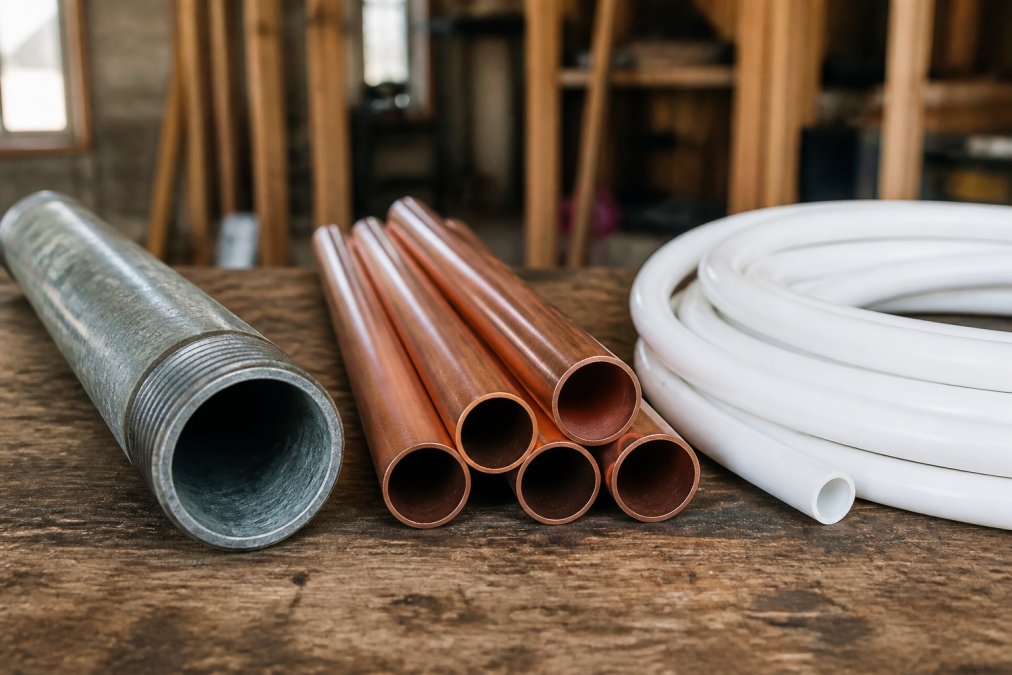
Galvanized Steel
Galvanized pipes were standard until the 1980s.
Copper
PEX
Insurance preference ranking:
- Copper (most preferred)
- PEX (acceptable standard)
- Newer galvanized steel (acceptable if post-1985)
- Older galvanized steel (requires replacement)
- Polybutylene (must be replaced)
How to Document Home Improvements for Insurance Claims
The 'Proof of Work' Documentation Checklist
Tier 1: Non-Negotiable Documents
- Final inspection certificate from local building department, This is the single most important document. It proves that a licensed inspector verified the work met code. Most insurers will not approve coverage without this. Obtain it immediately after work completion; don't wait.
- Paid invoices from licensed contractor, Must show contractor name, license number, work description, materials used, labor costs, and payment date. Itemized invoices are stronger than lump-sum invoices.
- Permit documentation, Shows that work was permitted and inspected by the jurisdiction. Unpermitted work raises red flags and may void coverage.
Tier 2: Supporting Documents
- Original plumbing inspection report, The baseline document that identified what needed replacement. Include the inspector's name, credentials, and specific findings about pipe material and condition.
- Contractor estimates and quotes, Provides context for the scope of work. Insurers use these to verify that the work described in invoices matches the scope identified in the inspection.
- Warranty information on new materials, Manufacturer warranties on pipes, fittings, and water heater demonstrate quality materials were installed.
- Photos of completed work, Take before, during, and after photos. Include close-ups of new pipe material, connections, and shut-off valves. Label photos with dates.
Tier 3: Supplementary Records
Call Us and Get a Quote Today! →
- Receipts for materials purchased, Keep receipts showing what was bought and when.
- Plumber's license verification, Copy the contractor's license from your state's licensing board website.
- Water heater documentation, If replaced, include the installation date, model number, and warranty card.
How Insurers Validate Your Documentation
Documentation Organization and Submission
National Association of Insurance Commissioners guidance on homeowners coverage standards and documentation provides baseline standards that most carriers follow, though individual policies may require additional documentation.
Preventing Non-Renewal and Coverage Gaps
Week 1: Understand the Specific Reason
Week 2: Assess Repair Feasibility and Cost
Option A: Complete Repairs Before Expiration
Option B: Secure Alternative Coverage While Repairs Are Pending
Option C: Coverage Gap Prevention (If Repairs Take Longer)
Documenting Repairs for Coverage Reinstatement
Include a cover letter stating:
"I received a non-renewal notice dated [date] due to [specific plumbing issue]. I have completed the following repairs: [list repairs]. Final inspection was completed by [jurisdiction] on [date]. Attached is the final inspection certificate, paid invoices, and contractor documentation. I request that you reconsider coverage approval based on these completed improvements."
Preventing Future Non-Renewal
Once you've secured coverage:
-
Maintain your plumbing system proactively. Address leaks and water pressure issues immediately.
-
Document all maintenance and repairs. Keep receipts and photos.
-
Report water damage claims promptly to your insurer, even if you're paying out of pocket. Delayed reporting can trigger coverage denial.
-
Schedule a plumbing inspection every 5 years if your home is over 40 years old. Share results with your insurer to demonstrate active maintenance.
-
Upgrade remaining problematic materials before they trigger non-renewal. Don't wait for an insurer to force the issue.
National Association of Insurance Commissioners consumer guide to non-renewal and coverage options explains your rights when facing non-renewal and outlines alternative coverage pathways by state.
Conclusion
Updating your plumbing system is one of the most effective ways to secure insurance approval and maintain long-term coverage eligibility. Whether you're replacing polybutylene pipes, upgrading galvanized steel, or installing modern PEX, the investment pays dividends through better rates and broader policy options.
| Material | Age Threshold | Insurer Status | Replacement Priority |
|---|---|---|---|
| Polybutylene | Any | Must replace | Highest |
| Galvanized steel | Pre-1985 | Likely requires replacement | High |
| Galvanized steel | Post-1985 | Generally acceptable | Low |
| Copper | Any | Preferred | None |
| PEX | Any | Acceptable | None |
Frequently Asked Questions
Does homeowners insurance cover the cost of replacing old plumbing pipes?
Most standard homeowners insurance policies do not cover the cost of replacing plumbing pipes as a maintenance or upgrade expense. However, if pipes fail suddenly and cause water damage, your policy may cover the resulting damage, not the pipe replacement itself. This is why proactive pipe replacement improves your eligibility: it reduces the risk of sudden failure and water damage claims. Carriers view homes with updated plumbing as lower-risk properties, making them more willing to issue or renew coverage at competitive rates.
What documentation do I need after replacing polybutylene pipes for insurance?
Keep detailed records including the contractor's invoice, completion date, permit approval, and before-and-after photos. Many insurers require proof that work was done by a licensed plumber and complies with local building codes. Some carriers want a plumbing inspection report confirming the new material meets current standards. Contact your insurance agent before starting work to ask what specific documents they need. This 'Proof of Work' documentation is essential for demonstrating eligibility improvements to your carrier and can prevent non-renewal notices.
How much can updating plumbing lower my homeowners insurance premium?
Premium reductions vary by carrier, your home's age, and the extent of updates. Replacing problematic materials like polybutylene or galvanized steel pipes can result in meaningful discounts because insurers view these upgrades as significant hazard reduction. Some carriers may offer reductions for comprehensive plumbing system updates, while others may simply restore your eligibility for coverage. The best way to find out your specific savings is to request a new quote from your insurer after completing plumbing work and submitting documentation.
Why do insurance carriers flag polybutylene piping?
Polybutylene piping, installed in many homes built between 1978 and 1995, is prone to brittleness and cracking, leading to sudden leaks and water damage. Insurance carriers view homes with polybutylene systems as high-risk because the failure rate is unpredictable and remediation costs can be substantial. Many insurers either refuse coverage or charge higher premiums for homes with polybutylene pipes still in place. Replacing polybutylene with modern materials like PEX or copper eliminates this risk factor, making your home eligible for standard coverage and potentially reducing your premium.