 How-to
Is Knob-and-Tube Wiring Safe Under Attic Insulation?
Last Updated: November 21, 2026
Quick Summary
Knob and tube wiring can be unsafe under attic insulation because insulation traps the heat the wires rely on air to shed. Have a licensed electrician inspect the wiring before any insulation goes in, since the right approach depends on which circuits are active and their condition.
- Knob and tube wires were designed to dissipate heat into open air, not to be buried.
- Insulation traps heat around the conductor and can speed breakdown of brittle cloth jackets.
- Look for porcelain knobs, porcelain tubes, cloth or rubber jackets, and taped splices in the attic.
- Have an electrician confirm which circuits are active, abandoned, or modified before insulation work.
- Get written estimates and check insurer requirements, since some carriers limit coverage for these homes.
Table of Contents
- What Knob-and-Tube Wiring Is and How It Works
- Why Covering Knob-and-Tube Wiring With Insulation Is a Risk
- Knob-and-Tube Wiring Inspection: How to Identify It in Your Attic
- How to Insulate Around Knob-and-Tube Wiring Safely
- Knob-and-Tube Wiring Replacement Cost and Decision Factors
- Homeowners Insurance With Knob-and-Tube Wiring
- Next Steps: Questions to Ask Your Electrician and Insurance Agent
- Frequently Asked Questions
What Knob-and-Tube Wiring Is and How It Works
Knob and tube wiring is one of the oldest electrical systems still found in American homes. It was common from about the 1880s through the 1930s. If your house has it, the wires are probably running through your attic right now. To see why this wiring is dangerous, read whether knob-and-tube wiring poses a fire hazard. Florida homeowners often ask whether that old wiring is a problem, especially when they plan to add insulation. The short answer is that it can be, and the details matter a great deal.
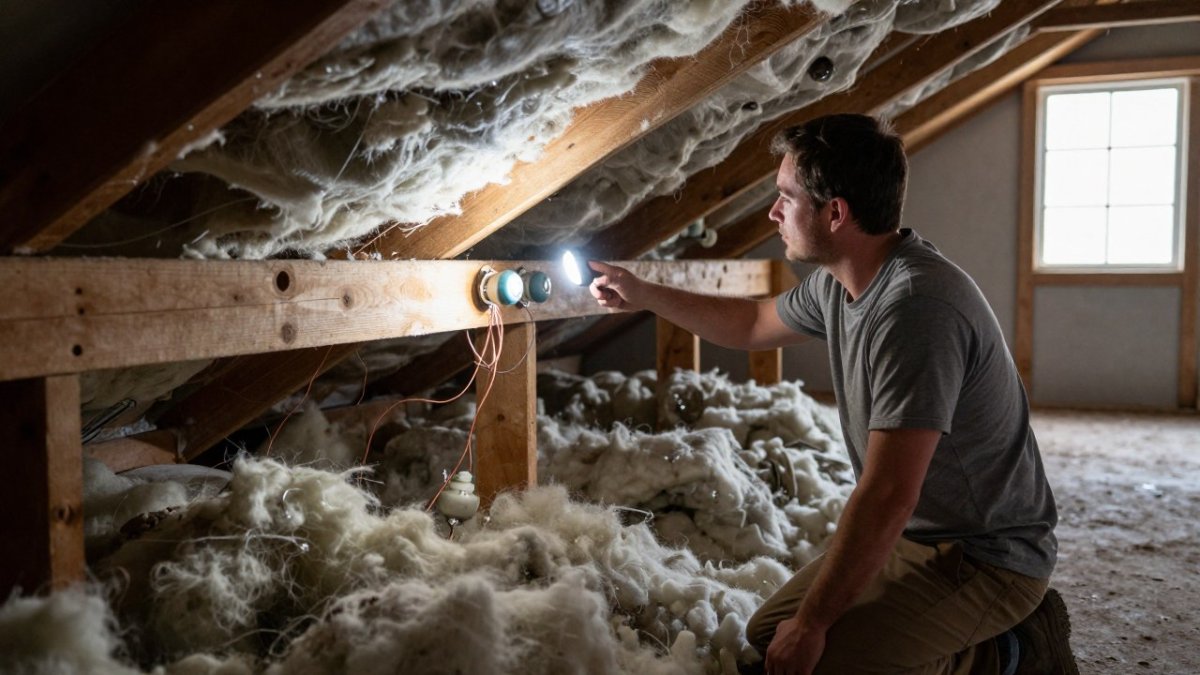
Knob-and-tube wiring is an electrical system where individual insulated conductors run through the framing of a house. Porcelain knobs hold the wires away from wood, and porcelain tubes protect them where they pass through joists and studs. The name comes straight from those two pieces of hardware.
The insulation on these wires is usually cloth or rubber. Over decades, that material dries out, cracks, and crumbles. The wires themselves were designed to shed heat into open air. They were never meant to be buried.
Here is the key idea: the system depends on air moving around the conductors. Remove that air, and the wiring can overheat.
Why Covering Knob-and-Tube Wiring With Insulation Is a Risk
Insulation is the main reason knob and tube wiring becomes a concern. Blown-in or batt insulation packed around a wire traps heat. The wire cannot cool itself, and the cloth jacket can break down faster than expected.
Many electricians and fire safety resources advise against covering these wires without a professional review first. The National Fire Protection Association has long warned about electrical equipment operating above its rated temperature.
- Insulation traps heat around the conductor
- Old cloth jackets may already be brittle
- Overheating raises the risk of an electrical fire
- Damaged or overloaded circuits make the problem worse
Treat any knob-and-tube wire in the attic as a safety issue before you add a single bag of insulation.
Covering these wires changes how they handle heat, and the risks are easy to underestimate.
| Risk factor | Why it matters | What to do |
|---|---|---|
| Insulation traps heat | Wire cannot cool itself | Get an electrical review first |
| Cloth jacket condition | Old jackets may already be brittle | Inspect before covering |
| Overheating | Raises risk of electrical fire | Treat as a safety issue |
| Overloaded circuits | Worsens heat buildup | Confirm circuit load |
Knob-and-Tube Wiring Inspection: How to Identify It in Your Attic
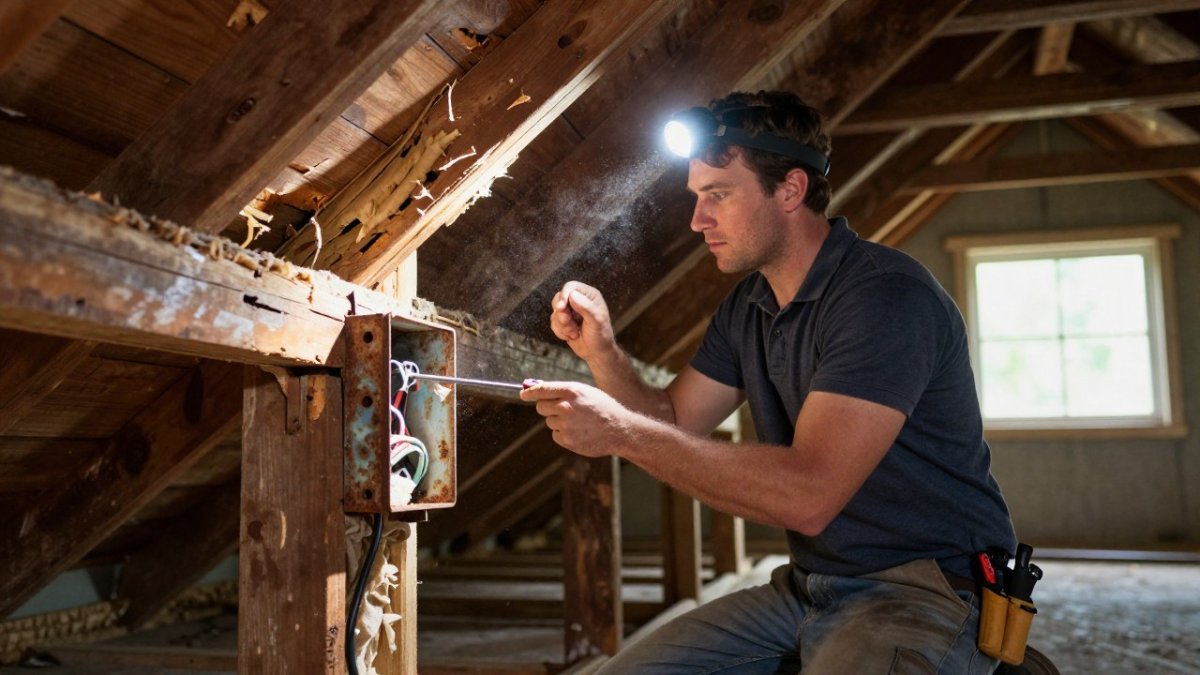
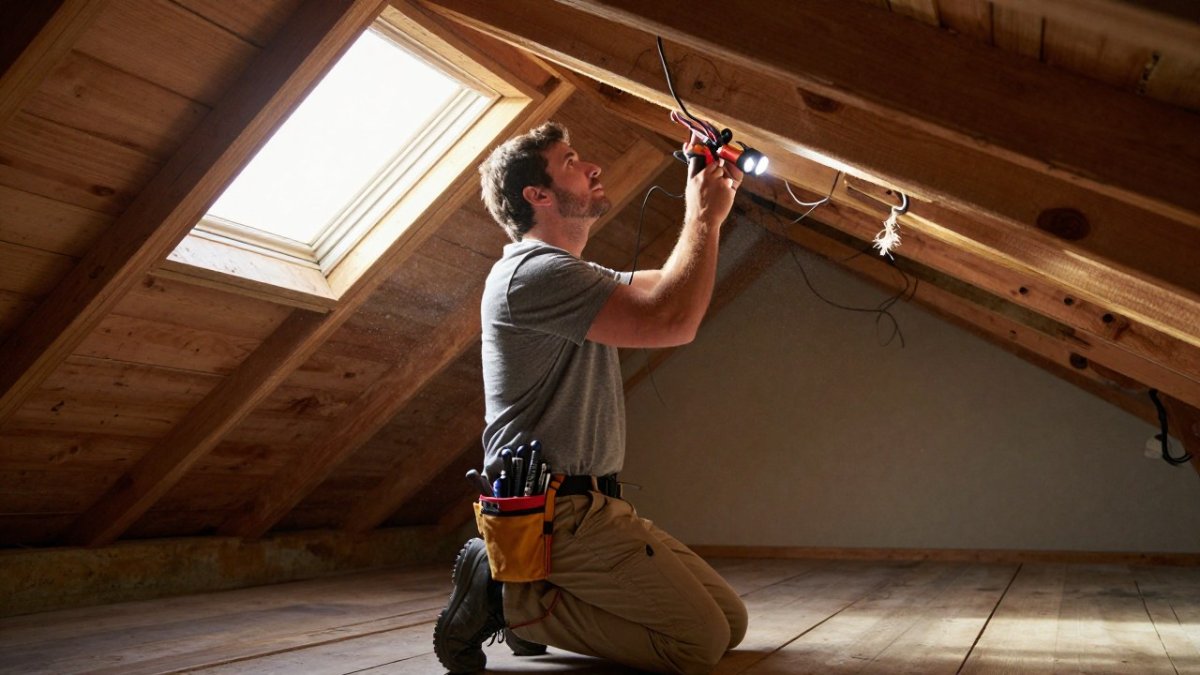
Start with a flashlight and a careful eye. Look along the ceiling joists for porcelain knobs and tubes. The wires usually run in pairs, with a cloth or rubber sheath that may look gray, brown, or black.
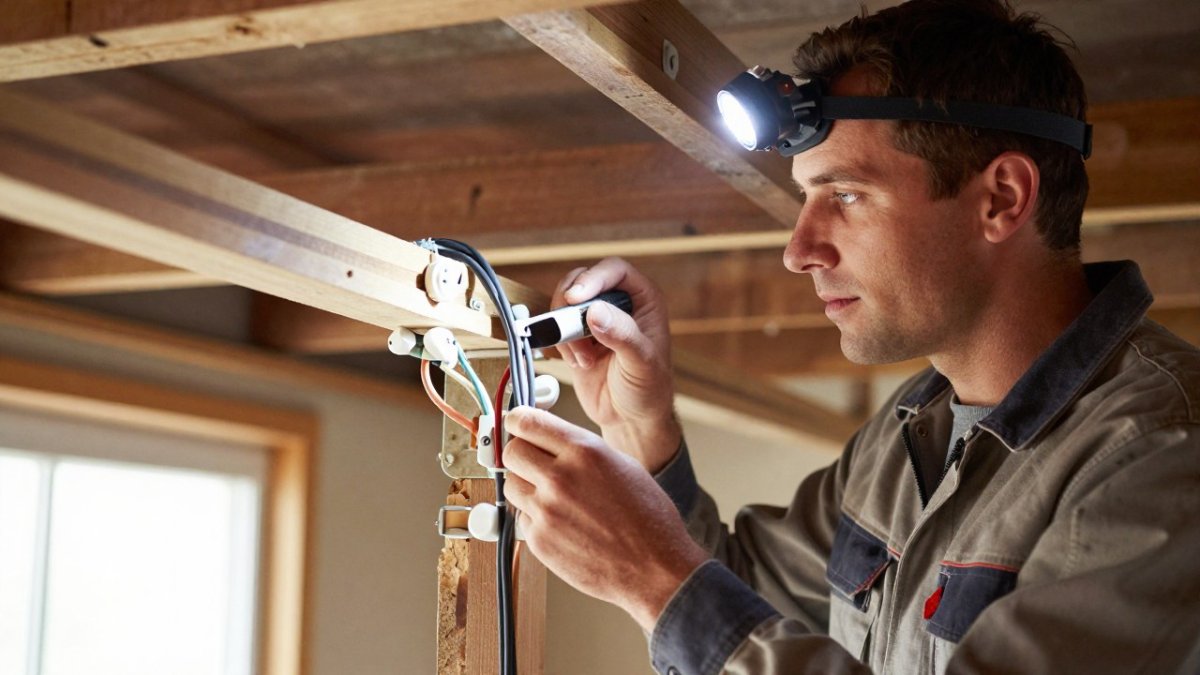
Use this quick checklist:
- Look for porcelain knobs holding wires off the wood
- Check for porcelain tubes where wires pass through framing
- Note any cloth-covered or rubber-covered wires
- Spot any splices that are taped rather than enclosed in a junction box
- Watch for wires that are bare, cracked, or hot to the touch (do not touch them)
Do not disturb the wires. Take photos and note their locations. Then bring in a licensed electrician to confirm what you found.
Active, Abandoned, and Modified Wiring: How to Tell the Difference
Not every knob-and-tube run is still carrying power. Some circuits were replaced but never removed. Others were altered by a past owner in ways that create new hazards. Visual appearance alone cannot tell you which is which, that is the gap most homeowners fall into before insulation work.
- Active wiring connects to outlets, switches, or fixtures in the living space and is still energized at the panel.
- Abandoned wiring is disconnected at the source and carries no load, though it may still be physically present in the attic.
- Modified wiring has been spliced, extended, or joined to newer cable without proper junction boxes, or has had circuits added in ways the original system was never designed to carry.
Modified wiring deserves the closest attention. Unsafe splices are a common reason knob-and-tube systems cause problems, and a splice hidden under insulation is far harder to catch later. An electrician can trace each circuit, test for live conductors, and tell you which runs are active, which are safely abandoned, and which need repair before any covering work. Once the active and abandoned runs are clear, upgrading knob and tube wiring can be weighed against the specific repairs needed to keep insulation away from unsafe conductors.
What the electrician should verify before insulation work:
- Which circuits are energized at the panel and where they run
- Whether any abandoned runs are truly disconnected, not just capped
- Whether splices are enclosed and accessible
- Whether the panel and service can carry the existing load
- Whether any conductor shows heat damage, brittle jacket, or evidence of overload
Write down the electrician's findings and keep them with your home records. That documentation supports both the insulation decision and any future insurance or sale conversation.
How to Insulate Around Knob-and-Tube Wiring Safely
Many homeowners want to insulate an older attic for energy savings. That goal is reasonable, but it should follow a safety-first order. The reason is mechanical: knob-and-tube conductors were designed to dissipate heat into open air, and insulation removes that air. Whether any insulation can go in, and how, depends on the condition of the wiring, the applicable electrical code, and a licensed professional's assessment, not on a universal workaround.
Here is a practical, ordered process that most practitioners recommend:
- Identify before you decide. Walk the attic and map every knob-and-tube run before anyone quotes insulation. Note porcelain knobs, tubes through framing, cloth or rubber jackets, and any taped splices. Photograph each run and label its location.
- Get an electrical inspection first. A licensed electrician should confirm which circuits are active, which are abandoned, and which have been modified. Do this before insulation work is scheduled, not after.
- Resolve abandoned and modified runs. Abandoned runs that are truly disconnected at the source may be removed where code allows. Modified runs with unsafe splices usually need repair or replacement before any covering work.
- Decide the insulation approach with the electrician, not around them. Options range from leaving active conductors exposed and insulating only the areas clear of wiring, to rerouting or replacing circuits so the full attic can be insulated. Suitability depends on wiring condition and local code; there is no single clearance number that makes covering safe in every case.
- Confirm with the building department and insurer. Ask what inspection will follow and whether your insurer requires documentation before or after the work.
A licensed insulation contractor should know how to work around existing wiring, but coordination matters more than familiarity. Ask the insulation contractor to explain, in writing, how material will be kept clear of active conductors and where they will stop work if they encounter damaged wiring. A common pattern is for the electrician to sign off on the electrical scope before the insulation crew arrives, so neither trade is guessing about the other's work.
Watch out: an insulation contractor who says they "always work around old wiring" without an electrician's sign-off is describing a habit, not a verified condition. Get the electrical review first.
NFPA electrical safety guidance
Knob-and-Tube Wiring Replacement Cost and Decision Factors
Replacing knob-and-tube wiring is a major project, and pricing depends on quantity, access, and the number of circuits. Pricing depends on the size of the home, access, and local permit requirements, so request written estimates from a licensed electrician. If you want to know how to document the work for savings, see proving a replacement for insurance discounts.
Several factors shape the decision:
- How much of the wiring is still active
- How accessible the wiring is inside finished walls
- Whether the panel and service also need upgrades
- Local permit and inspection requirements
- Whether insurance requires replacement or a clean inspection
Some homeowners choose partial replacement first, starting with the most heavily used circuits. Others plan a full rewire during a renovation. Either approach can work if an electrician agrees with the plan.
Homeowners Insurance With Knob-and-Tube Wiring
Insurance is where many homeowners feel the impact first. Some insurers limit coverage or decline to write policies on homes with knob-and-tube wiring. Others allow coverage with an inspection, a written plan to replace, or proof of recent updates.
Coverage rules vary by carrier, by location, and by policy. Florida homeowners should ask specifically how their insurer views knob-and-tube wiring before buying or renewing. For the state-specific picture, see knob and tube wiring coverage in Florida. Contact Dehlinger Insurance to review your options and find a policy that fits your home.
Next Steps: Questions to Ask Your Electrician and Insurance Agent
Bring a short list of questions to your next appointment:
- Which circuits are active, abandoned, or modified?
- Is insulation safe around the active runs, and what clearance do you recommend?
- Do I need a permit, and what inspection will follow?
- Will my insurer require replacement or accept an inspection report?
- What is the most cost-effective order for making repairs?
Write down the answers and keep them with your home records. Clear documentation helps with both insurance and future sales.
Knob-and-tube wiring under attic insulation is a problem you can solve, but only with the right order of steps. Dehlinger Insurance can help you understand your coverage options as you plan the work.
Frequently Asked Questions
Is it safe to insulate over knob and tube wiring?
Covering knob and tube wiring with loose-fill or batt insulation is generally considered unsafe. This wiring was designed to dissipate heat into open air, and insulation traps that heat, which can degrade the cloth and rubber insulation on the conductors and raise the fire risk. Many electricians and insurers recommend having the wiring evaluated and, in most cases, replaced or selectively decommissioned before adding insulation. Local electrical code and your insurer's requirements should be confirmed before you proceed.
Can you get homeowners insurance if you have knob and tube wiring?
Some insurers decline or restrict coverage for homes with knob and tube wiring, while others will cover the home if the wiring is documented as in good condition or has been partially or fully replaced. Requirements vary by carrier and policy, so it is worth asking before you buy. An independent agent can compare carriers that accept older wiring and explain any conditions, such as an electrical inspection or a wiring upgrade within a set timeframe.
Does attic insulation increase the fire risk of knob and tube wiring?
Yes. Knob and tube conductors rely on air moving around them to carry heat away. When insulation surrounds the wires, heat can build up, especially if a circuit is overloaded or a splice is loose. Over time this can break down the wire insulation and create a path for a short circuit or arcing. Keeping a clear air gap, avoiding contact between insulation and conductors, and having a licensed electrician check the circuits reduces this risk.
Should knob and tube wiring be replaced before adding insulation?
In many cases, yes, or at least the sections that will be covered should be evaluated first. A licensed electrician can determine whether the wiring is still active, whether it has been altered, and whether selective replacement or decommissioning is practical. Doing this before insulation is installed usually costs less than correcting problems after walls or attic floors are already covered. Replacement cost depends on the size of the home, access, and local permit requirements, so request written estimates from more than one electrician.