 How-to
7 Windstorm Protection Ideas for Outdoor Living Spaces
Last Updated: November 18, 2026
Quick Summary
Windstorm protection for outdoor living spaces means shielding patios, decks, porches, and gardens from wind, wind-driven rain, and flying debris using screens, panels, curtains, and structural barriers. Match the barrier to your prevailing wind direction, structure, and how often you need it, since no single solution fits every space. Always confirm your posts and framing can carry the load before buying a system.
- Windscreen mesh cuts wind speed while letting air pass through for daily comfort.
- Clear vinyl panels block wind-driven rain but trap heat and stop airflow.
- Hurricane screens are only as good as their wind rating and structural connection.
- Anchoring upgrades like new posts and footings can rival the cost of the screen itself.
- Re-tighten fasteners at least once a year and store deployable panels dry.
Table of Contents
- Why Windstorm Protection for Outdoor Living Spaces Matters
- Types of Wind Barriers and Screens for Your Patio
- Finding the Best Wind Blocker for a Patio
- Patio Wind Block Ideas That Balance Privacy and Airflow
- How Hurricane Screens for Patios Handle Storm Protection
- Windstorm Protection for Outdoor Living Spaces Cost Factors
- Site Assessment, Installation, and Maintenance Steps
- Step 1: Map Your Wind Exposure
- Step 2: Understand Wind Ratings and Building Codes
- Step 3: Inspect Attachment Points
- Step 4: Choose Your Barrier Type and Confirm Structural Limits
- Step 5: Install with Correct Fasteners
- Step 6: Test Airflow, Heat, and Pressure
- Step 7: Address Accessibility, Drainage, and Fire Safety
- Step 8: Maintain and Store Seasonally
- Get a Coverage Review Before Storm Season Starts
- Frequently Asked Questions
Why Windstorm Protection for Outdoor Living Spaces Matters
Windstorm protection for outdoor living spaces is the practice of shielding patios, decks, porches, and gardens from wind, wind-driven rain, and flying debris using screens, panels, curtains, and structural barriers.
Outdoor spaces are often where property damage begins. A loose chair cushion becomes a projectile; a patio cover never rated for wind load becomes a repair bill.
Below, we'll walk through seven practical protection ideas, from cheap mesh panels to engineered hurricane screens, and explain where each earns its place.
Types of Wind Barriers and Screens for Your Patio
The right barrier depends on whether you're blocking a breeze or bracing for a named storm. Most patios need a layered approach: something semi-permanent for daily comfort and something deployable for storm season.
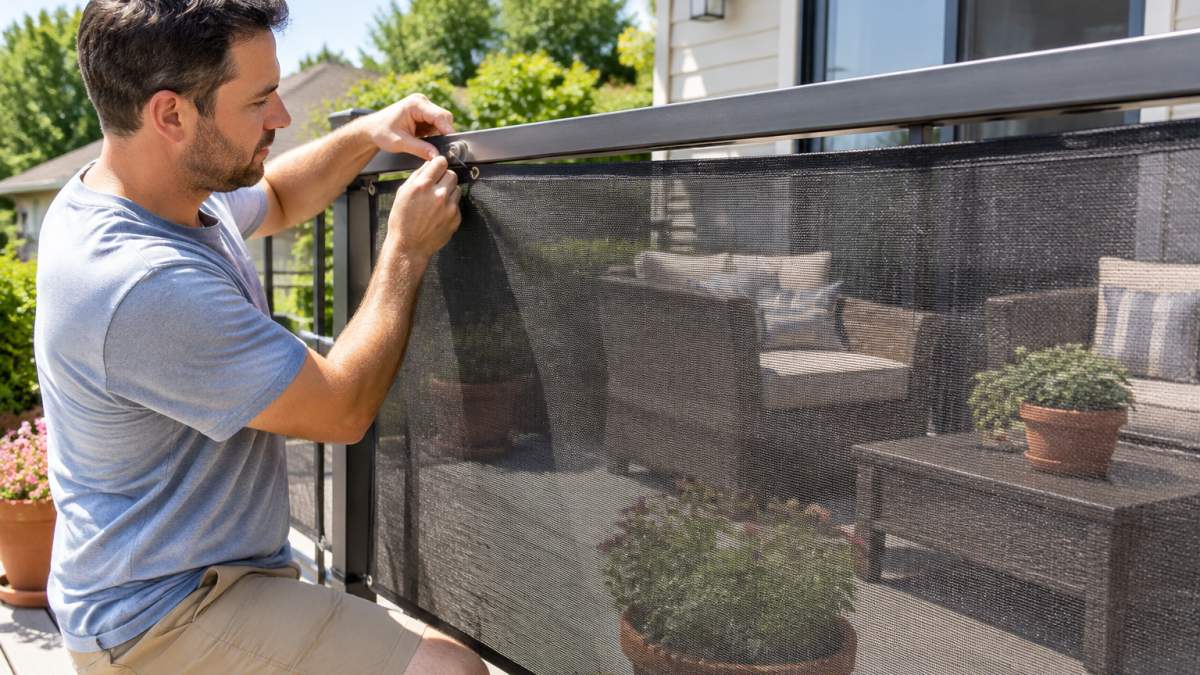
Windscreen Mesh and Fabric Panels
Windscreen mesh is a woven fabric panel, usually fastened to railings or posts, that cuts wind speed while letting air pass through. It's a common option for daily use because it reduces gusts without turning your patio into a sail.
Clear Vinyl Panels and Tarps
Clear vinyl panels and clear tarps create a physical wall against wind-driven rain. The trade-off is real: a sealed vinyl wall can trap heat and stop airflow on a warm day. Vinyl also needs proper anchoring, because a large panel catching wind puts serious stress on whatever holds it.
Finding the Best Wind Blocker for a Patio
The best wind blocker for a patio is the one matched to your prevailing wind direction, your structure, and how often you need it. There is no universal winner.
Start with exposure: a covered, recessed patio needs far less than an exposed upper-floor deck. Next, decide permanence: a roll-up curtain you deploy before a storm behaves very differently from a fixed vertical awning.
| Protection Method | Best For | Permanence | Watch Out For |
|---|---|---|---|
| Windscreen mesh | Daily breeze and privacy | Semi-permanent | Limited rain blocking |
| Clear vinyl panels | Wind-driven rain | Seasonal or fixed | Heat build-up, no airflow |
| Roll-up curtains | Storm-season flexibility | Deployable | Needs strong anchoring |
| Hurricane screens | High wind exposure | Engineered, fixed | Higher cost, pro install |
| Vertical awnings | Sun and light wind | Semi-permanent | Retract before high wind |
| Landscaping windbreak | Whole-yard shielding | Permanent | Takes years to mature |
Patio Wind Block Ideas That Balance Privacy and Airflow
Good patio wind block ideas solve two problems at once: they cut wind and add privacy without suffocating the space. That balance is where most DIY attempts fail.
The trick is partial coverage. A solid wall stops wind but also stops every breeze, a miserable trade on a warm evening. Instead, use materials that pass air:
- Windscreen mesh at railing height for privacy and gust reduction
- Louvered roof panels you can angle open or closed
- Slatted privacy screens that break wind while letting air through
A common mistake is sealing a patio completely and then wondering why it feels like an oven. Leave at least one side open to prevailing airflow, or choose a permeable material so pressure can equalize instead of pushing against a sealed wall.
How Hurricane Screens for Patios Handle Storm Protection
Hurricane screens for patios are engineered fabric or panel systems rated to withstand specific wind speeds.
Here's what most guides miss: a hurricane screen is only as good as its wind rating and its connection to the structure.
But they are not a substitute for impact-rated openings or a proper roof tie-down strategy, treat them as one layer in a broader storm-hardening plan.
If you own a high-value home and want the wider picture, our guide on how to mitigate windstorm damage for luxury homes covers protection beyond the patio. For the full property playbook, see the best ways to harden a Florida home against storms.
Windstorm Protection for Outdoor Living Spaces Cost Factors
Windstorm protection for outdoor living spaces cost depends on four things: the size of the area you're covering, the wind rating you need, whether the system is fixed or deployable, and whether installation is DIY or professional. Pricing depends on the size of the area, the wind rating you need, whether the system is fixed or deployable, and whether installation is DIY or professional. For current prices or a quote, contact Dehlinger Insurance directly. Because wind protection is only one part of storm readiness, pairing it with a broader hurricane-season plan can help safeguard the whole home, as Galt Insurance explains.
The mistake is buying the cheapest option for a high-exposure site and discovering it fails when you need it. A sheltered courtyard and an exposed rooftop facing open water call for very different systems, the difference is the wind load the system is designed to resist.
To compare solutions by wind severity, budget, and permanence, use a simple decision matrix:
| Wind Severity | Budget Band | Best-Fit Solutions | Permanence |
|---|---|---|---|
| Light daily breeze | Low | Windscreen mesh, slatted privacy screens, plant windbreaks | Semi-permanent to permanent |
| Moderate gusts and wind-driven rain | Moderate | Clear vinyl panels, roll-up curtains, vertical awnings | Seasonal or deployable |
| High wind and storm exposure | High | Hurricane screens, engineered panel systems, structural upgrades | Engineered, fixed |
Several factors commonly affect the cost of a project:
- Anchoring upgrades: new posts, framing, or concrete footings can rival the cost of the screen itself. A barrier that outmatches its mounting points is a hazard, not a shield.
- Installation access: upper-floor decks, rooftops, and tight side yards raise labor costs because equipment and staging are harder.
- Permitting and engineering: engineered systems and structural changes may require permits and, in some cases, a design professional's review, adding time and cost.
A common pattern is to budget for the barrier and forget the mounting. Before you compare product prices, get a contractor or engineer to confirm what your existing structure can carry.
Site Assessment, Installation, and Maintenance Steps
Protection works when it's planned, installed correctly, and maintained. This section walks through a practical process most product-focused guides skip: how to read wind ratings, when a screen is not a substitute for engineered storm protection, and how to keep the installation safe over time.
Step 1: Map Your Wind Exposure
Note prevailing wind direction and which sides of the patio take the brunt. Observe which way debris and rain typically blow during storms, or check local weather records. Exposure also depends on height and surroundings: an upper-floor deck or rooftop with open fetch to the water or a large field sees far higher wind speeds than a recessed courtyard shielded by the house.
Step 2: Understand Wind Ratings and Building Codes
Product wind ratings are usually expressed as a design wind speed or a pressure rating. A screen rated to a certain wind speed is not a guarantee of performance in every storm; the rating assumes correct attachment to a structure that can carry the load.
Local building codes may require permits for structural changes, and in high-wind regions the code may set minimum design pressures for attached structures. Before installing a fixed or engineered system, confirm with your local building department whether a permit and inspection are required.
Step 3: Inspect Attachment Points
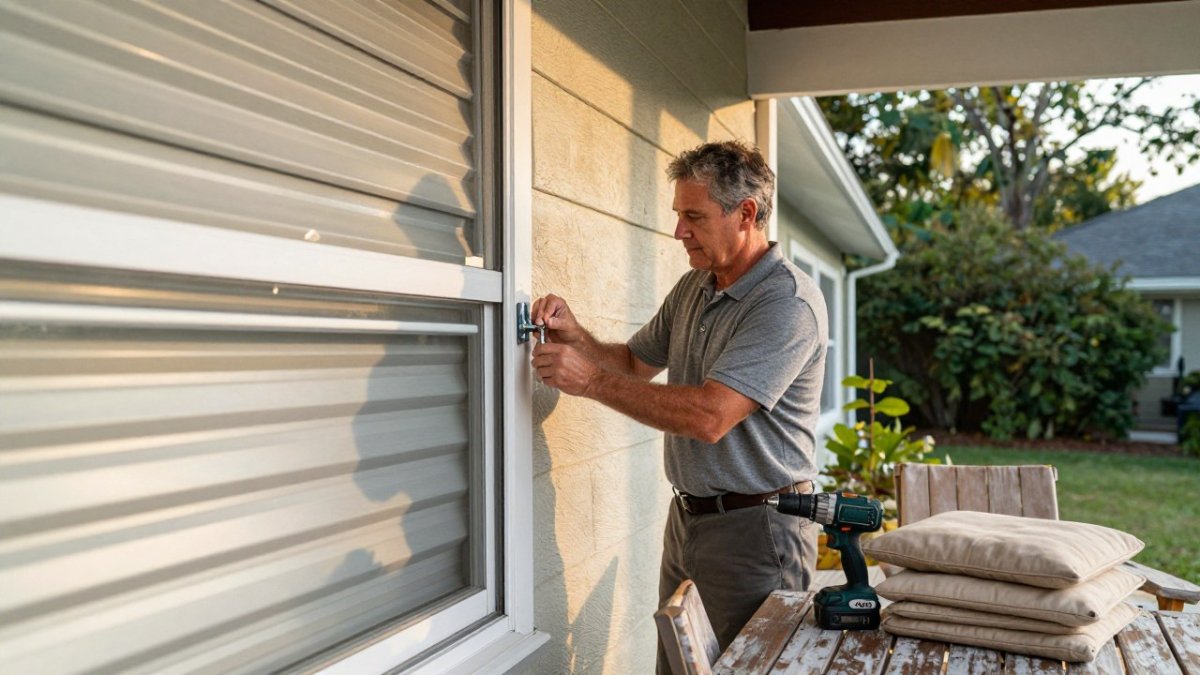
Check railings, posts, and walls for rot, rust, or loose fasteners. Probe wood for softness, look for corrosion on metal, and confirm that anchors are embedded in solid material rather than siding or trim. If a post moves when you push it, it will not hold a barrier in a gust.
Step 4: Choose Your Barrier Type and Confirm Structural Limits
Match material and wind rating to your exposure and permanence needs, then verify posts and framing can carry the load, or plan upgrades. This is the step where a decision matrix by wind severity, budget, and permanence helps: mesh for daily breeze, vinyl or roll-up curtains for wind-driven rain, and engineered systems for high wind exposure.
Step 5: Install with Correct Fasteners
Use hardware rated for the barrier, spaced per the manufacturer's specification. Stainless steel fasteners resist corrosion better in coastal conditions. Follow the manufacturer's anchoring pattern rather than improvising; spacing and edge distance matter more than the size of a single fastener.
Step 6: Test Airflow, Heat, and Pressure
Deploy the barrier and check the space doesn't overheat or trap pressure. A sealed vinyl wall stops airflow and can turn a patio stifling within minutes on a warm day. A permeable screen lets pressure equalize instead of pushing against a sealed surface. Leave at least one side open to prevailing airflow, or choose a permeable material, so the space stays comfortable and the barrier is not loaded more than intended.
Step 7: Address Accessibility, Drainage, and Fire Safety
Keep clear egress paths so doors and gates remain usable when a barrier is deployed. Check that water runoff from panels and covers drains away from the house and does not pool at the foundation. Keep combustible materials and vegetation away from structures, and do not block vents or exhaust outlets with panels or screens.
Step 8: Maintain and Store Seasonally
Clean mesh and vinyl, inspect fasteners, and store deployable panels before storm season. Re-tighten fasteners at least once a year, and store roll-up curtains and vinyl panels dry to prevent mildew and cracking. Before a named storm, retract or remove deployable barriers per the manufacturer's instructions; a deployed curtain left up in a severe storm can be damaged or become a hazard.
Skipping the structural check is a common cause of failure. A barrier that outmatches its mounting points becomes a hazard, not a shield.
Get a Coverage Review Before Storm Season Starts
Physical protection and insurance coverage work together. Even a well-hardened patio sits inside a policy, and the details of that policy decide how a claim is handled.
Before storm season, review what your policy actually covers for outdoor structures, detached patios, and landscaping. A wind mitigation inspection can document improvements that may qualify you for credits, and if a credit gets denied, you may be able to appeal a denied wind mitigation insurance credit. It's also worth confirming your hurricane coverage requirements so there are no surprises after a loss.
At Dehlinger Insurance, we work with multiple top-tier carriers and specialize in coverage for older homes and high-value properties.
Storm season doesn't wait for a convenient moment, and neither should your coverage review.
Frequently Asked Questions
What is the best wind blocker for a patio?
The best wind blocker for a patio depends on wind severity and whether you want airflow. Windscreen mesh blocks wind while letting air pass through, which reduces pressure on the structure. Clear vinyl panels stop wind-driven rain but need sturdy anchoring because they catch the full force of the wind. For hurricane-prone areas, storm screens rated for high wind speeds are generally designed for more demanding conditions than standard fabric panels.
How should I secure patio furniture before a windstorm?
Move lightweight chairs, tables, and decor inside or into a garage before a storm. Anchor heavier pieces with straps or tie-downs, and lower umbrellas and awnings. Remove cushions and loose items that can become flying debris. If you have a screen enclosure, check the fasteners and panels ahead of time. A quick pre-storm checklist protects both your belongings and your home, and it can reduce damage that leads to insurance claims.
Does homeowners insurance cover damage to patios, screens, or outdoor structures?
Many homeowners policies cover wind damage to attached structures like patios and screen enclosures, but detached structures and cosmetic damage may have limits. Review your policy's dwelling coverage, exclusions, and hurricane deductible before storm season. Document the condition of your outdoor spaces with photos, and keep receipts for any windstorm protection you install. An agent can confirm exactly what your policy covers for patios, screens, and outdoor structures.
Can outdoor screens withstand hurricane-force winds?
Standard mesh and fabric screens are not built for hurricane-force winds and should be removed or rolled up before a storm. Hurricane-rated screen systems, including some roll-down and accordion panels, are tested and labeled for specific wind speeds and pressure loads. Check the manufacturer's wind rating and your local building code requirements. Even rated screens need correct anchoring and structural attachment to perform as tested.