 how-to
Is Knob-and-Tube Wiring a Fire Hazard?
Table of Contents
- What Is Knob-and-Tube Wiring and Why Homes Still Have It
- Is Knob-and-Tube Wiring Actually a Fire Hazard?
- Signs of Knob-and-Tube Wiring in Your Home
- Knob-and-Tube Wiring Inspection: What Electricians Evaluate
- Knob-and-Tube Wiring Insurance Coverage and Your Options
- Knob-and-Tube Wiring Replacement Cost and When to Replace
- Your Next Steps as a Homeowner
- Frequently Asked Questions
Last Updated: October 20, 2026
What Is Knob-and-Tube Wiring and Why Homes Still Have It
Knob-and-tube wiring, often called K&T wiring, is an electrical wiring system installed in homes primarily between 1880 and 1950.
The reason homes still have K&T wiring today is simple: it works. If the wiring remains intact and hasn't been damaged, many older homes continue operating on these original circuits without immediate failure. However, the age of the system and changes in how we use electricity create real risks that modern wiring doesn't face.
At Dehlinger Insurance, we work with homeowners who own older properties. Many of these homes were built with knob-and-tube wiring. Understanding what this wiring is, how it ages, and when it becomes dangerous helps you make informed decisions about your home's safety and insurance coverage.
The system was new for its time. Each wire ran individually through your home rather than bundled together. This design allowed air to circulate around the wires, which helped with cooling. Modern electrical codes now require grounding and other safety features that K&T systems lack entirely.
Is Knob-and-Tube Wiring Actually a Fire Hazard?
The short answer: knob and tube wiring a fire hazard depends entirely on the condition of the wiring and how your home's electrical system is being used. Intact, properly maintained K&T wiring poses lower risk than damaged wiring. But several factors can transform this old system into a genuine fire threat.
When Intact Wiring Remains Relatively Safe
Knob-and-tube wiring that has been left undisturbed and protected from damage can operate safely for decades. The ceramic knobs and tubes provide good insulation support. The individual wire design allows air circulation, which prevents excessive heat buildup under normal electrical loads.
Homes built in the 1920s and 1930s with original K&T wiring still in use demonstrate this. Many operate without incident because the wiring was never modified, never covered, and never subjected to modern electrical demands. The key is that nothing has changed since installation.
However, "safe" is relative. Even intact knob-and-tube wiring cannot handle modern electrical loads. A 1920s home was designed for lights, a radio, and basic appliances. Today's homes demand power for computers, air conditioning, multiple televisions, and dozens of devices simultaneously. This mismatch between old wiring capacity and new demand creates heat.
How Damaged Insulation and Aging Increase Fire Risk
This is where knob and tube wiring becomes genuinely dangerous. The cloth and rubber insulation wrapped around the copper conductors deteriorates over time. After 50, 60, or 70 years, this insulation becomes brittle and cracks. Cracks expose live wires.
Damaged insulation creates multiple hazards. Exposed copper can arc to nearby conductive materials. Heat builds up at the point of exposure.
Rodents also damage insulation. Mice and rats chew through the cloth wrapping to reach the copper inside. This creates bare spots where live wires are completely exposed. A single rodent-damaged wire can cause a house fire.
Age is the primary driver here. Insulation doesn't stay flexible forever. The rubber hardens. The cloth becomes fragile. By the time a home reaches 80 or 90 years old, the insulation on original K&T wiring is almost certainly compromised in places.
Many homeowners don't discover damaged insulation until an electrician inspects the attic or crawl space. By then, the damage may have been present for years. The fire risk accumulates silently.
Exposed Live Wires and Modern Electrical Loads
Exposed live wires represent the most immediate fire hazard in homes with knob-and-tube wiring. When insulation fails, copper conductors carrying full electrical current sit bare in your walls, attic, or crawl space.
Exposed live wires can ignite nearby materials. Wood framing, dust, stored items, and attic insulation are all flammable. A single point of contact between a bare wire and wood can generate enough heat to start a fire. This fire may smolder for hours before becoming visible.
The problem worsens when you add modern electrical loads. Knob and tube wiring was designed for 30 to 60 amps total. Modern homes use 100 to 200 amps.
When too much current flows through old wiring, heat builds up. The copper heats. Any damaged insulation becomes a flashpoint. Overloaded circuits combined with exposed wires create a recipe for fire.
Signs of Knob-and-Tube Wiring in Your Home
Identifying whether your home has knob and tube wiring requires knowing what to look for. The system has distinctive visual characteristics that an electrician can spot quickly.
Look for these specific signs:
- Two separate wires running parallel through walls or attics, not bundled together
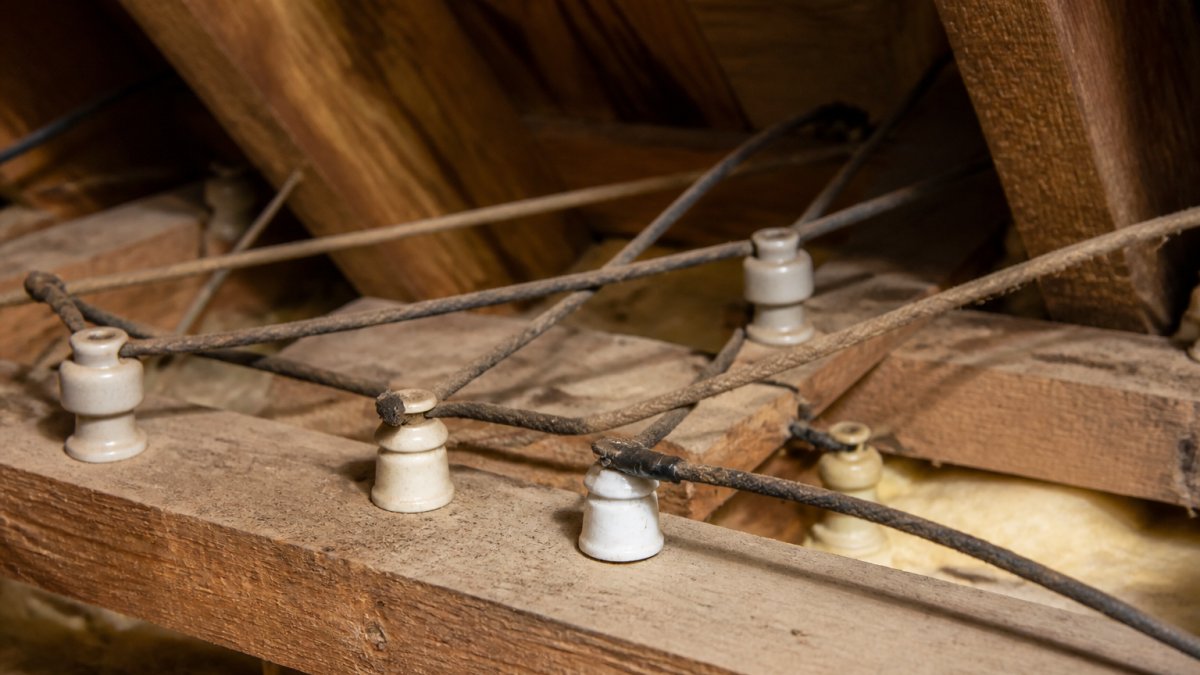
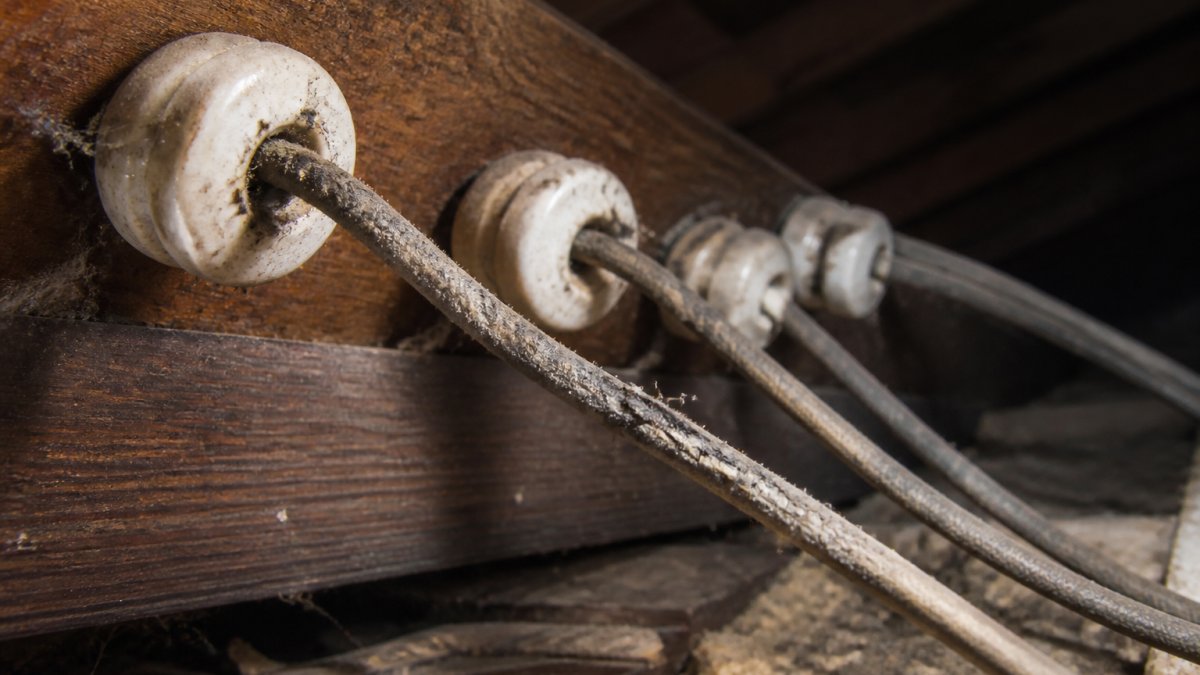
- Ceramic knobs supporting the wires at regular intervals
- Ceramic tubes (insulators) where wires pass through framing
- Cloth or rubber insulation wrapped around copper conductors
- Absence of a ground wire (K&T systems have only two wires, not three)
- Fuses instead of circuit breakers in your electrical panel
- Outlets with only two holes instead of three
If you see any of these features, your home likely has knob-and-tube wiring. Some homes have a mix of K&T and modern wiring if previous owners updated parts of the electrical system.
The most reliable way to confirm is to have a licensed electrician inspect your electrical panel and trace wiring through your attic or crawl space. They can tell you immediately whether you have K&T wiring and assess its condition.
Knob-and-Tube Wiring Inspection: What Electricians Evaluate
When you hire an electrician to inspect knob-and-tube wiring, they evaluate several specific factors to determine safety and risk level.
Electricians check the condition of insulation first. They look for cracks, brittleness, and areas where the covering has deteriorated. They examine whether rodent damage is present.
They assess whether the wiring has been modified or added to over the years. Many older homes have had new circuits added to original K&T systems.
Electricians evaluate the electrical panel to see what amperage the system is rated for and how much current is actually flowing through the K&T circuits.
Call Us and Get a Quote Today! →
They check for any evidence of previous fires or scorch marks around outlets, switches, or wire connections. They look for signs of overheating such as discoloration or melting of insulation.
A thorough inspection also includes checking whether the wiring is exposed in attics or crawl spaces or if it's buried under modern insulation.
The electrician will provide a detailed report of the wiring's condition and recommend whether the system can remain in use or needs replacement. This report is essential for insurance and safety purposes.
Knob-and-Tube Wiring Insurance Coverage and Your Options
Insurance companies treat knob and tube wiring insurance coverage as a significant underwriting issue. Many standard homeowners policies exclude coverage for homes with K&T wiring or charge higher premiums to accept the additional risk.
Some insurance companies will not insure homes with knob-and-tube wiring at all. They view the fire hazard as too great. Other companies will insure the home but exclude electrical damage from coverage.
A few insurance companies will cover homes with knob-and-tube wiring if the wiring is in good condition and has been professionally inspected and documented.
At Dehlinger Insurance, we work with multiple carriers who understand the realities of insuring older homes.
If your current insurance company has dropped you because of K&T wiring, don't assume you're uninsurable. Specialized carriers exist for exactly this situation. We can connect you with insurers who will cover your home fairly.
The most straightforward path is to replace the wiring entirely. Once K&T wiring is removed and modern electrical wiring installed, insurance coverage becomes standard and premiums typically drop.
Knob-and-Tube Wiring Replacement Cost and When to Replace
Replacing knob-and-tube wiring requires removing the old system entirely and installing modern electrical wiring throughout the home. This is a significant project that involves opening walls, running new wires, installing new outlets and switches, and upgrading the electrical panel.
The scope of replacement work depends on your home's size and layout. A small 1,200-square-foot home requires less work than a 3,000-square-foot house.
For replacement cost estimates, you'll need quotes from licensed electricians. Costs vary significantly based on local labor rates, material prices, and your specific home. The project is substantial enough that getting multiple quotes is essential.
Partial replacement is possible in some cases. If your home has a mix of K&T wiring and modern wiring, you might replace only the K&T circuits. However, electricians often recommend complete replacement to ensure safety and consistency throughout the electrical system.
Several factors determine whether replacement makes sense now or can wait:
- Insurance requirements: If your insurance company requires replacement, do it immediately
- Wiring condition: Severely damaged insulation means replacement is urgent
- Home sale plans: If you're selling soon, replacement increases home value and removes a major buyer concern
- Modern load demands: If you're adding new appliances or upgrading your home, replacement is the time to do it
- Age of wiring: Wiring over 70 years old is more likely to fail soon
Financing options exist for electrical work. Some electricians offer payment plans. Home improvement loans can fund the project. Some utility companies offer rebates for upgrading old electrical systems.
Your Next Steps as a Homeowner
If you own a home with knob-and-tube wiring, take action now rather than waiting for a problem to develop.
First, get a professional inspection. Contact a licensed electrician and specifically ask them to evaluate any K&T wiring in your home. Get a detailed written report of the wiring's condition and recommendations for safety.
Second, contact your insurance agent. Tell them about the knob-and-tube wiring and provide the electrician's inspection report. Ask whether your current policy covers the wiring and what your options are.
Third, plan for replacement if needed. Get quotes from licensed electricians for replacing the wiring. Understand the scope of work and timeline.
Finally, work with an insurance professional who understands older homes. At Dehlinger Insurance, we specialize in coverage for Florida homes with unique challenges, including older electrical systems. We've helped homeowners secure appropriate coverage for homes with knob-and-tube wiring.
Knob-and-tube wiring is a reality for many older Florida homeowners. Whether it represents an immediate fire hazard depends on the system's condition and how it's being used.
Frequently Asked Questions
Is it safe to buy a house with knob-and-tube wiring?
Buying a home with knob-and-tube wiring depends on its condition. If the wiring is intact, undamaged, and not covered by insulation, the fire risk is lower. However, many insurers will not cover homes with K&T wiring, and lenders may require replacement before financing. Have a licensed electrician inspect the system before purchase to assess its actual safety and compliance with electrical code requirements.
Will insurance cover a house with knob-and-tube wiring?
Most standard insurance carriers exclude or heavily restrict coverage for homes with knob-and-tube wiring due to fire risk. Some specialized insurers may offer coverage, but typically with higher premiums or conditions such as a full inspection or partial rewiring. Contact Dehlinger Insurance to explore your options, we work with carriers experienced in covering older homes with existing K&T systems.
Can knob-and-tube wiring be safely used if it is still working?
Working K&T wiring is not automatically unsafe, but age and condition matter. Brittle or cracked insulation, exposed wires, and lack of grounding all increase fire hazard. Modern electrical loads from devices like air conditioning, heating, and multiple appliances can overload K&T circuits, causing heat buildup. Even functioning wiring should be inspected regularly by a licensed electrician and monitored for warning signs like sizzling outlets or unusual electrical behavior.
What makes knob-and-tube wiring a fire hazard?
Knob-and-tube wiring poses fire risk because it lacks grounding, cannot safely handle modern electrical loads, and deteriorates over time. Damaged or brittle insulation exposes live wires; covering K&T wiring with attic insulation traps heat and increases fire risk. Additionally, improper repairs, bending, or modifications can crack insulation and create dangerous conditions. Combination of aging wire, inadequate capacity, and environmental exposure makes K&T systems a legitimate concern for fire prevention.