 how-to
Affordable Windstorm Insurance for Florida Mobile Homes
Table of Contents
- Why Windstorm Insurance for Florida Mobile Homes Costs So Much
- Step 1: Confirm You Meet Mobile Home Insurance Eligibility Requirements
- Step 2: Understand What a Windstorm Policy Covers and Excludes
- Step 3: Choose Mobile Home Insurance Deductibles You Can Live With
- Step 4: Collect Florida Mobile Home Insurance Quotes the Right Way
- Step 5: Claim Wind Mitigation Discounts for Mobile Homes
- Step 6: Document Your Home and File Claims That Get Paid
- Frequently Asked Questions
Last Updated: October 17, 2026
Why Windstorm Insurance for Florida Mobile Homes Costs So Much
Windstorm insurance is the part of a policy that pays to repair or rebuild your home after damage from high winds, hurricanes, and named storms. For mobile and manufactured homes, that protection costs more because these homes face higher wind risk and fewer carriers write the coverage.
At Dehlinger Insurance, we've spent over 38 years helping Florida residents find coverage that fits their budget. Here's what drives the price.
What Drives the Premium
Several factors push windstorm premiums higher for manufactured homes:
- Age and build standard. Homes built before modern wind standards cost more to insure.
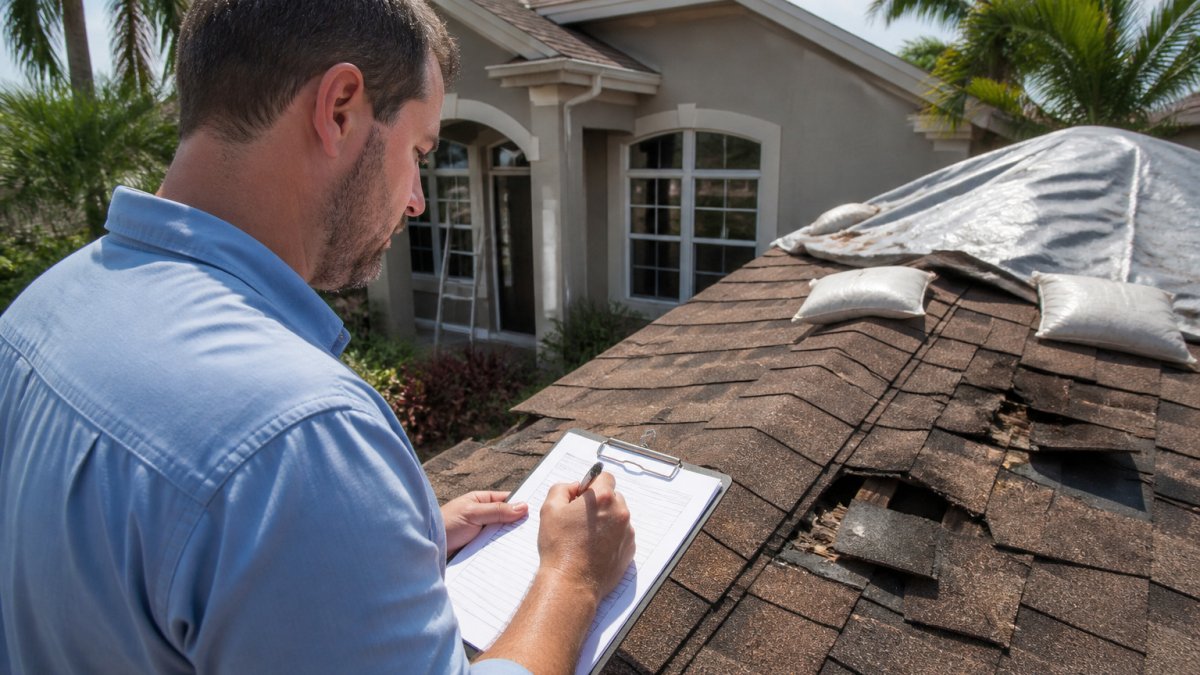
- Roof condition. An older or damaged roof raises risk for the carrier.
- Tie-down and anchoring. Proper anchoring lowers wind damage risk.
The good news: each of these is something you can influence. That's the thread running through this whole guide. You can't change the weather, but you can change how your home is built, documented, and insured.
Step 1: Confirm You Meet Mobile Home Insurance Eligibility Requirements
Before you shop, confirm the home qualifies. Mobile home insurance eligibility requirements usually come down to age, roof condition, and how the home is anchored. Meeting them up front saves you from wasted quotes and last-minute denials.
Age, Roof, and Tie-Down Rules
Most carriers set their own rules, but common eligibility points include:
- Home age. Older homes often need an inspection or a newer roof.
- Roof age and material. A worn roof can block approval.
- Tie-downs and anchoring. The home should be secured to resist wind uplift.
Many Florida mobile homeowners get turned down simply because they never confirmed these basics before applying. If your home was built decades ago, ask each carrier what documentation they need.
Step 2: Understand What a Windstorm Policy Covers and Excludes
A windstorm policy covers damage from wind, hurricanes, and named storms, but it does not cover everything. Knowing the difference between covered perils and policy exclusions prevents ugly surprises at claim time. This is also where most shopping mistakes happen: two quotes can look identical on the declarations page and behave very differently when a claim is filed.
Here's how coverage typically breaks down:
| Coverage Area | What It Usually Covers | Common Limits |
|---|---|---|
| Dwelling coverage | The physical structure of the home, including built-in fixtures | Set by dwelling limit |
| Personal property | Belongings inside the home | Separate personal property limit, often a percentage of dwelling |
| Personal liability | Bodily injury or property damage you cause | Per-occurrence limit |
| Other structures | Detached structures like sheds or carports | Often a smaller sub-limit |
| Medical payments | Minor injuries to guests | Small fixed limit |
| Loss of use | Temporary housing and added living costs after a covered loss | Time-limited or dollar-limited |
Covered Versus Excluded by Peril
The fastest way to read a windstorm policy is to sort causes of loss into three buckets: covered, excluded, and covered-only-with-an-endorsement.
- Usually covered: wind and hurricane damage to the roof, siding, skirting, and attached structures; hail; fire and lightning; theft; vandalism; falling objects; and weight of ice or snow in most inland policies.
- Usually excluded: flood and storm surge, earth movement (sinkholes and earthquakes), wear and tear, deterioration, rot, mold that results from long-term moisture, pest damage, and neglect or failure to maintain the home.
- Often needs an endorsement or separate policy: flood, sinkhole, and sometimes water backup or ordinance-or-law coverage for rebuilding to current code.
A practical example: if a named storm tears shingles off your roof and rain enters through the opening, the wind damage and the resulting interior water damage are typically treated as part of the wind loss. If floodwater rises into the home from outside, that is a flood loss and generally requires a separate flood policy.
Site, Foundation, and Land-Related Items
Manufactured home policies vary widely on the parts of the property that are not the box itself. Ask specifically whether the quote includes:
- Tie-downs and anchoring systems, often covered as part of the dwelling, but confirm.
- Skirting and piers, sometimes covered, sometimes excluded as site work.
- Foundations and footings, frequently excluded or limited when the home sits on leased land.
If the home sits in a park or on a leased lot, the park may own some of these items and the park's policy may respond instead. Get the responsibility split in writing before you buy.
Settlement Terms Change What You Actually Recover
Two policies with the same dwelling limit can pay very different amounts because of how they settle claims:
- Replacement cost value (RCV) pays to repair or replace with new materials, up to the limit.
- Actual cash value (ACV) pays replacement cost minus depreciation, so an older roof or older belongings pay out less.
- Extended replacement cost adds a percentage cushion above the dwelling limit for rebuild costs that exceed the estimate.
Ask each carrier whether dwelling and personal property are settled at RCV or ACV, and whether the policy includes extended replacement cost. On older manufactured homes, ACV roof settlement is common and can leave a large gap at claim time.
Step 3: Choose Mobile Home Insurance Deductibles You Can Live With
Mobile home insurance deductibles are the amount you pay before the policy pays. A higher deductible lowers your premium, but it raises your out-of-pocket cost when you file a claim.
Windstorm policies often use a separate hurricane or wind deductible, sometimes set as a percentage of the dwelling limit rather than a flat dollar amount. Ask each carrier to show both deductibles clearly.
A simple way to decide:
- Choose a higher deductible if you have savings set aside for a claim.
- Choose a lower deductible if a large surprise bill would strain your budget.
- Always confirm whether the wind deductible is a flat amount or a percentage.
Step 4: Collect Florida Mobile Home Insurance Quotes the Right Way
Getting Florida mobile home insurance quotes works best when you compare the same coverage side by side. Ask every carrier for identical limits and deductibles so the prices are truly comparable.
Call Us and Get a Quote Today! →
Follow these steps:
- Gather your home details: age, roof, size, and anchoring.
- Decide your dwelling limit and deductible first.
- Request quotes from multiple carriers through one agency.
- Compare coverage line by line, not just the total.
- Ask what each quote excludes.
Working with an agency that represents several top carriers means one conversation instead of five. That's how we handle it at Dehlinger Insurance, matching each home to carriers that actually accept it.
Check the Florida Office of Insurance Regulation for consumer guidance on shopping coverage.
Step 5: Claim Wind Mitigation Discounts for Mobile Homes
Wind mitigation discounts for mobile homes can lower your premium when your home has features that reduce wind damage. These discounts reward homes built or upgraded to resist high winds.
Features that often qualify include:
- Hurricane straps and tie-downs
- A roof in good condition
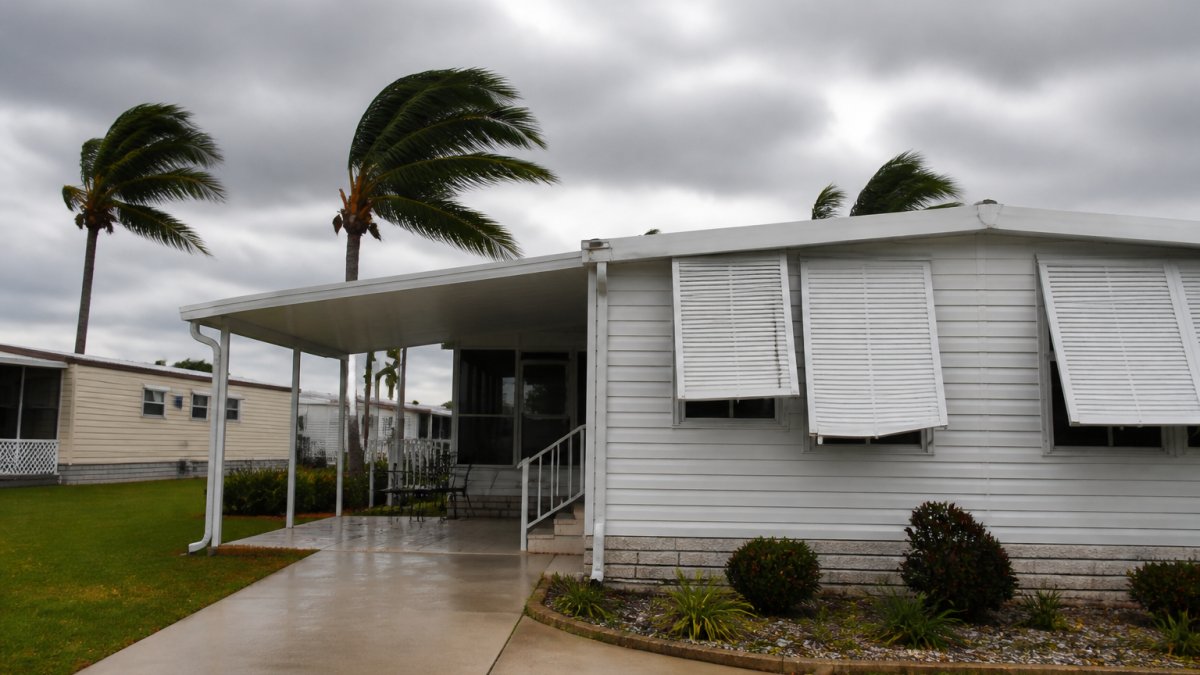
- Impact-rated windows or shutters
Ask for a wind mitigation inspection and send the report to your carrier. The Insurance Institute for Business & Home Safety publishes research on how wind-resistant features reduce storm damage.
Step 6: Document Your Home and File Claims That Get Paid
Claims get paid faster when you can prove what you owned and what happened. Documentation is the difference between a smooth claim and a fight. Most guides stop at a pre-storm checklist; the part that actually determines your payout is what you do in the first 48 hours after damage and how you document the loss for the adjuster.
Before a Storm: Build Your Evidence File
Do this before hurricane season, not after a watch is issued:
- Photograph or video every room, wall, appliance, and the exterior from all four sides
- Photograph the roof, tie-downs, skirting, and any detached structures
- Keep receipts and model numbers for major purchases and upgrades
A dated photo or video walkthrough is the single most useful item at claim time because it establishes condition and contents before the loss.
Immediately After Damage: The First 48 Hours
- Make it safe and prevent further damage. Cover broken windows and tarp the roof if you can do so safely. Keep every receipt for tarps, plywood, and temporary repairs, most policies reimburse reasonable mitigation costs.
- Report the loss promptly. Call your agent or carrier's claims line and get a claim number. Note the date, time, and who you spoke with.
- Document before you clean up. Photograph and video all damage, including water stains, missing shingles, and damaged belongings, before anything is discarded or repaired.
- Keep damaged items until the adjuster sees them unless they pose a health hazard. If you must dispose of something, photograph it first and keep a sample or receipt.
- Keep a claim log. Record every call, email, and visit, with dates and names.
How the Adjuster Assesses the Loss
An adjuster will typically inspect the home, compare the damage to the policy's covered perils, and prepare an estimate using pricing software.
You are allowed to get your own contractor estimates and to ask the adjuster to explain any line item you do not understand. If the estimate seems low, ask for the line-item breakdown in writing and compare it to your documentation.
How Settlement Terms Affect Your Check
The settlement basis matters as much as the damage estimate:
- Replacement cost value (RCV) pays to repair or replace with new materials, up to the limit. Many policies pay ACV first and release the recoverable depreciation after repairs are completed and documented.
- Actual cash value (ACV) pays replacement cost minus depreciation, so an older roof or older belongings pay out less.
- Deductibles, including a separate hurricane or wind deductible that may be a percentage of the dwelling limit, are subtracted from the payment.
Ask your agent before a storm which basis applies to the dwelling and to personal property, and whether recoverable depreciation is available. That single answer tells you how much of the repair bill you should plan to cover yourself.
The Florida Division of Emergency Management offers storm preparation resources to help you get ready before hurricane season, and the Florida Office of Insurance Regulation publishes consumer guidance on claims and policyholder rights.
Frequently Asked Questions
What makes a mobile home uninsurable in Florida?
Insurers turn down mobile homes that fail basic eligibility requirements: roofs older than 15 to 20 years, no tie-downs or anchors, homes built before 1976 (pre-HUD standards), or homes that have been unoccupied for long periods. A history of repeated claims or undisclosed damage can also disqualify a home. Fixing the roof, adding tie-downs, and getting a wind mitigation inspection can move a rejected home into the eligible pool, though some carriers still decline homes over 30 years old.
How can I lower the cost of windstorm insurance for a mobile home?
Raise your hurricane deductible to 2% or 5% of the dwelling limit, install hurricane shutters or impact glass, add tie-downs and anchors, and request a wind mitigation inspection. Bundle auto insurance with the mobile home policy, keep a clean claims history, and shop Florida mobile home insurance quotes from multiple carriers every renewal. Each step chips away at the premium, and stacking them usually saves more than any single change.
Does mobile home insurance cover hurricane wind damage?
A standard mobile home policy with windstorm coverage pays for hurricane wind damage to the dwelling, personal property, and other structures like steps, fencing, and carports. Windstorm is sometimes excluded and must be added by endorsement or bought as a separate policy, so check the declarations page. Flood damage from storm surge or rising water is never covered by windstorm insurance and requires a separate flood policy.
What information do insurers need to quote mobile home insurance?
Have the home's address, year built, make and model, square footage, and VIN ready. Insurers also ask for the roof age and material, tie-down or anchor details, whether the home is on owned or rented land, and the dwelling replacement cost. A wind mitigation inspection report and photos of the exterior speed up the quote. Providing accurate details upfront prevents re-quotes and surprise premium changes at closing.
Windstorm coverage for a mobile home takes some legwork, but the steps above make it manageable. Confirm eligibility, understand what's covered, pick a deductible you can afford, and claim every discount you've earned. That's where Dehlinger Insurance comes in: with 38 years serving Florida residents, relationships with multiple top carriers, and specialized coverage for older homes, we match your manufactured home to the right policy at a price that works. Call us and get a quote today.