 listicle
Best Florida Home Insurance 2026: Top Carriers Compared
Table of Contents
- Top Florida Home Insurance Carriers for 2026
- Security First Insurance: Best for Hurricane Protection
- State Farm Florida: Lowest Rates and Bundling
- Tower Hill Insurance Exchange: Best Overall Value
- Florida Peninsula Insurance: Comprehensive Coverage Options
- How to Lower Home Insurance Premiums in Florida
- Home Insurance Discounts for Wind Mitigation
- What Affects Your Florida Home Insurance Rate
Last Updated: August 30, 2026
Top Florida Home Insurance Carriers for 2026
Choosing the right home insurance in Florida depends on your home's age, location, construction type, and risk exposure. At Dehlinger Insurance, we've spent over 38 years helping Florida residents navigate this landscape, working directly with multiple top-tier carriers to find policies that fit individual needs rather than forcing families into generic coverage.
The carriers reviewed here represent the strongest options available to Florida homeowners in 2026. Some excel at hurricane protection, others at affordability, and a few balance both.
Quick Comparison Table
| Carrier | Best For | Key Strength | Coverage Type |
|---|---|---|---|
| Dehlinger Insurance | Personalized guidance & older homes | 38+ years experience, multiple carrier relationships | All property types |
| Security First Insurance | Hurricane protection | Specialized Florida risks, strong claims network | Homeowners, condos, renters |
| State Farm Florida | Competitive rates & bundling | No. 1 rated for value and service in Florida | Standard homeowners policies |
| Tower Hill Insurance Exchange | Overall value & customization | Low rates, high claims satisfaction, A (Exceptional) rating | Multiple property types |
| Florida Peninsula Insurance | Comprehensive coverage options | Wide add-on choices, A Exceptional financial rating | Homeowners, condos, renters |
| Universal Property & Casualty (UPCIC) | Broad appetite & high-value homes | Largest specialty carrier appetite, A rating | Multiple property types |
| Citizens Property Insurance | Last-resort coverage | Only option for high-risk properties | Basic HO-3 equivalent |

Security First Insurance: Best for Hurricane Protection
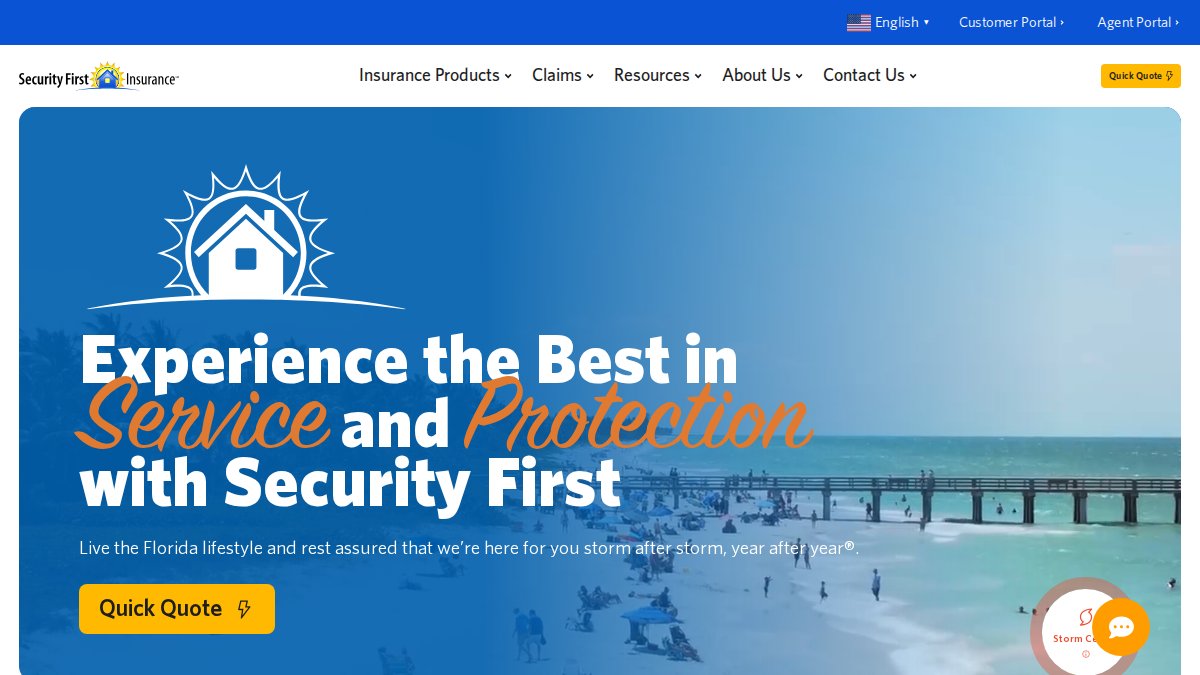
Security First Insurance operates exclusively in Florida with underwriting infrastructure designed around the state's most significant threat: hurricanes. Their named-storm coverage and comprehensive dwelling protection reflect this specialization. They maintain an A (Exceptional) Demotech rating, meaning they have the financial strength to pay claims even after major hurricane seasons.
Security First has filed consecutive rate decreases in recent years, which is rare in Florida's volatile market. Their First Choice Repair Network includes over 150 vetted, licensed contractors across the state. The tradeoff: flood damage requires a separate policy, and response times can lag during peak hurricane season when hundreds of claims arrive simultaneously.
Best for: Coastal homeowners and those in high-wind zones who prioritize hurricane protection.
State Farm Florida: Lowest Rates and Bundling
State Farm holds the No. 1 position for value and customer service in Florida consumer surveys. Their national parent company's A++ AM Best rating provides stability that smaller carriers can't match.
Bundling matters significantly. Combining home and auto with State Farm typically saves 15-25% compared to separate carriers (iii.org). State Farm's service model relies on local agents, creating personal relationships that matter when filing claims or adjusting coverage.
The limitations: State Farm doesn't offer online quotes in Florida, you must contact a local agent. Their complaint ratio is slightly above average for the industry, though still respectable.
Best for: Families bundling home and auto insurance who value agent relationships and competitive pricing.
Tower Hill Insurance Exchange: Best Overall Value
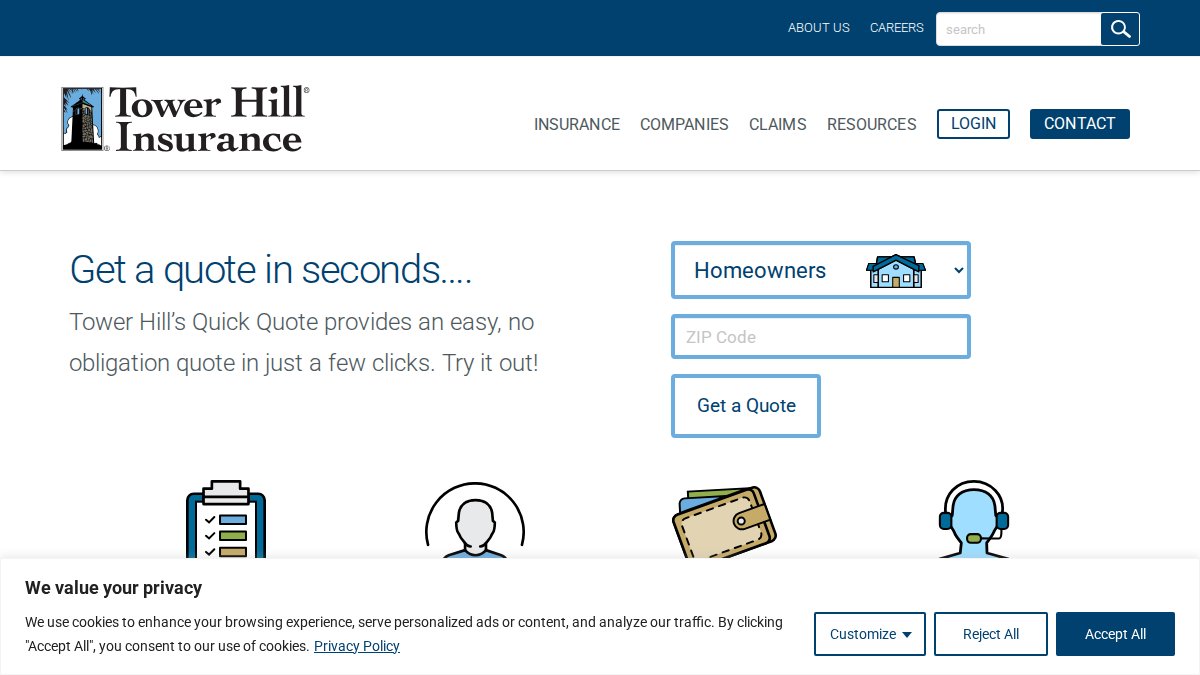
Tower Hill has insured Florida homes since 1972, weathering multiple major hurricane seasons and market cycles. Their pricing consistently ranks among the lowest in Florida without sacrificing coverage breadth. They specialize in high-value homes, handling complex properties, older construction, and unique exposures better than mass-market carriers.
Their claims satisfaction score is notably high, with faster claim resolution than industry averages during the 2024 hurricane season. The gap: Tower Hill doesn't offer auto insurance, so you won't get bundling discounts. They also lack J.D. Power satisfaction ratings and an AM Best financial rating. Their policies distribute through independent agents only.
Best for: Owners of high-value homes, older properties, and those seeking excellent claims service without needing auto bundling.
Florida Peninsula Insurance: Comprehensive Coverage Options
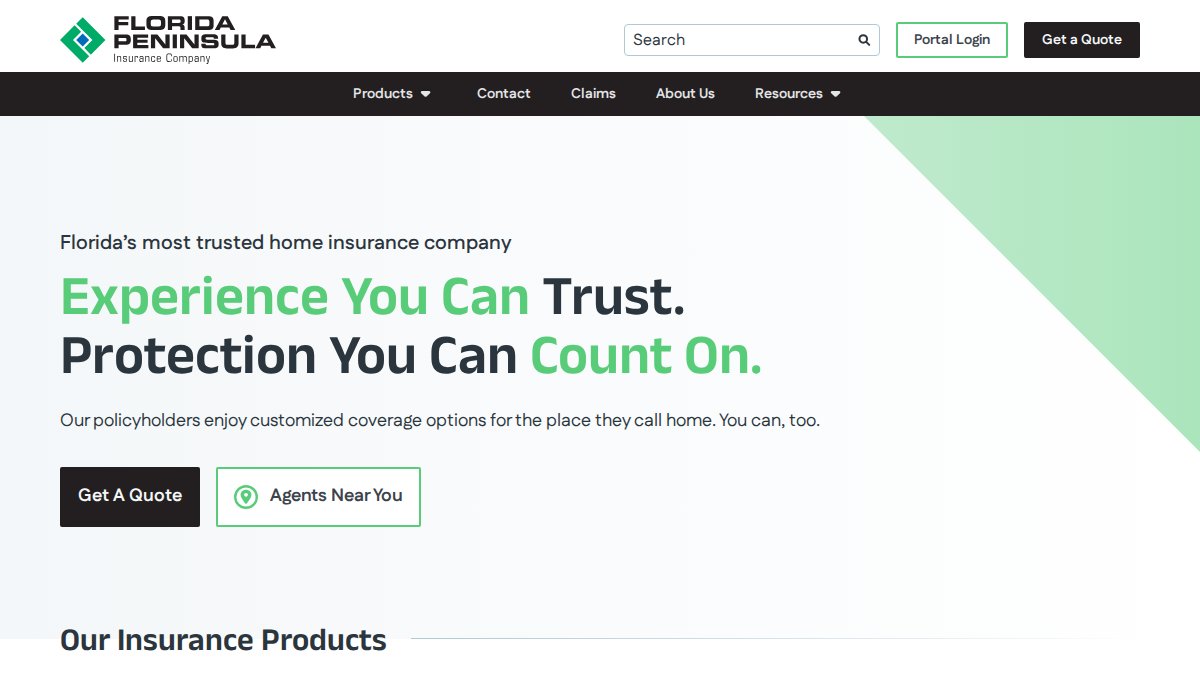
Florida Peninsula distinguishes itself through breadth of coverage options. They offer add-ons many carriers charge extra for: equipment breakdown coverage, service line protection, and identity theft protection bundled into policies. Their A Exceptional Demotech rating verifies financial stability. Their 24/7 online claims reporting system removes friction.
Their underwriting team is known for being responsive and flexible on non-standard properties. The realistic limitation: as a smaller, Florida-focused carrier, their rates sometimes run higher than national carriers for standard properties in low-risk areas. Flood insurance still requires a separate policy.
Best for: Homeowners seeking comprehensive add-on coverage options and personalized underwriting, particularly those with non-standard properties.
How to Lower Home Insurance Premiums in Florida
Insurance premiums in Florida reflect real risk: hurricane exposure, aging housing stock, litigation patterns, and reinsurance costs. Several concrete strategies can meaningfully reduce what you pay without cutting coverage.
Increase your deductible. Moving from $500 to $1,000 typically reduces annual premiums by 10-15% (naic.org). For homeowners with emergency savings, this trade-off often makes financial sense.
Bundle home and auto. Consolidating with your home insurer usually saves 15-25% on the combined premium.
Maintain your property. A well-maintained roof, updated electrical system, and secure plumbing reduce your risk profile and can lower premiums.
Ask about occupancy discounts. Primary residences qualify for occupancy discounts with most carriers.
Pay annually instead of monthly. Most carriers offer 5-10% discounts for annual payments.
Review coverage annually. Ensure your coverage aligns with actual replacement value.
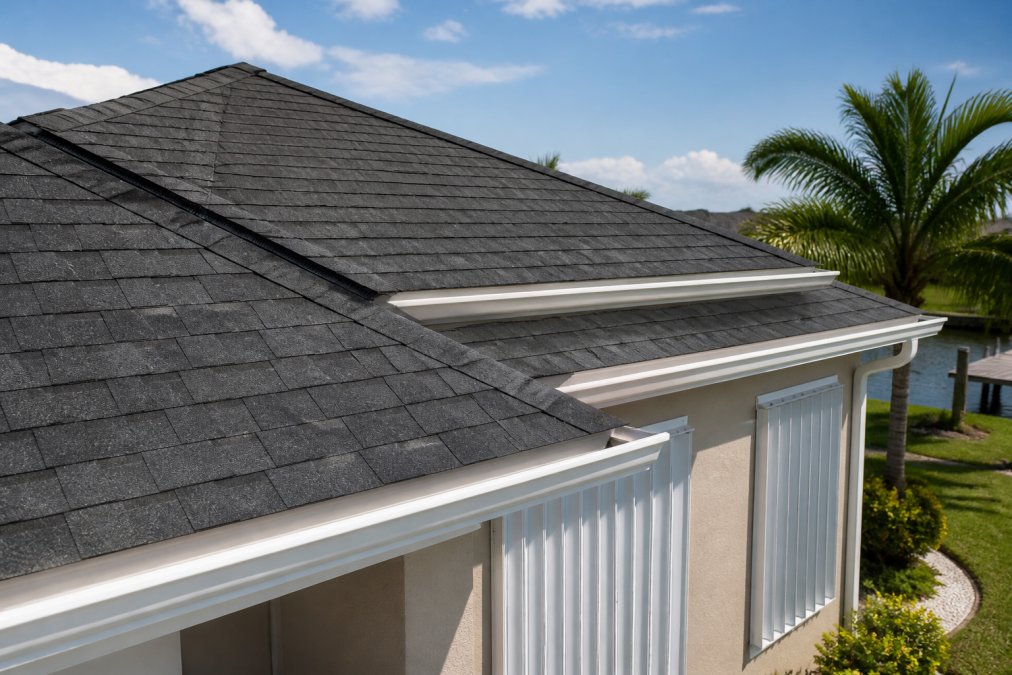
The most impactful strategy requires investment: wind mitigation improvements like roof reinforcement, impact-resistant windows, and storm shutters qualify for substantial discounts because they genuinely reduce risk.
Home Insurance Discounts for Wind Mitigation
Wind mitigation discounts represent the largest premium reduction available to most Florida homeowners. Carriers offer these because homes with reinforced roofs, impact-resistant windows, and storm shutters experience significantly lower wind damage during hurricanes.
Roof reinforcement is the most impactful upgrade, qualifying for 8-15% discounts. Impact-resistant windows and doors qualify for 5-10% discounts. Storm shutters (permanent aluminum or roll-down systems) qualify for 5-8% discounts. Gable end reinforcement typically qualifies for 3-5% discounts.
If you're paying $1,500 annually for homeowners insurance, a combined 15% discount saves $225 per year. If your roof needs replacement anyway, timing it for discount qualification is smart. If you're bundling multiple improvements, the combined 25-30% discount accelerates payback significantly.
Most carriers require a wind mitigation inspection to qualify for discounts. This inspection, typically $200-400, documents which improvements are in place. Dehlinger Insurance works with carriers that offer these inspections and can guide you through the process.
What Affects Your Florida Home Insurance Rate
Your premium reflects how insurance companies quantify risk.
Location and hurricane exposure. Homes in coastal zones, flood zones, and high-wind areas pay significantly more than inland properties. A home one mile from the coast might pay 40-60% more than an identical home 10 miles inland (naic.org).
Home age and construction. A 1980s home typically costs 20-30% more to insure than a 2015 home. Masonry construction costs less to insure than wood frame construction because it's inherently more wind-resistant.
Roof condition and age. A roof nearing end-of-life increases premiums. Some carriers won't insure homes with roofs older than 25-30 years.
Square footage and replacement cost. Larger homes cost more to rebuild, so they cost more to insure.
Claims history. Homeowners with prior claims pay higher premiums. Multiple claims within 5-7 years significantly increase rates.
Credit score. Insurers use credit-based insurance scores to assess risk. Homeowners with lower scores pay higher premiums.
Deductible selection. Higher deductibles mean lower premiums.
Occupancy status. Primary residences cost less to insure than vacation homes or rentals.
Prior insurance status. Homeowners with continuous coverage typically pay less than those with lapses.
Two homes that look identical might have vastly different premiums based on roof age, prior claims, or location within a flood zone. This is why shopping around matters, different carriers weight these factors differently.
Getting the Right Coverage Without Overpaying
The goal isn't finding the cheapest premium. It's finding the right coverage at a fair price.
Dwelling coverage should equal your home's replacement cost value, what it would cost to rebuild from scratch with current materials and labor. This isn't your home's market value. Get a professional appraisal or use your carrier's valuation tools to set this correctly.
Personal property coverage typically defaults to 50-70% of dwelling coverage, which is adequate for most homeowners. If you own significant valuables, you may need scheduled personal property endorsements.
Liability coverage protects you if someone is injured on your property and sues. Standard policies offer $100,000-$300,000. If you have significant assets, an umbrella policy adding $1-2 million in additional liability coverage costs $100-200 annually.
Loss of use coverage reimburses temporary housing if your home becomes uninhabitable after a covered loss. Review the limits to ensure they're adequate.
Water damage exclusions vary between carriers. Standard policies exclude flood but cover water intrusion from wind-driven rain or burst pipes. Review what's excluded and consider supplemental coverage if needed.
Dehlinger Insurance helps Florida homeowners evaluate these decisions, recommending coverage that matches your situation and budget rather than pushing unnecessary add-ons.
Navigating Claims and Policy Renewals
Report claims promptly. Most carriers require notice within 30-60 days of loss. Document everything with photos and video before making temporary repairs.
Provide detailed documentation. Photos, receipts, contractor estimates, and a detailed loss description accelerate claims processing.
Get a public adjuster if the claim is substantial. For major losses, hiring a public adjuster often results in higher settlements. Their fee (10-20% of the settlement increase) is typically worth the cost.
Review your renewal notice carefully. If your renewal quote jumps 20%+ without changes to your home or claims history, shop around. Carriers often offer better rates to new customers.
Update your coverage annually. Ensure your policy stays aligned with your actual situation.
Why Work With an Independent Agent
An independent agent like Dehlinger Insurance works with multiple carriers. We know which carriers have appetite for older homes, which offer the best hurricane protection, and which have the fastest claims processing. We know which carriers offer discounts you didn't know existed and which ones are pulling back from Florida.
More importantly, we advocate for you. If a carrier denies a claim unfairly, we push back. If your renewal rate jumps unjustifiably, we shop it. If you need coverage for a non-standard property, we know which carriers will actually consider it.
Over 38 years, Dehlinger Insurance has built relationships with top-tier carriers specifically to serve Florida residents better. We're solving insurance problems, not just selling policies.
Frequently Asked Questions
What is the average annual premium for home insurance in Florida?
Florida home insurance premiums vary significantly based on location, home age, coverage limits, and risk factors. Citizens Property Insurance Corporation, the state's insurer of last resort, reports an average annual premium of $1,843 as of April 2026, though private carriers often offer competitive rates. Coastal properties and older homes typically pay higher premiums due to increased hurricane risk and underwriting concerns. Contact local agents for personalized quotes based on your specific property.
How can I lower my home insurance premiums in Florida?
Several strategies reduce your Florida home insurance costs. Install wind mitigation improvements like impact-resistant windows, reinforced roof systems, or storm shutters, these often qualify for substantial discounts. Increase your deductible, bundle home and auto policies, maintain a good credit score, and ask about claims-free discounts. Review your coverage annually; you may be over-insured. Working with an experienced local agent who understands Florida's market can help identify discounts specific to your home and situation.
What wind mitigation improvements qualify for insurance discounts?
Florida insurers reward specific wind mitigation investments with premium discounts. These include impact-resistant windows and doors, roof reinforcement (secondary water barrier), roof-to-wall connections, gable-end bracing, and storm shutters. Many carriers offer discounts ranging from 5% to 25% depending on the improvements and your carrier. Some require a mitigation inspection to verify work meets building code standards. The return on investment can be significant if your home qualifies for multiple discounts. Ask your agent which improvements your insurer prioritizes.
Should I choose a national carrier or work with a local agency?
Both approaches offer distinct advantages. National carriers like State Farm often provide competitive rates and bundling options, but may lack Florida-specific expertise. Local agencies and specialty carriers understand Florida's unique hurricane risks, coastal zones, and older home challenges. They often have relationships with multiple carriers and can shop your policy if you're denied elsewhere. For older homes, specialty coverage, or personalized service, a local agent familiar with Florida's market typically delivers better results than online quotes alone.
What does standard homeowners insurance cover in Florida?
Standard Florida homeowners policies (HO-3) typically cover dwelling, other structures, personal property, liability protection, and loss of use. Dwelling coverage protects the home's structure; personal property covers belongings; liability covers injuries or damage to others on your property. Most policies exclude flood damage, which requires a separate flood insurance policy. Understanding your policy's actual cash value versus replacement cost value, deductible amounts, and specific exclusions is essential. Review your policy documents or ask your agent to clarify what's covered and what gaps may exist.
Looking for personalized guidance on Florida home insurance? Call Dehlinger Insurance today and get a quote tailored to your specific home and situation. Our team has over 38 years of experience helping Florida residents find the right coverage at the right price.
This article was written using GrandRanker