 listicle
7 Florida Hurricane Preparedness Tips for Senior Homeowners
Last Updated: October 25, 2026
Quick Summary
Effective hurricane preparedness for senior homeowners starts with a household checklist covering medical equipment, transportation, and key documents. Build supplies early, including one gallon of water per person per day and a 30-day medication buffer, and register for county alerts and special needs assistance before a storm is named.
- Store at least a week of water: one gallon per person per day, about 14 gallons for two people.
- Ask for prescription refills early to build a 30-day supply beyond your normal refill.
- Look up your county evacuation zone letter and write it on the same page as your route.
- Register every household phone for county emergency alerts, including a caregiver's number.
- Run generators outdoors only, away from windows and doors, never in a garage or screened porch.
Table of Contents
- Start With a Florida Hurricane Preparedness Checklist Built Around Your Needs
- Stock Hurricane Supplies for Seniors Before the Shelves Empty
- Build a Hurricane Evacuation Plan for Seniors That Accounts for Mobility and Transportation
- Secure Your Home Before the Storm Arrives
- Review Your Hurricane Insurance Coverage for Homeowners Early
- Set Up Emergency Contacts and a Communication Plan
- Plan for the Aftermath: Heat, Humidity, and Returning Home
- Get a Coverage Review Before Hurricane Season Starts
- Frequently Asked Questions
Start With a Florida Hurricane Preparedness Checklist Built Around Your Needs
The most useful Florida hurricane preparedness tips for senior homeowners begin with one document: a checklist written for your household, not a generic one. A hurricane preparedness checklist works because it turns a season of vague worry into a dated list of tasks you can actually finish.
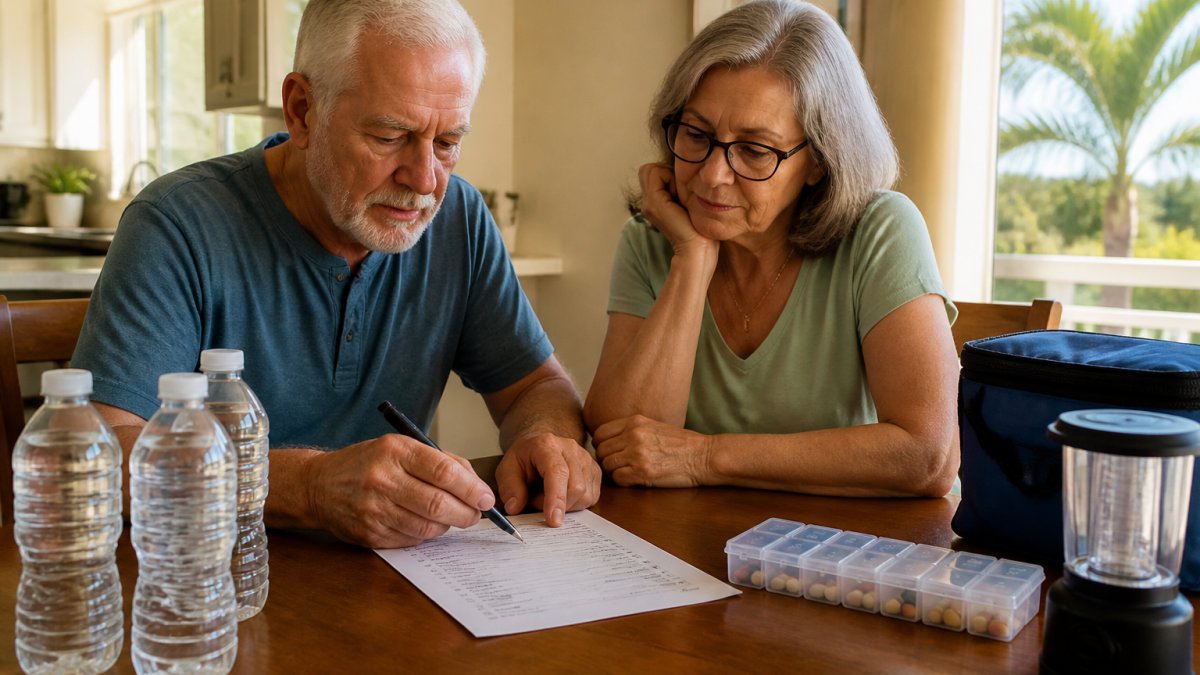
Start with three questions. What medical equipment needs power? Who drives, and who needs a ride? Which documents would you grab in ten minutes? Your answers shape every section below. A guide for retired snowbirds covers seasonal occupancy and preparedness planning.
Stock Hurricane Supplies for Seniors Before the Shelves Empty
Shelves empty fast once a storm is named, and hurricane supplies for seniors need a longer runway than most. Build your stock over several weeks in small trips. The National Weather Service hurricane planning guidance recommends a basic emergency kit plus a check of flashlights, generators, and storm shutters before the season begins.
Water, Food, and Medication Basics
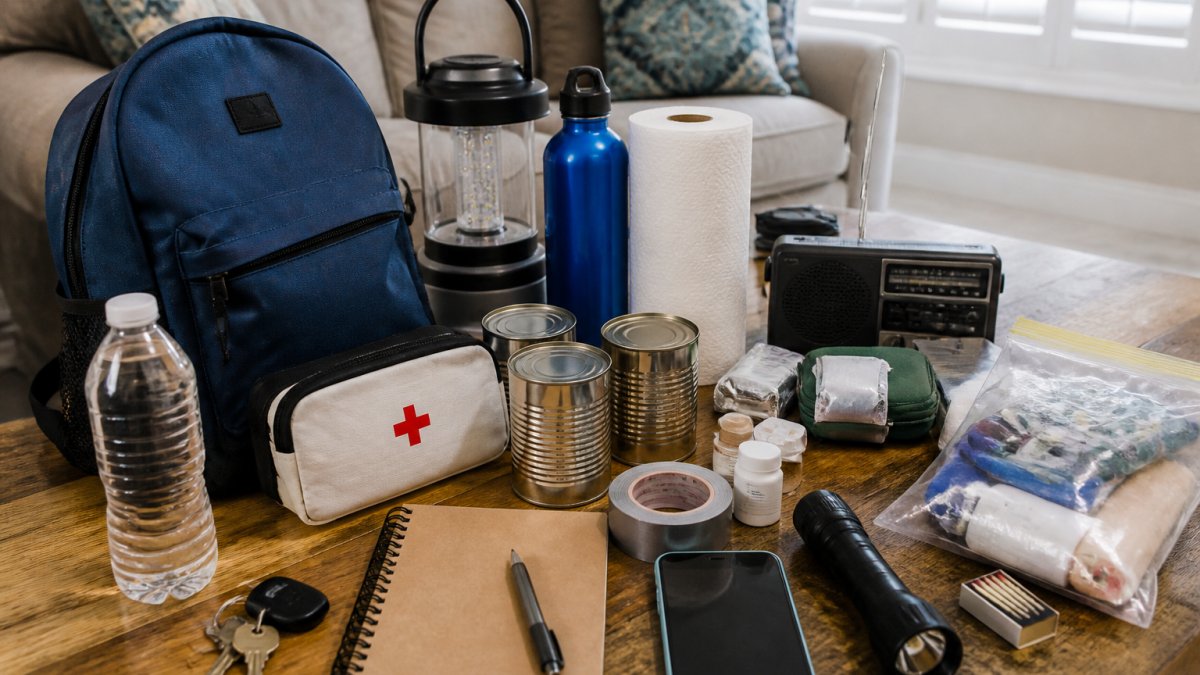
Plan on one gallon of drinking water per person per day, plus extra for pets, and store at least a week's worth, for two people that is roughly 14 gallons, plus pet water. Choose nonperishable food you will actually eat: canned protein, peanut butter, crackers, shelf-stable milk, and ready-to-eat meals that need no cooking. Keep a manual can opener and a battery-powered radio.
Medications deserve their own plan. Ask for prescription refills early enough to build a buffer, a common target is a 30-day supply beyond your normal refill, and keep a written list of every drug, dose, and prescribing doctor. Store copies with your supplies and in your wallet.
Medical Devices and Backup Power
List every device that runs on electricity: oxygen concentrator, CPAP, nebulizer, mobility scooter charger, and any power-dependent bed or monitoring equipment. Talk to your supplier about backup options before a storm forms, many oxygen suppliers can provide a backup tank or a battery pack, but only if you ask in advance.
Generators must run outdoors, well away from windows and doors, to avoid carbon monoxide danger. Never run one in a garage or screened porch, and never plug a generator into a wall outlet, use it only for cord-connected appliances or a properly installed transfer switch. Store fuel safely and away from living areas.
Here are the supply and medication targets the article recommends building toward before a storm is named.
| Item | Target | Note |
|---|---|---|
| Drinking water | One gallon per person per day | Store at least a week's worth |
| Water for two people | Roughly 14 gallons | Plus extra for pets |
| Prescription refills | 30-day supply beyond normal refill | Ask early to build a buffer |
| Medication records | Written list of every drug, dose, doctor | Store copies with supplies and in wallet |
| Power outage medication | Weekly pill organizer plus cooler with ice packs | Covers an outage |
| Medical devices | List every power-dependent device | Ask supplier about backup options in advance |
| Generators | Run outdoors, away from windows and doors | Never in a garage or screened porch |
Build a Hurricane Evacuation Plan for Seniors That Accounts for Mobility and Transportation
A hurricane evacuation plan for seniors has to answer one question honestly: how do you physically leave? The American Red Cross hurricane safety guidance recommends planning both an evacuation route and a safe-shelter option, because wind and flooding may make one impossible.
Know Your Zone Before You Need It
Every coastal and many inland counties assign evacuation zones by letter, commonly A through F, and orders are issued zone by zone as a storm approaches. Zone A is typically the lowest-lying and evacuates first. Look up your zone through your county emergency management office's website or the state's Know Your Zone tool, and write the letter on the same page as your route. If you live in a manufactured home or a flood-prone area, assume you may be ordered out even in a zone that sounds inland.
Register for Alerts and Special Needs Assistance
Sign up for your county's emergency alert system, most use a mass-notification service that sends texts, emails, or voice calls when an evacuation order or shelter opening is announced. Register every phone in the household, including a caregiver's. Separately, ask your county emergency management office about its special needs registry. These programs are designed for residents who need transportation, electricity for medical equipment, or accessible shelter space during an evacuation. Registration is usually free and can often be completed online or by phone before the season starts; do not wait for a storm to be named.
Plan the Ride and the Destination
Arrange a ride with a neighbor or family member now, not on the day the order comes. If you rely on paratransit or a medical transport service, confirm in advance whether it runs during evacuations and how early you must call. Identify a destination outside the evacuation zone, a relative's home, a hotel inland, or a public shelter, and confirm that it can accommodate mobility aids, a service animal, or a power-dependent medical device. Public shelters vary in accessibility; call ahead or check your county's shelter list for which locations are designated special needs or accessible shelters.
Pack a Go-Kit You Can Carry
Keep a small evacuation kit packed and light enough to lift: a week of medications in original labeled bottles, a written medication list, copies of ID and insurance cards, glasses, phone charger and backup battery, a change of clothes, and cash in small bills. Keep it by the door during hurricane season so a last-minute order does not turn into a search.
Secure Your Home Before the Storm Arrives
Roof damage drives most storm claims, and most of it starts small. Walk your property and look for loose shingles, cracked sealant, and clogged gutters. The BELFOR hurricane season property preparation guide recommends inspecting roofs for missing or curling shingles and reinforcing the home's structural envelope.
Call Us and Get a Quote Today! →
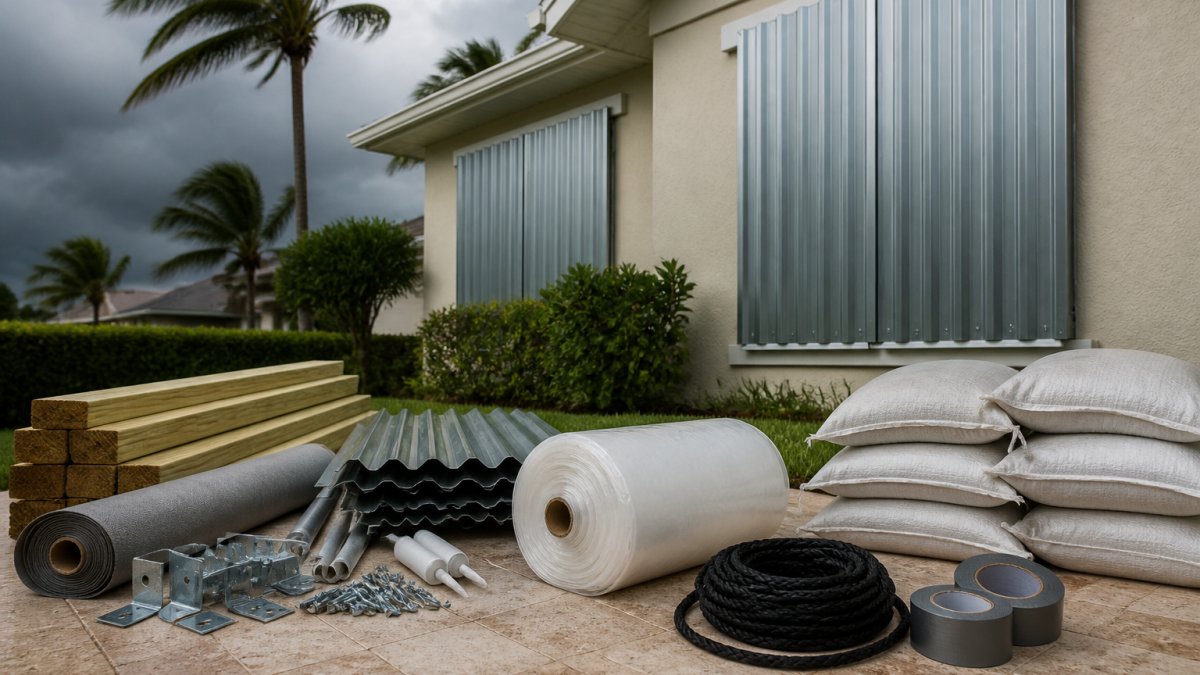
Then work outward. Trim weak branches, bring in lawn furniture and garbage cans, and check that hurricane shutters or plywood panels are cut and labeled. Readers can also review practical home hardening methods that support insurance discounts. If you cannot board up windows yourself, line up help in advance.
Review Your Hurricane Insurance Coverage for Homeowners Early
Hurricane insurance coverage for homeowners is where preparation meets money, and reading your policy early beats discovering a gap after a storm. Check your hurricane deductible, your coverage limits, and whether your policy pays replacement cost or actual cash value. A guide to hurricane endorsements explains what a policy actually includes. Those terms decide what a claim actually pays. A comparison of replacement cost and actual cash value explains how each affects claims before storm season.
Flood damage is usually excluded from standard homeowners policies, so ask directly whether you need separate flood coverage. Readers can learn whether flood insurance is mandatory for seniors.
Store copies of your policy, ID, and a home inventory in a waterproof bag and in the cloud. Photograph each room now; that record speeds up any claim later.
Set Up Emergency Contacts and a Communication Plan
A communication plan is a single page listing who calls whom, and it works when cell service does not. Include a family member outside the storm area as a check-in contact, plus your doctor, pharmacy, and insurer. Text messages often get through when calls fail.
Keep a paper copy in your supply kit and another in your wallet. Program contacts into your phone and label them clearly. Update your emergency contacts with your county and with any caregiver or senior community you work with. Caregivers should hold the same list.
Plan for the Aftermath: Heat, Humidity, and Returning Home
The days after landfall are often harder than the storm itself. Florida heat and humidity return quickly, and a home without power becomes dangerous for older adults within hours. Have a plan for where you will stay if the outage runs long.
Return home only when officials say it is safe. Photograph damage before you clean up, keep receipts for any repairs, and call your insurer early to open a claim. Watch for downed power lines and standing water. If your home is uninhabitable, ask your insurer about loss-of-use coverage before you pay for a hotel. Securing your property during extended absences or recovery periods is often managed effectively by home watch services.
Get a Coverage Review Before Hurricane Season Starts
The gap between a prepared household and a scrambling one usually comes down to one conversation held early. Coverage terms, deductibles, and exclusions are easier to fix in May than in the middle of an evacuation order.
Dehlinger Insurance has provided Florida residents with insurance for over 38 years, with specialized coverage for older homes and relationships with multiple top carriers. We build personalized policies around your medical needs, your property, and your budget, and we offer affordable payment plans for auto insurance premiums. Get started with Dehlinger Insurance and walk into hurricane season knowing exactly what your policy covers.
Call us and get a quote today.
Frequently Asked Questions
What should I include on my Florida hurricane preparedness checklist?
A practical checklist covers drinking water at one gallon per person per day, nonperishable food, medications and prescription refills, a first aid kit, flashlights and batteries, blankets, clothing, and copies of important documents. Add a battery-powered radio, cash, and a list of emergency contacts. Senior homeowners should also note medical devices and backup power needs. Review the checklist each spring before hurricane season and update supplies that have expired.
What supplies should older adults have in a hurricane kit?
Hurricane supplies for seniors should go beyond a standard kit. Include at least a seven-day supply of medications in original containers, a written medication list, spare eyeglasses and hearing aid batteries, and any medical supplies you use daily. Pack mobility aids, comfortable shoes, and a light jacket. Keep a cooler with ice packs for insulin or other temperature-sensitive medication, and store a phone charger and backup battery in the kit.
How should seniors plan for evacuation during a hurricane?
A hurricane evacuation plan for seniors starts with knowing your evacuation zone and route. Identify a destination outside the evacuation area, such as a family member's home or a hotel, and confirm transportation in advance. Register with your county's special needs assistance program if you need help evacuating. Keep a go-bag packed with medications, documents, and supplies, and leave as soon as an evacuation order is issued rather than waiting for the storm to strengthen.
When should senior homeowners review their hurricane insurance coverage?
Review hurricane insurance coverage for homeowners well before hurricane season begins, ideally in spring. Check your hurricane deductible, wind coverage, and whether you have separate flood insurance, since standard homeowners policies usually exclude flooding. Confirm your roof's age and condition meet your carrier's requirements, and ask about wind mitigation discounts. Reviewing early gives you time to adjust coverage or shop for a policy before a storm forms.
How can older adults prepare for power outages and medical needs?
Plan for power outages by identifying which medical devices depend on electricity and how long their batteries last. Keep backup batteries or a charged portable power station ready, and never run a generator indoors or in a garage because of carbon monoxide risk. Store medications that need refrigeration with ice packs, and keep a written list of your conditions and prescriptions. Tell a neighbor or caregiver your plan so someone checks on you if the power goes out.