 listicle
Best Florida Home Insurance for Seniors: 2026 Guide
Table of Contents
- Quick Comparison: Best Florida Home Insurance for Seniors
- Average Cost of Home Insurance in Florida for Seniors
- How We Evaluated These Providers
- Top Florida Home Insurance Options for Seniors, Ranked
- 1. Security First Insurance: Best for Affordable Rates
- 2. American Integrity Insurance: Best for Discount Stacking
- 3. Universal Property & Casualty: Best for Homeowners 65+
- 4. People's Trust Insurance: Best for Wind-Resistant Homes
- 5. Loggerhead Insurance: Best for Recent Renovations
- 6. State Farm: Best for Bundling Home and Auto
- 7. Kin Insurance: Best for Tech-Comfortable Seniors
- 8. Liberty Mutual: Best for National Brand Reliability
- 9. GEICO (Through Partners): Best for Existing GEICO Policyholders
- 10. Dehlinger Insurance: Best for Older Homes and Personalized Service
- Florida Homeowners Insurance Discounts for Seniors
- How to Lower Home Insurance Premiums in Florida
- Coverage Seniors Often Overlook: Flood, Liability, and HOA Gaps
- Navigating Policy Non-Renewals in Florida
Last Updated: August 4, 2026
Florida's home insurance market is one of the most challenging in the country. Finding the best florida home insurance for seniors requires more than grabbing the lowest quote online. Dehlinger Insurance has helped Florida seniors protect their homes for over 38 years, and one pattern stands out: retirees on fixed incomes face risks that generic comparison sites don't address, from sudden policy non-renewals to HOA coverage gaps. Below, we rank top providers, break down available discounts, and show you how to protect your home without wrecking your retirement budget.
Quick Picks:
- Best Overall / Personalized Service: Dehlinger Insurance - ideal for older homes, complex situations, and seniors who want an experienced local agent
- Best for Affordable Rates: Security First Insurance - automatic 55+ discount applied at quote
- Best for Discount Stacking: American Integrity Insurance - senior, wind mitigation, and multi-policy discounts combine well
- Best for Tech-Comfortable Seniors: Kin Insurance - fully digital, mature homeowner discount over age 50
- Best for Bundling: State Farm - strongest bundling savings for home and auto together
Quick Comparison: Best Florida Home Insurance for Seniors
| Provider | Senior Discount Age | Best For | Standout Feature |
|---|---|---|---|
| Dehlinger Insurance | All ages | Older homes, personalized service | 38+ years FL experience, multiple carriers |
| Security First Insurance | 55+ | Affordable rates | Automatic 55+ premium discount |
| American Integrity Insurance | 55+ | Discount stacking | Senior + wind mitigation + multi-policy |
| Universal Property & Casualty | 65+ | Homeowners 65+ | Explicit 65+ occupant discount |
| People's Trust Insurance | 55+ | Wind-resistant homes | 5% mature discount on non-hurricane premium |
| Loggerhead Insurance | 55+ | Recent renovations | Seniors + renovation + smart home discounts |
| State Farm | No age discount | Bundling home and auto | Strong bundling savings |
| Kin Insurance | 50+ | Tech-comfortable seniors | Mature homeowner discount, fully digital |
| Liberty Mutual | No age discount | National brand reliability | "A" AM Best rating, bundling savings |
| GEICO (through partners) | No age discount | Existing GEICO policyholders | Multi-policy discount via partner network |
Average Cost of Home Insurance in Florida for Seniors
Florida home insurance premiums rank among the highest in the nation due to hurricane exposure, litigation history, and a shrinking carrier market. For seniors, costs depend heavily on roof age, home construction year, coastal proximity, and claims history. A home with a roof over 15 years old in a coastal county will carry a meaningfully different premium than a recently renovated inland property.
Security First Insurance lists an average starting point around $798 per year for $350,000 in dwelling coverage for qualifying homes, though your actual rate will vary. The gap between providers on the same home can be substantial, which is why working with an independent agent who accesses multiple carriers matters more in Florida than almost any other state.
How We Evaluated These Providers
We assessed each provider on senior-specific discounts, coverage for older homes, financial stability, wind and hurricane mitigation discounts, fixed-income friendliness, claims process quality, and digital accessibility. No single carrier wins on all dimensions. The right choice depends on your specific home, location, and financial situation.
Top Florida Home Insurance Options for Seniors, Ranked

1. Dehlinger Insurance: Best for Older Homes and Personalized Service
Dehlinger Insurance is the top pick for Florida seniors, particularly those with older homes or complex coverage situations. With over 38 years of experience serving Florida residents, the agency shops multiple top-tier carriers on your behalf and matches coverage to your actual situation. This matters most for homeowners with homes built before 2000, those declined by standard carriers, and seniors who want expert guidance rather than self-service quotes.
Pros: Over 38 years of Florida-specific experience, access to multiple top insurance carriers, specialized expertise in older and non-standard homes, personalized service with real agents
Cons: Pricing depends on the carrier matched to your situation; contact for a quote
2. Security First Insurance: Best for Affordable Rates
Security First Insurance consistently offers competitive rates and applies a 55+ discount automatically at quote. The carrier covers older homes with unique features, a genuine differentiator where many carriers have tightened eligibility.
Pros: Very competitive pricing, automatic senior discount at 55, flexible coverage endorsements Cons: Specific pricing requires a quote and varies by location and home age
3. American Integrity Insurance: Best for Discount Stacking
American Integrity Insurance offers a Senior/Retiree discount for policyholders aged 55 and up. It shines in combining discounts: senior status, windstorm mitigation improvements, protective devices, and multi-policy discounts for seasonal homes, rental properties, or boats.
Pros: Explicit senior/retiree discount, strong wind mitigation discount, good for seasonal residents Cons: Pricing not publicly listed; requires a quote
4. Universal Property & Casualty: Best for Homeowners 65+
Universal Property & Casualty offers an "Occupants Over the Age of 65 Discount," one of the clearest age-specific discounts in Florida. The carrier covers dwelling, other structures, personal belongings, and liability with optional endorsements.
Pros: Explicit 65+ discount, wide coverage options, strong Florida presence Cons: Some complaints around claims handling; pricing requires a quote
5. People's Trust Insurance: Best for Wind-Resistant Homes
People's Trust Insurance offers a 5% mature or senior discount for policyholders aged 55 or older on the non-hurricane portion of the premium. The real value is for seniors who have invested in wind-resistant improvements: impact windows, reinforced garage doors, or hip roofs.
Pros: Clear senior discount, strong wind mitigation discounts, gated community discount available Cons: Senior discount limited to non-hurricane premium; pricing requires a quote
6. State Farm: Best for Bundling Home and Auto
State Farm does not offer an explicit age-based senior discount for homeowners insurance, but it remains strong for seniors who also carry auto insurance. Bundling savings are meaningful, and State Farm's financial stability and customer service track record are among the strongest of any national carrier in Florida.
Pros: Strong bundling savings, excellent customer service ratings, financially stable Cons: No explicit senior discount; not always cheapest without bundling
7. Kin Insurance: Best for Tech-Comfortable Seniors
Kin Insurance offers a "Mature Homeowner" discount for policyholders over age 50, one of the lowest age thresholds in Florida. The entire experience runs through their digital platform, offering faster service for tech-comfortable seniors.
Pros: 50+ mature homeowner discount, replacement cost coverage as baseline, multiple discount categories Cons: Limited in-person support; best for tech-comfortable policyholders
8. Liberty Mutual: Best for National Brand Reliability
Liberty Mutual carries an "A" (Excellent) rating from AM Best, the financial stability benchmark that matters most when evaluating whether your insurer can pay claims after a major hurricane. The carrier offers bundling, new roof, and renovation discounts, though no specific senior age discount.
Pros: "A" AM Best rating, strong bundling savings, available in all 50 states Cons: Higher average premiums; requires good credit history
9. GEICO (Through Partners): Best for Existing GEICO Policyholders
GEICO does not underwrite homeowners policies; it connects policyholders with partner insurers. For seniors already carrying GEICO auto insurance, the multi-policy discount is the primary draw.
Pros: Multi-policy discount for existing GEICO auto customers, wide partner network, 24/7 support Cons: GEICO doesn't underwrite the policy directly; claims experience depends on the partner carrier
10. Loggerhead Insurance: Best for Recent Renovations
Loggerhead Insurance offers a Seniors & Retirees discount for insured members aged 55 or older, paired with renovation discounts for roofs replaced within the last 10 years. For seniors who have recently updated their roof or installed smart home leak detection, the discount combination can be meaningful.
Pros: Senior discount at 55, renovation and smart home discounts, customizable coverage tiers Cons: Pricing not publicly listed; newer carrier with less claims track record
Florida Homeowners Insurance Discounts for Seniors
Age-Based Discounts: What Qualifies and at What Age
Most Florida carriers that offer age-based discounts set the threshold at 55. Kin Insurance triggers its Mature Homeowner discount at 50. Universal Property & Casualty targets 65+. The discount is typically a percentage reduction applied automatically at quote. Some carriers apply the age discount only to the non-catastrophe portion of the premium. In coastal Florida, the hurricane/windstorm portion can represent a large share of your total cost. Always ask specifically which components the senior discount applies to before comparing quotes.
Wind and Hurricane Mitigation Discounts
Wind and hurricane mitigation discounts are the most financially significant discounts available in Florida and are available to homeowners of any age. A wind mitigation inspection documents your home's roof shape, roof covering, roof deck attachment, roof-to-wall connections, opening protections, and building code compliance. Homes with hip roofs, impact-resistant windows, reinforced garage doors, and secondary water resistance typically qualify for the largest discounts. The inspection costs a modest fee and is valid for multiple years. For many Florida seniors, the annual premium savings pay for the inspection cost within months.
How to Lower Home Insurance Premiums in Florida
Roof Age, Plumbing Updates, and Electrical System Upgrades
Roof age is the single most influential factor in Florida homeowners insurance underwriting. Most carriers will not write a new policy on a home with a roof over 15 years old. A roof replacement typically produces immediate premium reductions. Plumbing updates matter because water damage claims are a leading driver of homeowners insurance losses in Florida. Homes with galvanized steel or polybutylene pipes carry higher risk. Updating to CPVC or PEX plumbing can improve insurability and lower your rate. Electrical system upgrades, particularly replacing knob-and-tube wiring or Federal Pacific panels, reduce fire risk and improve eligibility with standard carriers.
Home improvement checklist for lower premiums:
- Roof replaced within the last 10 years, with documentation
- Wind mitigation inspection completed and on file
- Plumbing updated from galvanized or polybutylene
- Electrical panel updated from Federal Pacific or fuse box
- Impact windows or storm shutters installed
- Security system with central monitoring active
- Smoke and carbon monoxide detectors installed
Fixed-Income Budgeting Strategies for Insurance Costs
Choose your deductible deliberately. A higher hurricane deductible lowers your annual premium, but it must be a number you can actually cover from savings if a storm hits. Ask your carrier about annual payment discounts. Paying your premium in full annually rather than monthly often produces a small discount. Review your personal property coverage limits against your actual possessions. Many seniors are over-insured on contents because policy limits were set years ago. A home inventory review can reveal opportunities to right-size coverage.
Coverage Seniors Often Overlook: Flood, Liability, and HOA Gaps
HOA vs. Homeowners Insurance: What Your Association Actually Covers
An HOA master policy typically covers the building structure and common areas, but the specific scope depends on whether the policy is "bare walls in," "single entity," or "all-in." A bare walls in policy covers only the structure to unfinished interior surfaces. Your flooring, cabinetry, appliances, and interior fixtures are your responsibility. A standard HO-6 condo policy fills this gap. The practical mistake: assuming your HOA dues mean your home is fully insured. Review your HOA's master policy declarations page alongside your own policy to identify the gap.
Flood Insurance Add-Ons and the NFIP
Standard homeowners insurance policies do not cover flood damage. Flood insurance in Florida is available primarily through the National Flood Insurance Program administered by FEMA, with private flood insurance options also available. NFIP policies cover building property and personal property separately, each with its own coverage limit and deductible. For seniors in flood zones, private flood insurance often offers higher limits and faster claims processing than the NFIP, though pricing varies. Homes in high-risk FEMA flood zones with federally backed mortgages are required to carry flood insurance. But many flood claims occur in moderate-risk zones where flood insurance is not required. The risk is real even when the mandate is not.
Navigating Policy Non-Renewals in Florida
Policy non-renewal is one of the most stressful situations a Florida senior can face, and it has become increasingly common as carriers have exited the state or tightened underwriting criteria.
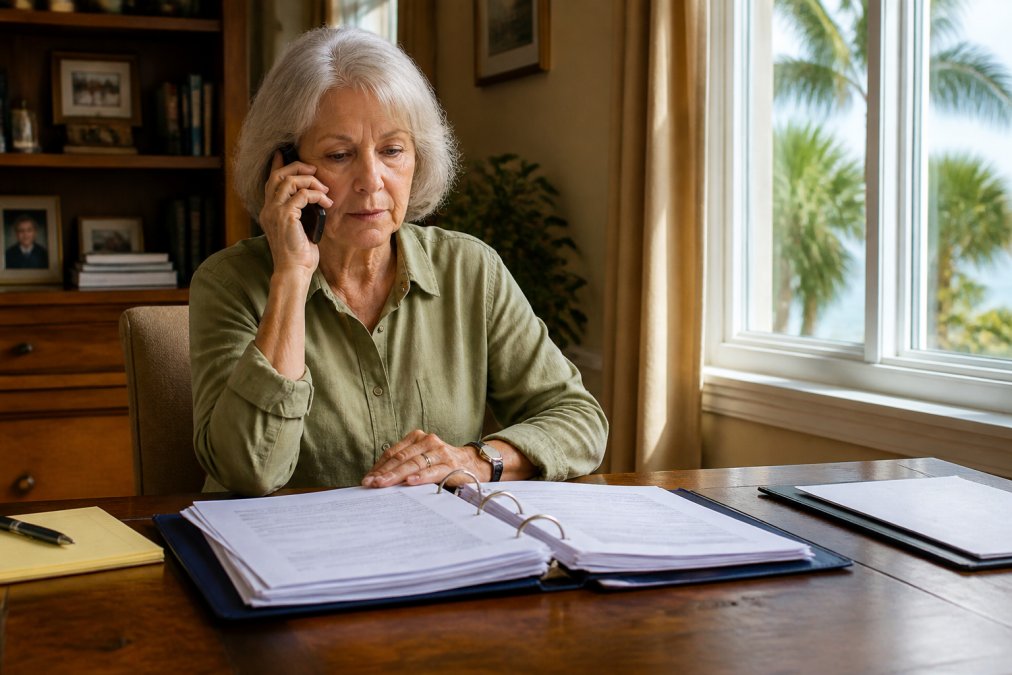
A non-renewal notice means your current carrier will not continue your policy at the end of the current term. Florida law requires carriers to provide advance written notice, giving policyholders a window to find alternative coverage. The most common triggers for non-renewal include roof age exceeding carrier thresholds (typically 15-20 years), prior claims history (particularly multiple water damage claims), carrier reducing its Florida exposure overall, and home characteristics that no longer meet updated underwriting guidelines.
Act immediately on receiving a non-renewal notice rather than waiting for the deadline. Contact an independent agent with access to multiple carriers, because the standard admitted market may not have options for your specific situation. Florida's Citizens Property Insurance Corporation, the state-backed insurer of last resort, is an option for homeowners who cannot find coverage in the private market. For detailed current eligibility information, review Citizens Property Insurance Corporation coverage and eligibility guidelines. Seniors with older homes who have been non-renewed by one carrier often assume they cannot find coverage. That assumption is frequently wrong. An independent agent with specialized experience in older Florida homes and relationships with non-standard carriers can often find coverage where a direct-to-consumer platform cannot.
Frequently Asked Questions
Do seniors get discounts on homeowners insurance in Florida?
Yes. Several Florida insurers offer explicit age-based discounts for seniors. Security First Insurance automatically applies a 55+ discount to premiums. American Integrity, Loggerhead, and People's Trust all offer senior or retiree discounts for policyholders aged 55 and older. Universal Property & Casualty provides a specific discount for occupants over 65. The exact savings vary by carrier and home characteristics, so getting multiple quotes is the most reliable way to find the best florida home insurance rate for your situation.
What is the most reasonable homeowners insurance for seniors on a fixed income?
Security First Insurance averages around $798 per year for $350,000 in dwelling coverage, making it one of the most affordable options in Florida. For seniors on a fixed income, bundling home and auto policies can also reduce costs significantly. State Farm advertises average bundling savings around 27.4%. Working with an independent agency that holds relationships with multiple carriers lets you compare options without spending hours pulling individual quotes from each company.
Who is still writing homeowners insurance in Florida?
Despite Florida's difficult insurance market, several carriers remain active. These include Security First Insurance, American Integrity Insurance, People's Trust Insurance, Universal Property & Casualty (UPCIC), Loggerhead Insurance, Kin Insurance, State Farm, Liberty Mutual, and GEICO through its partner network. Independent agencies like Dehlinger Insurance, with over 38 years serving Florida residents, maintain relationships with multiple carriers, which is especially useful for owners of older homes that standard insurers sometimes decline.
What Florida homeowners insurance discounts for seniors can I stack together?
Stacking discounts is one of the most effective ways to lower your annual premium. Common combinations include a senior or retiree age discount, a wind mitigation discount after a certified inspection, a security system or smart home device discount, a bundling discount for combining home and auto policies, and a claims-free history discount. American Integrity and Loggerhead both explicitly support multiple discount categories. A local independent agent can identify which combinations apply to your specific home and location.
What should seniors do if their Florida homeowners insurance policy is not renewed?
Florida law requires insurers to give at least 120 days' notice before non-renewing a policy. If you receive a non-renewal notice, contact an independent agency immediately to explore Citizens Property Insurance Corporation as a last-resort option, or find a specialty carrier that covers older homes. Document your home's current condition, gather any recent inspection or mitigation reports, and ask about updating your roof, electrical system, or plumbing, since these upgrades can make your home eligible with carriers that previously declined coverage.
Finding the best florida home insurance for seniors in Florida's current market is genuinely difficult, particularly for retirees with older homes, fixed incomes, or a prior non-renewal. Dehlinger Insurance has spent over 38 years building carrier relationships specifically for situations like these, with specialized expertise in older homes and access to multiple top-tier carriers to match your coverage to your actual risk profile. Call Us and Get a Quote Today.
This article was written using GrandRanker