 listicle
Best Insurance Agency in Florida: 2026 Reviews
Table of Contents
- How We Ranked the Best Insurance Agencies in Florida
- Top Insurance Agencies in Florida: Full Reviews
- 1. Dehlinger Insurance: Best for Personalized Local Service
- 2. Florida Best Quote Insurance: Best for Competitive Rates
- 3. Brightway Insurance: Best for Multiple Carrier Options
- 4. We Insure: Best for Hybrid Agency Model
- 5. GEICO: Best for Digital-First Auto Insurance
- 6. State Farm: Best for Home and Auto Bundling
- 7. Security First Insurance: Best for Affordable Homeowners Coverage
- Independent Insurance Agency vs Captive Agent: Which Serves You Better
- How to Compare Home Insurance Quotes Effectively
- Key Factors That Affect Your Insurance Premiums
- How to Choose the Right Insurance Agency for Your Needs
- Conclusion
- Frequently Asked Questions
Last Updated: August 31, 2026
How We Ranked the Best Insurance Agencies in Florida
Finding the right insurance agency in Florida requires looking beyond brand recognition. We evaluated agencies across financial stability, coverage breadth, customer satisfaction, ability to handle complex underwriting (older homes, luxury properties), and responsiveness.
Each agency operates within Florida's unique market, where premiums reflect hurricane, flooding, and coastal risks. All demonstrated relationships with multiple carriers, critical because no single insurer covers every scenario well.
| Ranking Factor | What We Measured | Why It Matters |
|---|---|---|
| Carrier relationships | Number and quality of insurance partners | More carriers = better rates and options for your situation |
| Coverage flexibility | Ability to customize policies and add endorsements | Standard policies often miss gaps in Florida coverage needs |
| Claims handling | Speed and ease of the claims process | This is when you actually need your insurance to work |
| Local expertise | Understanding of Florida-specific risks and regulations | Wind mitigation, flood zones, and coastal exposure require specialized knowledge |
| Customer accessibility | Response time, available languages, multiple contact methods | You need help when you need it, not just during business hours |
Top Insurance Agencies in Florida: Full Reviews
1. Dehlinger Insurance: Best for Personalized Local Service
Dehlinger Insurance has served Florida residents for over 38 years, understanding the state's insurance landscape through multiple hurricane seasons and regulatory shifts (bbb.org). They work with older homes, luxury properties, and complex underwriting situations, challenges that standard insurers often decline.
For homeowners turned down elsewhere due to age, location, or prior claims, Dehlinger Insurance has the relationships to find coverage. They offer affordable auto insurance payment plans and Spanish-language support, addressing real pain points for Florida families.
Their specialization in older homes is particularly valuable. Florida has significant pre-modern-code inventory; standard insurers price these aggressively or decline them. Dehlinger's experience with wind mitigation credits means older homes don't automatically mean unaffordable premiums. For luxury homeowners, their personalized approach ensures endorsements and coverage limits actually protect assets.
Pros:
- Over 38 years of Florida market experience
- Relationships with multiple carriers
- Specialized expertise with older homes and complex underwriting
- Affordable auto insurance payment plans
- Spanish-speaking agents available
- Handles luxury property coverage
Cons:
- Requires direct contact for quotes
- Smaller operation than national carriers
2. Florida Best Quote Insurance: Best for Competitive Rates
Florida Best Quote Insurance operates from Largo with a 4.8-star customer rating, built on comparing multiple carriers for each client and emphasizing low down payments and flexible payment options (bbb.org). They specialize in complex underwriting for luxury homes, valuable expertise since high-value properties face underwriting scrutiny that standard agents don't encounter.
Rather than pushing profitable options, they focus on balancing coverage and cost. This approach builds loyalty among budget-conscious families.
The limitation is geographic scope. They primarily serve the Largo area, restricting reach across Florida.
Pros:
- High customer satisfaction (4.8-star rating)
- Expertise in luxury home underwriting
- Competitive rates and low down payments
- Easy payment options
- Personalized service
Cons:
- Limited geographic service area (primarily Largo)
- Not BBB accredited
- Requires direct contact for quotes
3. Brightway Insurance: Best for Multiple Carrier Options
Brightway Insurance operates as a national network with strong Florida presence, combining larger organization resources with local agent expertise. Their main strength is breadth: home, auto, flood, condo, renters, and business insurance make them a one-stop shop.
Online tools for quotes and policy management add convenience. You can get preliminary quotes before speaking with an agent, saving time if you know what you need.
Service quality varies by franchise location, so you need to vet your specific agent, not just the brand.
Pros:
- Wide range of insurance products
- Access to multiple carriers
- Online quote and policy management tools
- Local agents with personalized service
- Strong national brand recognition
Cons:
- Service quality varies by franchise location
- Some customers report mixed experiences with premium increases
- Less personalized attention as company grows
4. We Insure: Best for Hybrid Agency Model
We Insure combines independent agency ownership with centralized support, translating to local decision-making backed by larger infrastructure. Agents access multiple top-rated carriers, meaning quotes reflect actual market options.
Modern technology makes the insurance process faster than traditional agencies. Upload documents, get quotes, and manage policies without friction.
Agent quality depends on individual franchise owners. Some reviews mention workplace culture issues affecting service quality.
Pros:
- Hybrid model combines local ownership with national support
- Access to multiple top-rated carriers
- Modern technology platform
- Responsive, knowledgeable agents
- Can save money on bundled policies
Cons:
- Service quality varies by individual agent
- Some employee reviews mention workplace culture issues
- Experience depends heavily on your specific agent
5. GEICO: Best for Digital-First Auto Insurance
GEICO dominates auto insurance in Florida with competitive pricing, often among the lowest available. Starting rates around $97 per month for minimum coverage appeal to price-sensitive drivers.
Their digital-first approach is valuable if you prefer handling insurance online. Get quotes, adjust coverage, and file claims without talking to anyone. Claims satisfaction in Florida is notably high.
The significant limitation is substantial premium increases year-over-year. Some customers report frustration with customer service wait times. GEICO works best for clean driving records, straightforward coverage needs, and annual rate shopping.
Pros:
- Competitive auto insurance rates
- Excellent digital experience and self-service
- Strong claims satisfaction in Florida
- Wide coverage options beyond auto
- Bundling discounts available
Cons:
- Premium increases common year-over-year
- Limited agent interaction
- Customer service wait times reported
- Not ideal for complex coverage needs
6. State Farm: Best for Home and Auto Bundling
State Farm's strength is bundling home and auto insurance, typically resulting in lower combined premiums than buying separately. They're the cheapest major insurer for most Florida homeowners.
Local agents mean you have a person to call with questions. The agent relationship matters more for homeowners insurance due to complexity and customization. Reliable customer service reputation built over decades creates confidence.
Auto insurance rates for full coverage can run slightly higher than specialists like GEICO. You're paying for bundling convenience and agent relationships.
Pros:
- Excellent bundling discounts
- Cheapest major insurer for most Florida homeowners
- Strong local agent network
- Reliable customer service reputation
- Comprehensive coverage options
Cons:
Call Us and Get a Quote Today! →
- Auto insurance rates may be higher than specialists
- Some prefer independent agencies over captive agents
- Premium increases possible
7. Security First Insurance: Best for Affordable Homeowners Coverage
Security First Insurance is a Florida-based homeowners insurer with rates starting at $798 annually, among Florida's lowest (floir.com). Customizable coverage includes valuables coverage and golf cart endorsements. Strong financial stability ratings ensure claims payment when hurricanes hit.
The limitation is scope. They specialize in homeowners insurance only, requiring you to shop elsewhere for auto or other coverage. If you want the best homeowners rate and don't mind splitting coverage, Security First competes effectively.
Pros:
- Lowest home insurance rates in Florida
- Customizable coverage options
- Strong financial stability ratings
- Florida-based with local expertise
- Useful add-ons for Florida properties
Cons:
- Homeowners insurance only
- Not ideal for complex underwriting situations
- Limited to specific underwriting criteria
Independent Insurance Agency vs Captive Agent: Which Serves You Better
An independent insurance agency represents multiple carriers and shops your coverage across companies. A captive agent represents one company exclusively.
The independent model gives you choice. When an independent agent compares quotes from multiple carriers, you see actual market options. This is particularly valuable in Florida, where coverage availability and pricing vary significantly by property type and location. An independent agent can often find coverage for properties that captive agents will decline.
The captive model offers depth. An agent representing one company becomes expert in that company's products and underwriting. You build a relationship with someone who knows your account.
For most Florida residents, the independent model makes more sense. Florida's insurance market is fragmented with many smaller carriers alongside national names. An independent agent's access to this spectrum means better odds of finding coverage that fits your situation and budget.
How to Compare Home Insurance Quotes Effectively
Getting multiple quotes is essential, but comparing them requires standardizing coverage. Use the same dwelling coverage amount, deductible, and liability limits for each quote.
Check what's included. Some insurers include water backup coverage; others charge extra. Some include replacement cost for personal property; others limit it. A cheap quote might exclude necessary coverage.
Review deductible structure. Some use flat dollar amounts; others use a percentage of home value for wind and hail claims. A percentage deductible can mean thousands more out-of-pocket after a hurricane.
Ask about discounts explicitly. Make sure each quote includes the same discounts you'd actually qualify for.
Request quotes from at least three agencies. If one is significantly lower, ask why. Document everything, keep quote documents, note dates, and record which agent provided each quote.

Key Factors That Affect Your Insurance Premiums
Insurance premiums reflect risk. Understanding these factors helps you understand your quote and identify cost-reduction opportunities.
Home age and construction. Older homes cost more to insure, particularly with outdated electrical or plumbing. Homes built before 1950 often face higher premiums or restrictions. Concrete block homes cost less than wood-frame due to fire resistance. Wind mitigation improvements (reinforced roof, impact-resistant windows, roof straps) can lower premiums significantly.
Location and risk exposure. Proximity to coast, flood zone designation, and hurricane history affect premiums. Coastal homes pay more due to storm surge and wind risk. Properties in flood zones face additional costs.
Prior claims history. Multiple claims in a short period signal higher risk and result in higher premiums or restrictions. A clean claims history is valuable.
Dwelling coverage amount. Higher coverage limits cost more. Ensure your dwelling coverage reflects current replacement cost, not market value.
Deductible selection. Higher deductibles lower premiums. Choose a deductible you can actually afford if you need to file a claim.
Credit score. Many insurers use credit-based insurance scores when calculating premiums. Maintaining good credit helps with insurance rates.
How to Choose the Right Insurance Agency for Your Needs
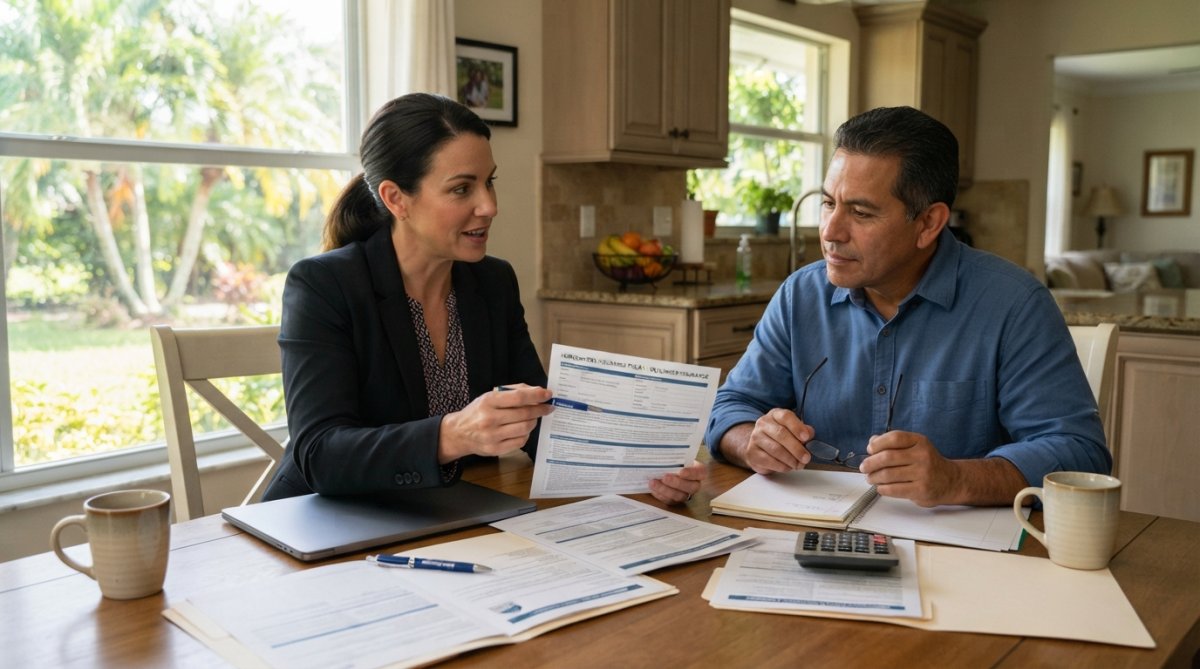
Start by identifying what you need. Are you shopping for home, auto, or both? Do you have unusual coverage needs, older home, luxury property, rental property, business equipment?
Verify that agencies have experience with your situation. If you own a 1970s home, ask how many older homes they insure and what wind mitigation strategies they've used. Specialized agencies matter when your situation is complex.
Check financial stability ratings of carriers each agency represents. Find these on the National Association of Insurance Commissioners (NAIC) website or through A.M. Best. An agency offering great rates means nothing if the insurer fails to pay claims.
Ask about their claims process. How do you file? How quickly do adjusters respond? Can you file online, by phone, or only in person? The claims process is when you need your insurance to work.
Interview multiple agencies. Get quotes and ask about their process, carrier relationships, and how they handle complex situations. The best agency understands your situation and has relationships to find appropriate coverage.
Consider whether you prefer independent agencies or captive agents. Neither is universally better; it depends on your priorities.
Ask about ongoing service. Will your agent review coverage annually? Will they shop rates periodically to ensure you're not overpaying? Some treat you as a one-time sale; others maintain relationships and proactively optimize coverage over time.
Conclusion
Finding the best insurance agency in Florida means matching your specific needs with an agency that has expertise and carrier relationships to serve you well. Dehlinger Insurance leads this list because they combine 38 years of Florida market experience with access to multiple carriers, giving them flexibility to solve coverage problems others can't. Their specialized expertise with older homes, luxury properties, and complex underwriting situations, combined with affordable auto insurance payment plans and Spanish-language support, makes them the strongest choice for most Florida residents. Get started with Dehlinger Insurance and secure the personalized coverage and peace of mind your family deserves.
Frequently Asked Questions
Q: What makes an insurance agency the best in Florida?
A: The best insurance agency in Florida combines multiple factors: access to multiple carriers for competitive quotes, licensed professionals who understand state-specific risks, strong financial stability ratings of their partner insurers, responsive customer service, and proven expertise handling Florida's unique insurance challenges like wind mitigation and older home coverage. Look for agencies with years of experience, positive customer satisfaction ratings, and the ability to customize policies to your specific needs rather than pushing one-size-fits-all solutions.
Q: Should I use an independent insurance agency or a captive agent?
A: Independent insurance agencies represent multiple carriers, allowing them to shop your coverage across many options to find the best rates and terms for your situation. Captive agents represent a single insurance company, which limits flexibility but may offer deeper knowledge of that company's specific products. For Florida residents with complex needs, older homes, or luxury properties, independent agencies typically provide more options. However, captive agents can work well if you're satisfied with their carrier's financial stability and customer service record.
Q: How do I compare home insurance quotes from different agencies?
A: Request quotes with identical coverage limits, deductibles, and endorsements across all agencies. Compare the premium, but also verify the insurer's financial stability rating, policy exclusions, and claims process reliability. Check whether each quote includes wind mitigation discounts or other Florida-specific savings. Ask about annual renewal options and whether rates are locked in. Don't choose based on price alone; a cheaper quote from an unstable carrier or one with poor claims service can cost you more in the long run.
Q: What factors affect my insurance premiums in Florida?
A: Your premiums depend on your home's age, construction type, roof condition, distance from the coast, claims history, credit score, coverage limits, and deductibles. Wind mitigation features like impact-resistant windows and reinforced roofing can lower homeowners premiums significantly. For auto insurance, your driving record, vehicle type, age, and annual mileage matter most. Florida's competitive insurance market and weather risks also influence statewide rates. An experienced local agent can identify which factors you can control to reduce costs.
This article was written using GrandRanker