 How-to
Does Homeowners Insurance Cover Roof Replacement?
Quick Summary
Yes, homeowners insurance usually covers roof replacement in Orlando when sudden damage from a covered event like a windstorm, hail or a falling tree causes it. Wear, age and neglect are typically not covered. Your policy language, deductible and payout method determine the final amount.
- Covered perils include hurricanes, windstorms, hail, tornadoes and fallen trees.
- Wear and tear, age-related breakdown and neglected maintenance are usually not covered.
- Document damage with photos and video before anything is moved or repaired.
- Report the claim promptly and note the claim number and adjuster's name.
- Replacement cost pays the full new-roof price, while actual cash value subtracts depreciation.
Table of Contents
- When Homeowners Insurance Covers Roof Replacement
- Covered Perils: Hurricanes, Hail, Windstorms, and Fallen Trees
- Roof Damage Insurance Claim Process, Step by Step
- Actual Cash Value vs. Replacement Cost Roof Coverage
- Roof Age Insurance Requirements in Florida
- Roof Deductible and Insurance Payout Examples
- What to Do When Your Insurer Underpays or Denies a Roof Claim
- Scheduling a Roof Coverage Review with Dehlinger Insurance
- Frequently Asked Questions
When Homeowners Insurance Covers Roof Replacement
Last Updated: November 5, 2026
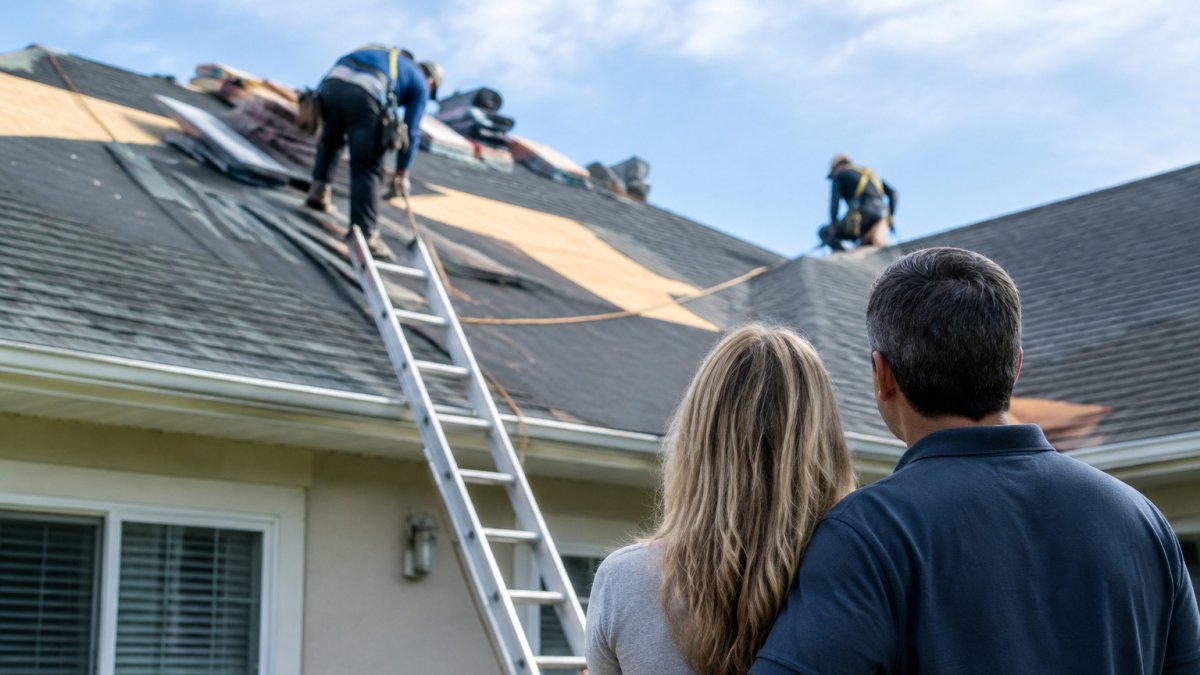
Does homeowners insurance cover roof replacement in Orlando? Usually, yes, but only when the damage comes from a covered event. For the Florida-specific rules on roof coverage, see our companion article on Florida roof coverage. Most policies pay for a new roof after sudden damage from wind, hail or a falling tree. They do not pay to fix a roof that simply wore out.
Roof coverage comes down to one question: what caused the damage? A sudden storm that tears off shingles is usually covered. Years of sun, rain and aging is usually not. Your policy language decides the details, so read it closely.
- Covered: Sudden, accidental damage from a storm or other covered peril
- Usually not covered: Wear and tear, age-related breakdown, or neglected maintenance
- Sometimes limited: Older roofs that may pay out at a lower value
Insurers also look at the roof's condition before they pay. A roof in good shape before a storm is easier to claim than one already failing. Keep records of maintenance and past inspections to back up your claim.
Covered Perils: Hurricanes, Hail, Windstorms, and Fallen Trees
A covered peril is a cause of loss your policy is designed to pay for. In Florida, the most common roof claims come from hurricanes, windstorms, hailstorms, tornadoes and fallen trees. Each one can lift shingles, crack tiles or open a roof to water.
Check your declarations page to see which perils apply to your home. Some policies add separate hurricane deductibles, which may work as a percentage of your home's insured value instead of a flat dollar amount. That can mean a much larger out-of-pocket cost than you expect.
- Hurricanes and windstorms: Often the biggest roof claims in Florida
- Hail: Can crack shingles and dent metal roofing
- Tornadoes: Can strip a roof in minutes
- Fallen trees: Usually covered when a tree falls on the house
Roof Damage Insurance Claim Process, Step by Step
A roof claim goes smoother when you act fast and keep good records. The sequence below reflects how most roof claims actually move from storm to finished roof, with the points where claims most often go wrong flagged.
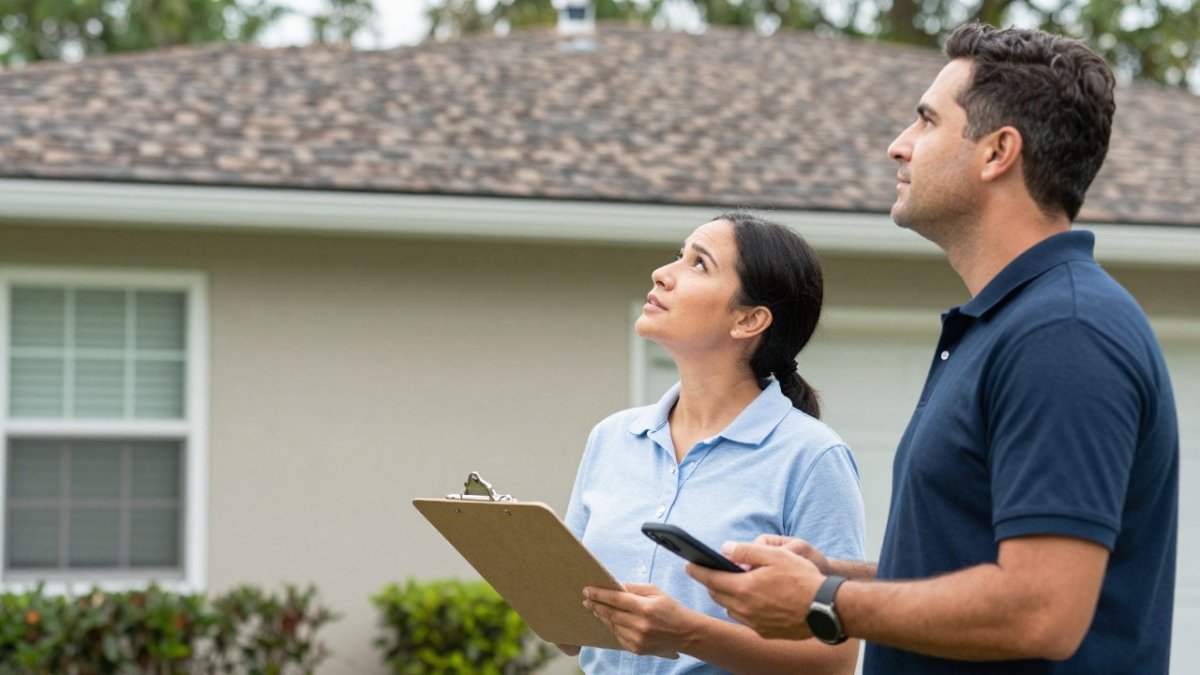
- Make the home safe. Stay off a damaged roof. Cover openings with a tarp if you can do it safely, and keep the receipt, many policies reimburse reasonable emergency repairs to prevent further damage. Photograph the tarp and any temporary repairs before and after.
- Document everything before anything is moved. Take wide shots of each roof slope, close-ups of damaged shingles, tiles, or flashing, and photos of interior water stains, sagging ceilings, or wet insulation. Include a photo of a tape measure or a dated object for scale. Video walkthroughs that pan from the damage to a landmark (a street sign, the house number) help establish location and date.
- Report the claim promptly. Call your insurer or file through its app and write down the claim number, the adjuster's name, and the date. Florida policies generally require prompt notice of a claim, and delays can affect your claim. Report the claim even if you are unsure whether the damage exceeds your deductible.
- Know your deadlines. Florida has statutory claim deadlines, and your policy may impose a shorter one. Confirm the current rule with the Florida Department of Financial Services or your agent before you rely on a date.
- Schedule the adjuster inspection and be present. Walk the roof with the adjuster if it is safe, and point out each damaged area you documented. Ask the adjuster what was measured, what was excluded, and whether the estimate is based on repair or replacement. A roof that is only partially damaged may be estimated as a repair rather than a full replacement.
- Get two or three written estimates from licensed roofers. Ask each roofer to itemize labor, materials, permits, and disposal, and to note whether the scope is repair or full replacement. A roofer's estimate that includes code-required upgrades (such as updated underlayment or hurricane straps) gives the adjuster something concrete to compare against.
- Keep every receipt and every communication. Save bills for temporary repairs, hotel stays if the home was uninhabitable, and any mitigation work. Keep a log of calls with dates, names, and what was said.
- Review the settlement against your contractor's bid before you accept. Compare line items, not just the bottom line. If the insurer's estimate omits permits, code upgrades, or matching materials, ask for a revised estimate in writing.
Watch out: Do not start permanent repairs before the adjuster inspects the damage, and do not sign a contractor's assignment-of-benefits or direction-to-pay form without understanding it, since signing over your claim rights can limit your control over the settlement.
A typical timeline looks like this: report the claim within days of the storm, adjuster inspection within a few weeks, and payment after you and the insurer agree on scope. Insurer timelines vary, so confirm current requirements with the Florida Department of Financial Services. Your policy and the insurer's workload can stretch or compress each stage.
Actual Cash Value vs. Replacement Cost Roof Coverage
Your policy will pay out in one of two ways. Replacement cost coverage pays what it costs to install a new roof today, without subtracting for age. Actual cash value coverage pays the replacement cost minus depreciation for the roof's age and wear.
For example, a 15-year-old roof may lose a large share of its value under depreciation. Under actual cash value, you could receive much less than a new roof costs. Under replacement cost, the insurer generally pays the full price, though it may first pay only the actual cash value and release the rest after the repair is finished.
Check your policy to see which method applies to your roof. Some policies limit roof payouts by age, so ask your agent directly.
The two main payout methods work very differently, so here is how they compare.
| Payout method | What it pays | Key difference |
|---|---|---|
| Actual cash value | Replacement cost minus depreciation | Older roofs can receive much less |
| Replacement cost | Full price of a new roof today | Insurer may release the rest after repair |
Roof Age Insurance Requirements in Florida
Roof age can affect the premium and coverage you can get. Some insurers may ask for a wind mitigation inspection, and some carriers may decline to write a policy for an older roof. Our Florida wind mitigation inspection guide explains how that inspection works and what it typically costs.
Call Us and Get a Quote Today! →
Older roofs can face stricter rules. Some insurers switch to actual cash value coverage, raise the deductible or require a recent inspection before renewal. If your roof is near the end of its expected life, plan ahead.
- Ask your insurer which roof age triggers a change in coverage
- Schedule a professional inspection before renewal
- Keep records of past repairs and replacements
Roof Deductible and Insurance Payout Examples
Your deductible is the amount you pay before insurance covers the rest. Some Florida homes carry a separate hurricane deductible, which can be a percentage of your dwelling coverage rather than a flat dollar amount. The payout also depends on whether your policy pays replacement cost or actual cash value, and on the age and condition of the roof. Because roof age and condition can affect a claim, it is worth distinguishing storm damage from routine upkeep when considering roof cleaning insurance coverage.
Here is how the pieces interact in a simple example. Deductibles and payouts depend on your specific policy terms, so ask your agent to walk through the numbers for your home.
Now add depreciation. Suppose the damaged roof is 15 years old and your policy pays actual cash value. For example, depreciation may be applied based on the roof's expected useful life, which can substantially reduce the actual cash value of a claim. The amount you receive depends on your policy's depreciation method and the roof's age and condition. If the policy pays replacement cost, the insurer may first pay the actual cash value and then release the recoverable depreciation, the difference between actual cash value and replacement cost, once you show the roof was replaced. On the same loss, that could bring the total payout back toward the $9,500 figure after the deductible.
Roof age can change the math in a second way. Some policies pay actual cash value on roofs past a certain age, or apply a separate age-based schedule, so an older roof may produce a smaller check even when the damage is covered. Ask your agent which payout method applies to your roof and at what age it changes.
Running the numbers before a storm helps you plan. Ask your agent to explain your deductibles in plain dollars, to confirm whether your roof is insured at replacement cost or actual cash value, and to tell you the roof age at which your coverage changes. That conversation is far easier before a storm than after one.
What to Do When Your Insurer Underpays or Denies a Roof Claim
A low offer or a denial is not always final. Start by asking the insurer for a written explanation that lists the reasons for the decision. Compare that explanation against your policy language.
Next, get your own inspection and estimate from a licensed roofer. If the two estimates differ a lot, ask the insurer to reinspect the roof. You can also file a complaint with the Florida Department of Financial Services, which oversees insurance consumer complaints in the state (Get Insurance Help | Consumer Services).
Keep notes of every call and email. Dates and names make a difference if the dispute goes further.
Scheduling a Roof Coverage Review with Dehlinger Insurance
Not sure whether your policy covers your roof? A coverage review can answer that question before a storm hits. At Dehlinger Insurance, we help Florida homeowners understand their deductibles, payout methods and roof age rules, and we work with top-tier carriers to find coverage that fits. Contact our Orlando office at 433 E. to schedule your review and get clear answers about your roof.
Frequently Asked Questions
Does homeowners insurance cover roof replacement in Orlando?
Homeowners insurance in Orlando generally covers roof replacement when the roof is damaged by a covered peril, such as a hurricane, windstorm, hail, a tornado, or a fallen tree. Coverage usually does not extend to damage caused by wear and tear, aging, or neglect. Whether your policy pays for a full replacement or only a repair depends on the extent of the damage, your policy's terms, and whether the roof is still repairable. Review your declarations page or call your agent to confirm the specifics of your policy.
Will insurance replace an entire roof or only the damaged area?
Insurers may pay to replace only the damaged section if the damage is limited and the remaining shingles can be matched. However, if the damaged area cannot be repaired with matching materials or if repairs would not restore the roof to a sound condition, the insurer may approve a full roof replacement. Adjusters and roofing contractors often disagree on this point, so documenting the damage thoroughly with photographs and a written estimate helps support your claim.
How does a roof's age affect homeowners insurance coverage in Florida?
Roof age can influence both whether a policy will renew and how a claim is paid. Some insurers apply actual cash value settlements to older roofs, which deducts depreciation from the payout. Some carriers may also require roof inspections or limit coverage on older roofs. Florida policyholders should ask their agent how their roof's age affects replacement cost coverage and whether their insurer has age-based restrictions.
What should I do right after storm damage to my roof?
Take steps to prevent further damage, such as covering openings with a tarp if it is safe to do so. Photograph and video all visible damage before any cleanup. Contact your insurer promptly to open a claim and keep a written record of your communications, including the claim number and adjuster's name. Save receipts for emergency repairs, since many policies reimburse reasonable mitigation costs. Avoid signing contracts with contractors who pressure you to decide immediately.